
What the 300 PEI Sheet does on a bigger print bed
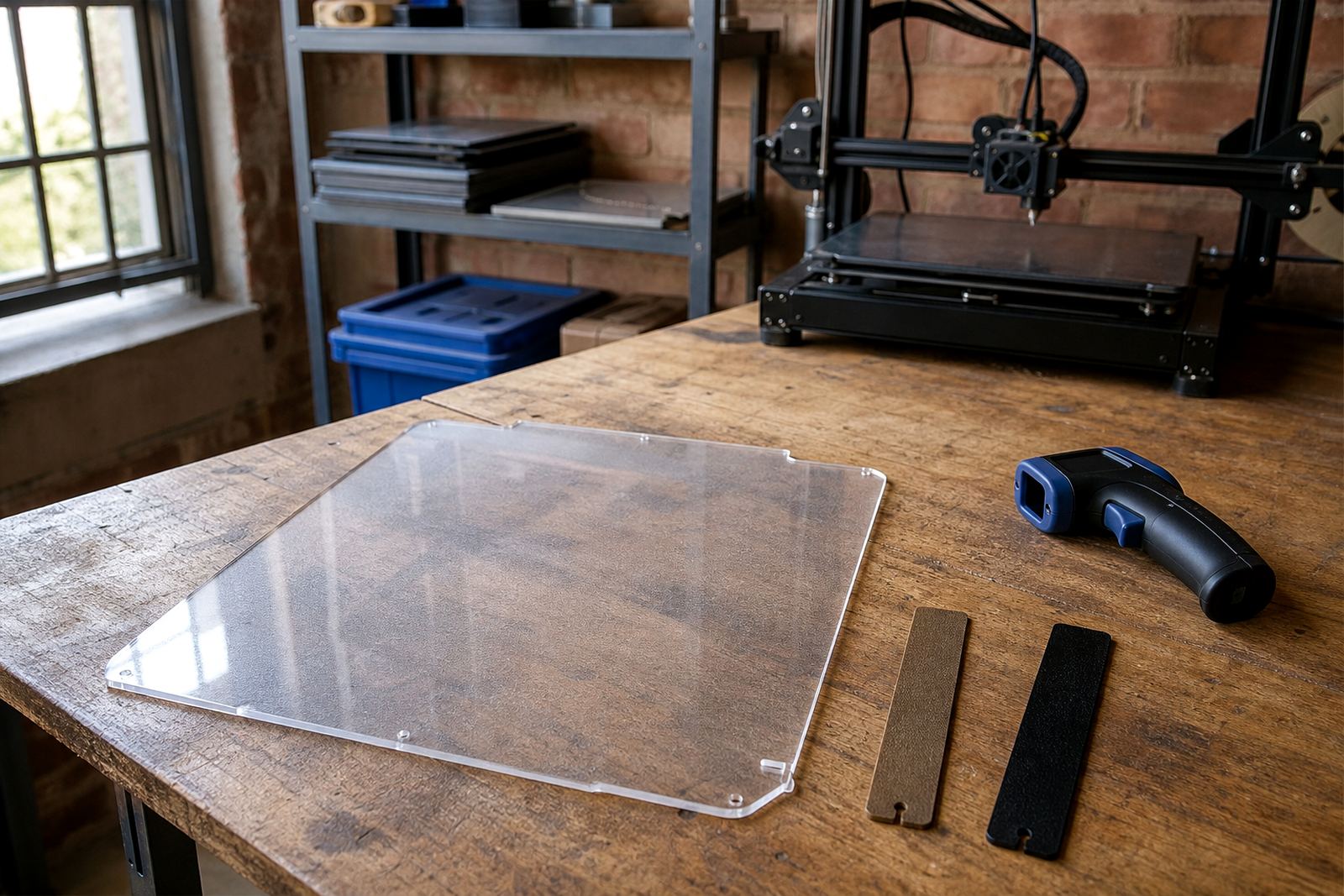
The 300 PEI Sheet is a build surface for 3D printers with a larger bed area, typically around 300 mm class machines. It gives the print a consistent surface to grip during the first layer, then releases once the bed cools, which helps reduce failed starts and edge lift. For users in Centurion, Pretoria, Johannesburg and further afield, it is a practical option when you are running daily jobs and cannot afford repeated rework.
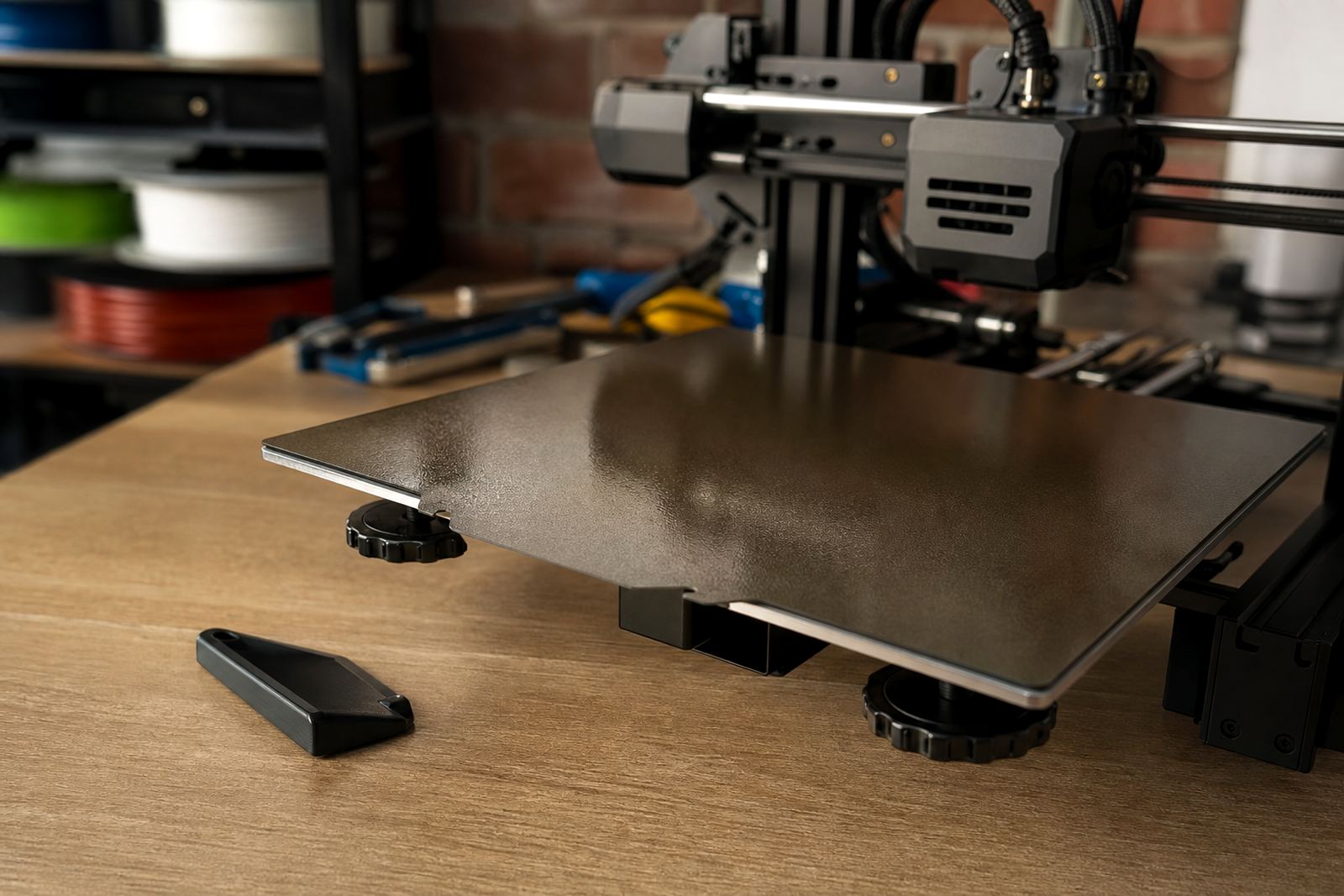
This sheet is used on rigid heated beds and on machines fitted with a flat magnetic base, depending on the setup. It is chosen for PLA, PETG and many common filaments where good bed contact is important. On bigger beds the main challenge is not just sticking, but sticking evenly, and that is where a properly fitted PEI surface earns its keep.
- Designed for larger format print beds
- Helps with first layer grip across the full surface
- Suitable for hobby printers, school labs and print farms
- Works best on a bed that is flat and properly set up
Sizes, finish options and matching your machine
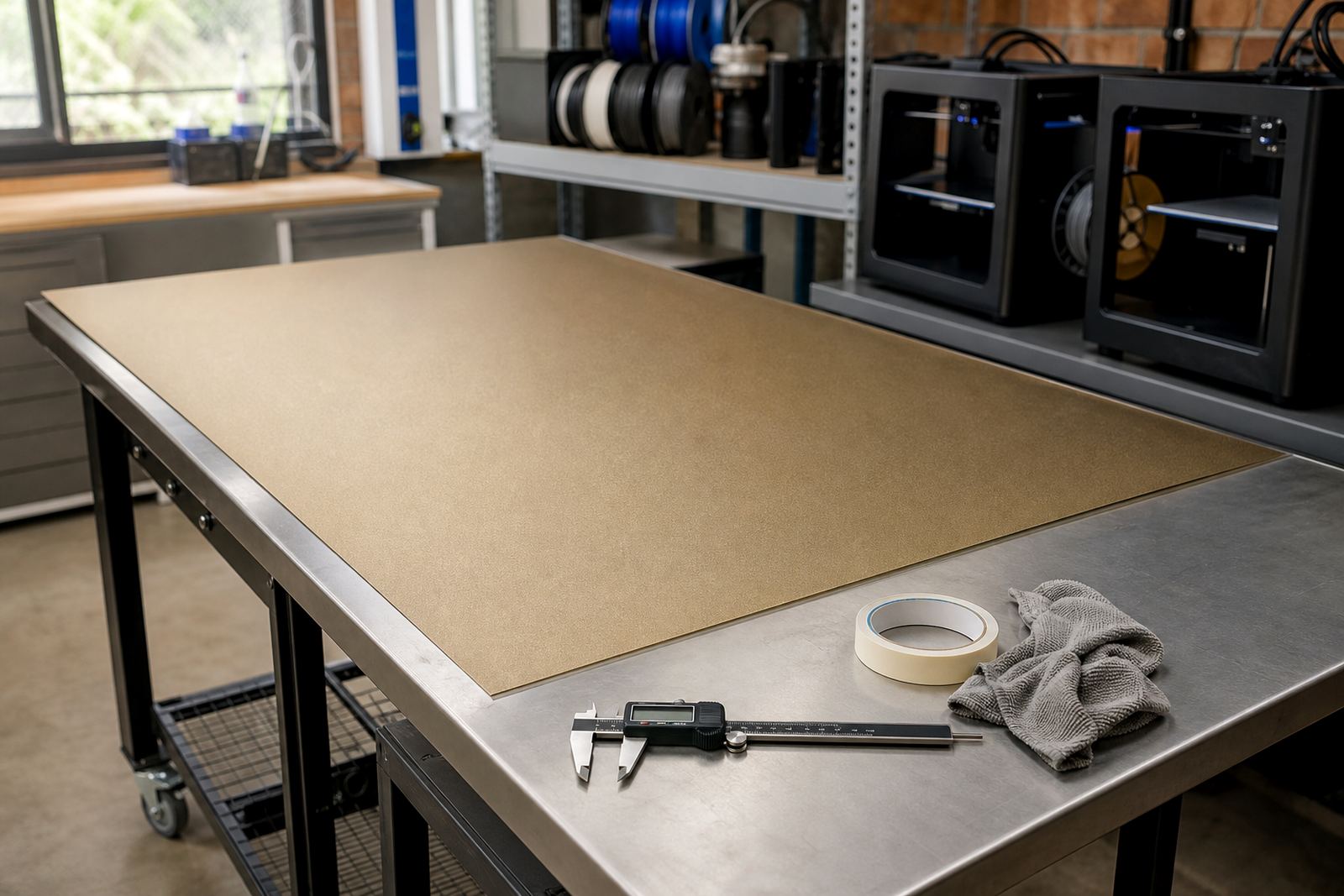
We supply the 300 PEI Sheet in sizes that suit common large bed formats, with cutting available for custom fits. The final size depends on the machine frame, the printable area and whether you need clearance around clips, probe points or bed mounts. If your printer uses a removable plate, the sheet can be supplied to suit that plate rather than the glass or metal base underneath.
There are options for smooth or textured surfaces depending on the finish you want on the bottom of the print. Smooth surfaces give a cleaner base appearance, while textured finishes can hide minor bed marks and are often preferred on utilitarian parts. For school labs and production lines, the more important point is getting the size right the first time, because a sheet that overhangs or fouls moving parts will cause problems later.
- Available for 300 mm class beds and larger custom cuts
- Smooth or textured finish depending on print requirement
- Can be matched to magnetic or fixed-bed setups
- Useful for single machines or grouped farm standardising
Where the 300 PEI Sheet suits best
This product suits printers with a bed large enough to show up any uneven heating or warping. It is a good fit for classrooms where learners are printing in batches, for businesses running repeated parts, and for makers who want larger prints without constant corner lift. If you are working from a workshop in Midrand, a school in Bloemfontein or a print room in Cape Town, a dependable sheet helps keep jobs moving when time is tight.
It is especially useful when you print parts with wide footprints, flat bases or long edges. Larger beds often need a bit more care with levelling and adhesion, so the sheet should be paired with a flat bed and a sensible first-layer height. In humid coastal areas like Durban and Gqeberha, keeping the surface clean and the filament dry makes a noticeable difference.
- Large format personal printers
- School maker spaces and STEM labs
- Small print farms and short-run production
- Parts with wide bases, plates or trays
Installation, power requirements and what your printer needs
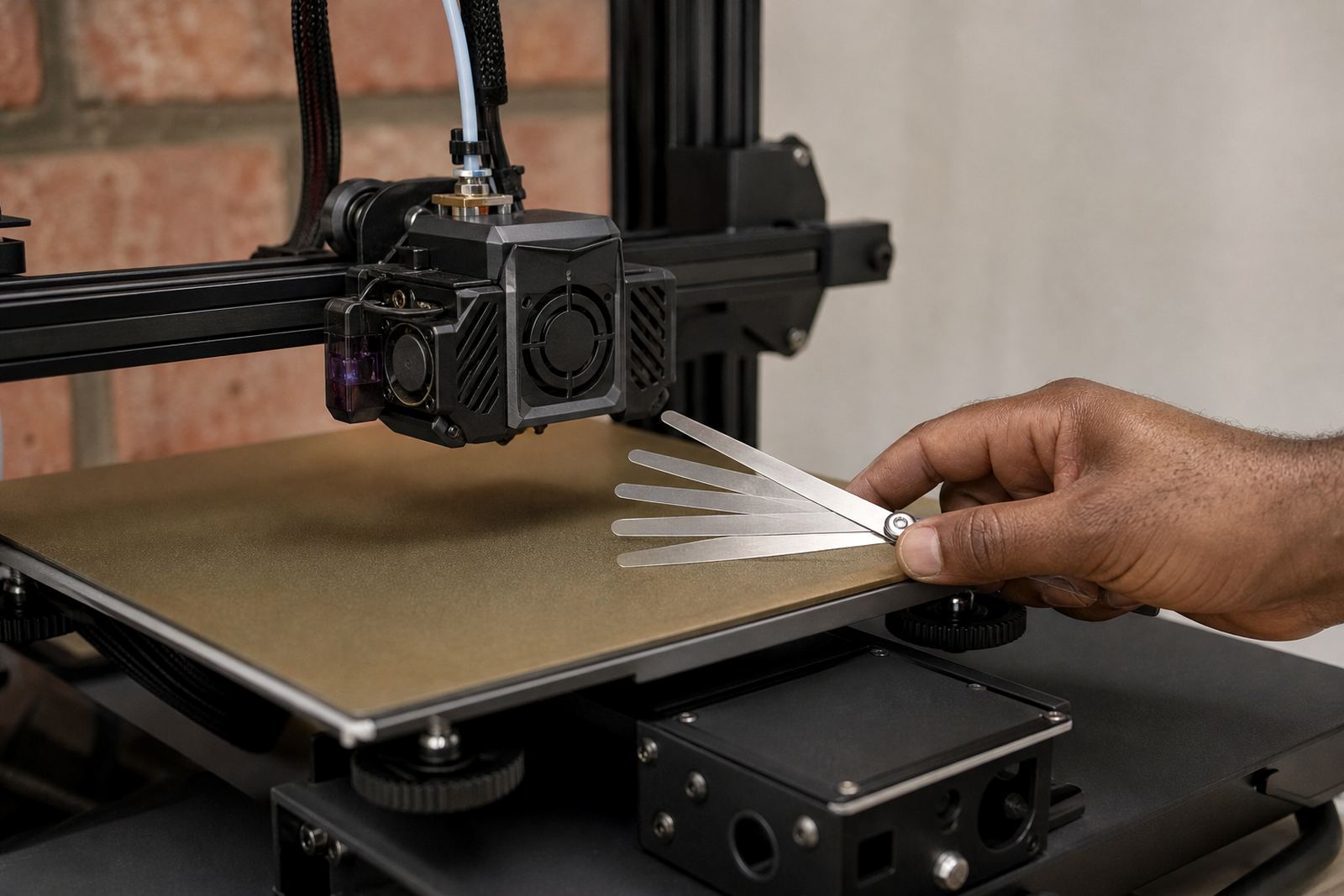
The 300 PEI Sheet does not need power or gas of its own. It works as a surface fitted to the printer bed, and the printer’s heated bed provides the working temperature. That means the real checks are mechanical: bed flatness, correct sizing, and enough room for the sheet to sit without rubbing on guides, clips or cabling. A poor fit can cause uneven contact and early wear.
We can assist with plate installation, PEI sheet fitting, magnetic base fitting and bed flatness checks. For larger beds, these steps matter because a slight twist in the base can show up as weak corners or a lifted centre. If you are setting up a classroom or a new farm in Gauteng, standardising the bed setup across all machines can save a lot of time later.
- No separate power supply or gas connection required
- Depends on your printer’s heated bed and temperature control
- Best used with a flat, clean and secure bed mount
- Installation support available for local and national customers
Care, cleaning and surface life
To keep the sheet working properly, clean it with a suitable surface cleaner and a lint free cloth. Avoid touching the print area with oily hands, and do not scrape aggressively with metal tools. Once the first layer starts to feel unreliable, the surface may need a refresh rather than a full replacement. That is often the cheaper option, especially on machines that run daily and cannot sit idle.
In busy environments, a short bed care routine helps a lot. Check the sheet for marks, lift, glue residue, or areas that no longer grip evenly. On farms and in schools, it is worth assigning one person to do the checks because mixed habits lead to mixed results. A small chip on the edge may not matter today, but over time it can turn into a print failure or a warped part.
- Clean regularly with a soft cloth and suitable cleaner
- Avoid sharp scrapers and rough abrasion
- Inspect for wear, lifted corners and residue build-up
- Surface refresh and replacement planning available
What to check before you place an order
Before ordering, check the bed size, the active print area, and whether the bed has clips, probe points or cut-outs. If the printer is part of a larger setup, it helps to know whether the sheet must match one machine or several machines. For schools, we also recommend checking whether the bed will be handled by learners, because that affects the finish and the care routine.
We also advise checking filament types, usual bed temperatures and the level of support you need after fitting. If you are running multiple printers, farm standardising can be more valuable than buying each sheet separately. When all beds use the same surface and the same cleaning method, training and maintenance become much easier. Please use the enquiry form on our contact page if you want help matching the sheet to your machine.
- Bed size and printable area
- Smooth or textured finish preference
- Magnetic base, fixed plate or glass compatibility
- Need for cutting, fitting or setup support
Key facts
| Product | 300 PEI Sheet |
|---|---|
| Use case | Large format 3D printer build surface |
| Typical size | 300 mm class beds and custom cuts |
| Surface options | Smooth or textured PEI |
| Power or gas | None required, uses printer heated bed |
| Support | Installation, fitting, bed checks and care training |