
What a bed flatness check tells you
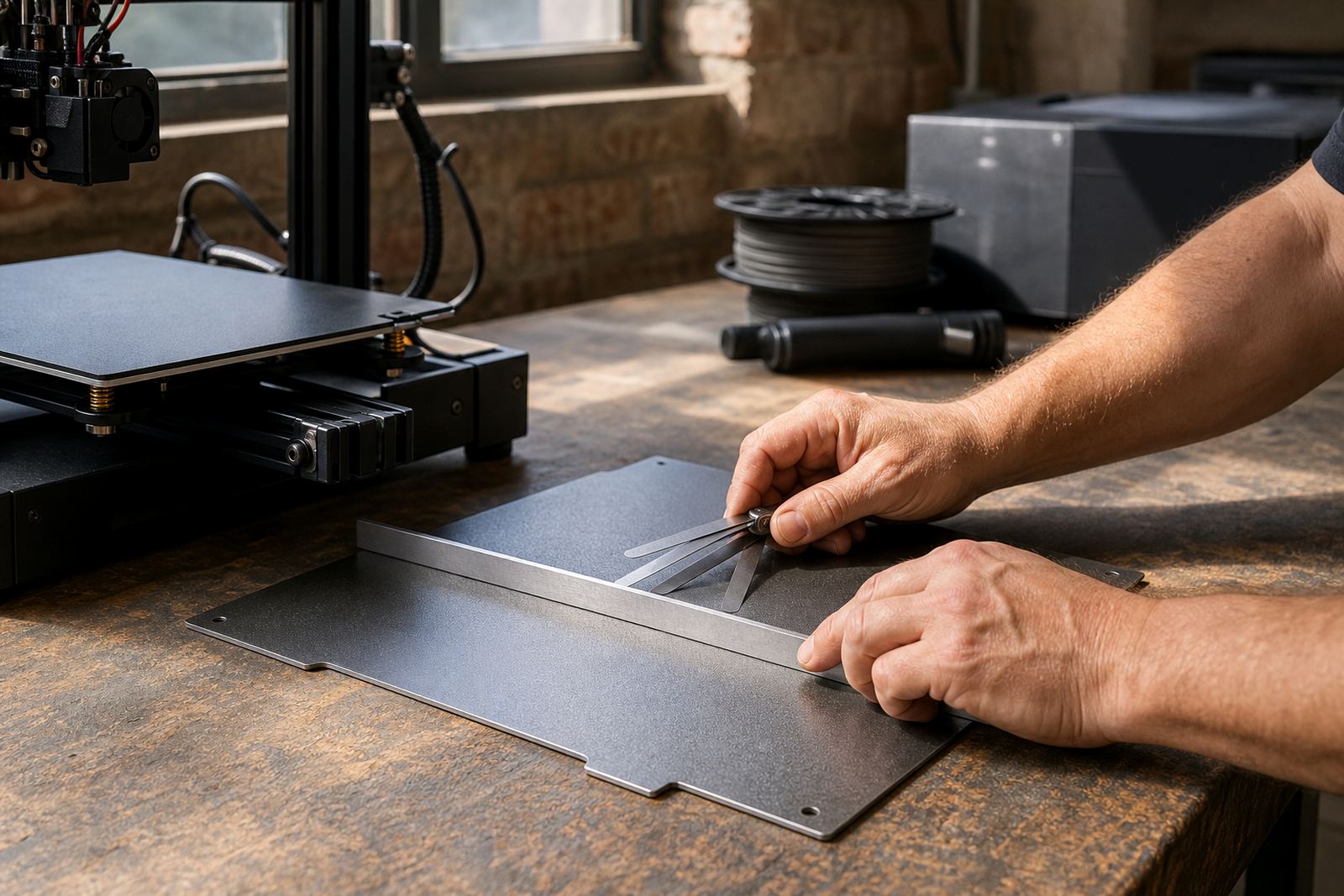
A bed flatness check is a practical inspection of the print surface, not just a quick glance across the plate. We measure how even the build area is from edge to edge and look for dip points, raised corners, twist, and local warping that can throw off first-layer height. On a 220 x 220 mm plate even a small change can affect adhesion, so the test matters whether you are running a single home machine or several printers in a small farm.
The aim is to separate bed problems from nozzle issues, slicer settings, and worn surfaces. If the plate is out by too much, the printer may need extra squish in one area and less in another, which leads to uneven lines, lifting corners, or a rough underside. We also check whether the surface type, mounting method, or magnetic base is contributing to the problem.
- Checks for high spots, low spots, twist and edge lift
- Confirms whether the issue sits in the plate, magnetic base, or frame alignment
- Helps explain poor first-layer grip, gaps, and inconsistent line width
What is included in the inspection
The service covers a structured inspection of the build plate and its mounting setup. We assess the working face, the underside, and the way the plate sits on the printer so you get a full view of the problem, not only the symptom. If a plate has a removable surface sheet, we check the contact layer as well because a good surface can still behave badly if the base is uneven.
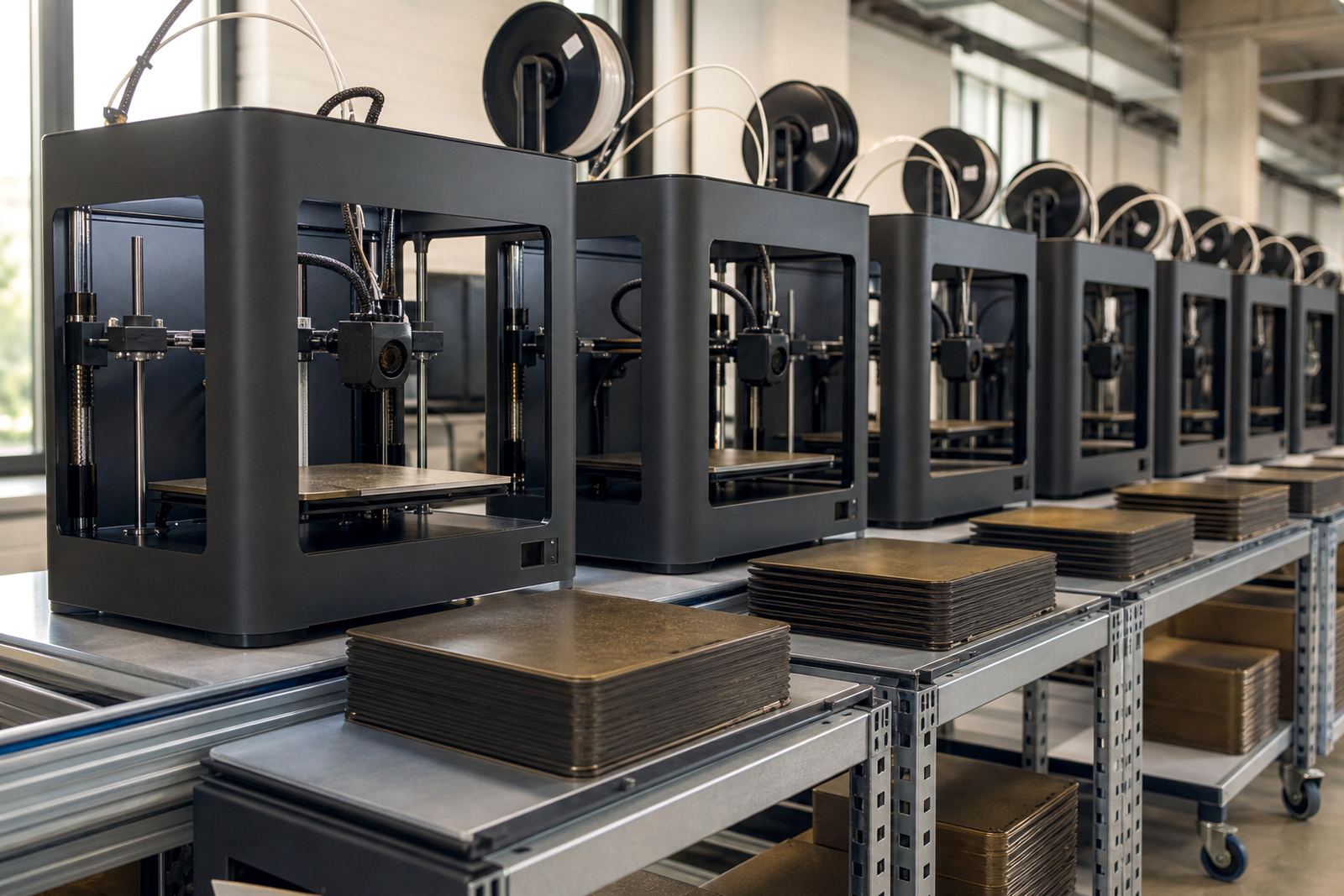
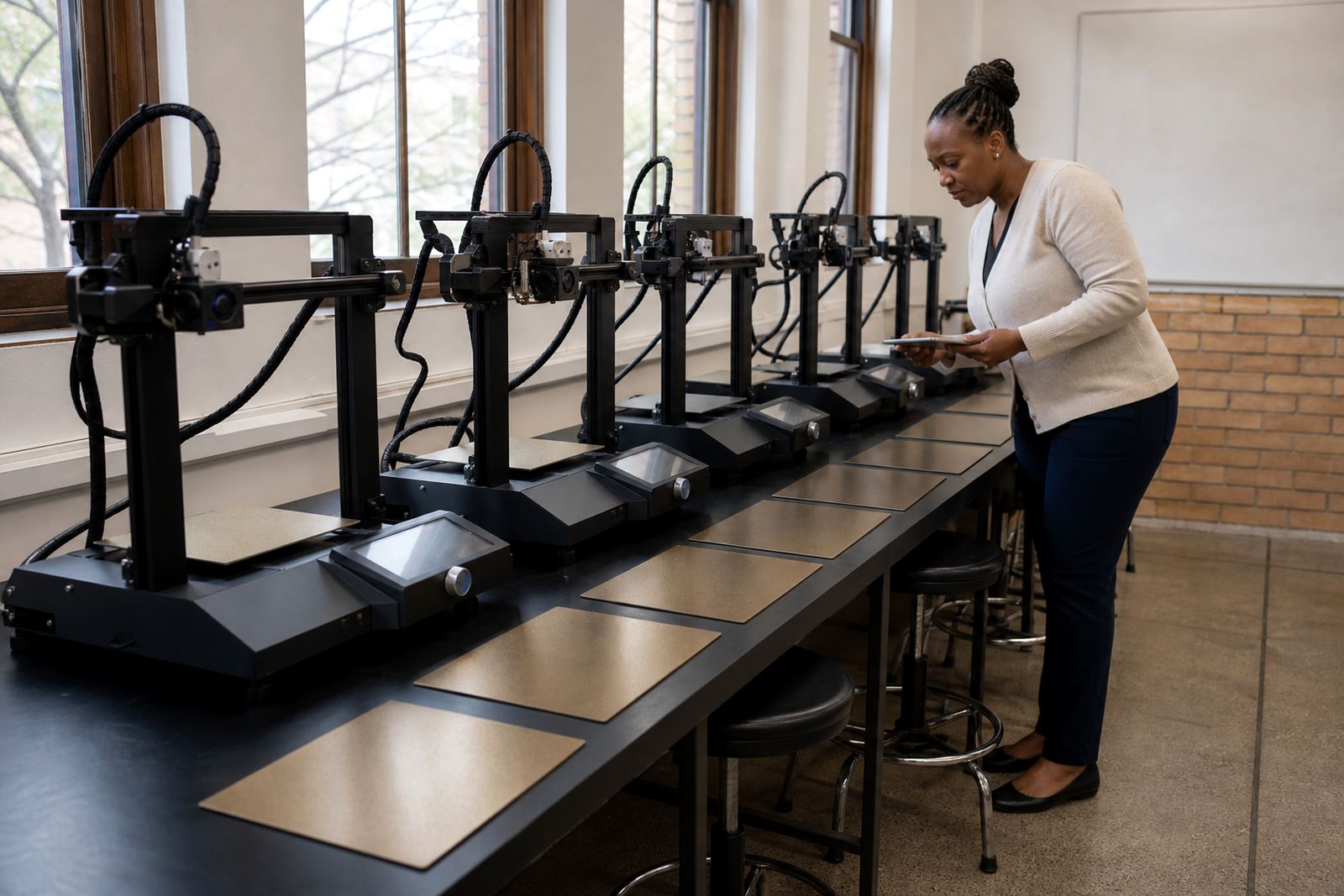
For schools, print farms, and busy workshop tables, we can also group multiple machines into one check so you can compare printers using the same standard. That is useful when one machine keeps needing different levelling values and the rest are printing fine.
- Visual inspection of the build plate and mounting surface
- Flatness reading across corners, centre points, and key zones
- Check for contamination, wear, scratches, and residue build-up
- Review of magnetic base seating and plate fit
- Advice on whether the plate can be recovered or should be replaced
Our process from intake to recommendation
We start by recording the plate size, surface type, printer model, and any symptoms you have noticed. After that, the plate is cleaned and measured in a consistent way so dust, filament residue, or glue does not hide the real numbers. If the plate is visibly bent we note the direction of the warp and whether the issue changes when the plate is mounted cold or warm.
Next, we compare the surface reading with the printer's usual first-layer behaviour. If the printer has been running with repeated levelling adjustments, poor corner adhesion, or a centre that prints too close, we match those signs to the flatness result. You then get a clear recommendation: keep using it, surface refresh, re-mount, pair it with a corrected magnetic base, or plan replacement. In some cases the issue is not the plate itself but the frame, bed carriage, or a worn mounting setup and we will say so plainly.
- Intake and fault note capture
- Cleaning and setup for repeatable measurement
- Flatness reading and issue mapping
- Practical recommendation with next steps
Turnaround times for single plates and batch checks
For a single plate, the check is usually handled quickly, especially for clients in Centurion, Pretoria East, Midrand and Johannesburg coverage areas. Where the plate is dropped off for inspection, turnaround is often same day or next working day depending on queue and how many points need measuring. If the job involves several printers or a school lab setup, we plan a batch schedule so the assessment is done in a sensible order.
For print farms or training spaces, the timing depends on the number of machines, the condition of the surfaces, and whether we need to compare several plates against one another. If replacement planning is required, we can build that into the same visit so you do not lose extra time later. Load-shedding does not help a workflow, so we keep the process efficient and avoid unnecessary repeat checks.
When a plate needs a follow-up after fitting or surface refresh, we can schedule that as part of the maintenance cycle. That helps confirm that the new setup is sitting true before production restarts.
Pricing approach and what affects the cost
Pricing is based on the size of the plate, the number of items checked, and whether the work is a simple inspection or part of a larger service. A flatness check on one standard plate is priced differently from a batch review for a classroom, maker space, or print farm. If the plate also needs a magnetic base fitting, surface refresh, or custom size cutting, those items are quoted separately so you know exactly what is being paid for.
We keep the approach straightforward. You are not paying for guesswork, you are paying for a measured result and a practical recommendation. If the plate is within acceptable tolerance and only needs a cleaner routine or minor adjustment, we will say that instead of pushing unnecessary replacement. If it is out of tolerance, we will show why that matters for first-layer consistency.
- Single plate inspections quoted per item
- Batch pricing available for schools and farms
- Separate pricing for fitting, refresh work, or replacement planning
- Clear advice before any extra work begins
Maintenance intervals for reliable first layers
How often you should check flatness depends on how the printer is used. A hobby machine that prints occasionally may only need an inspection when first-layer problems start. A school lab or print farm should check plates on a routine schedule, especially if beds are removed often, cleaned aggressively, or exposed to heat cycles day after day. On coastal routes such as Cape Town, Durban, and Gqeberha, humidity and storage conditions can also affect the surface and magnetic seating over time.
As a rule, we suggest a check after any hard impact, after a failed build that pulled on the plate, or when you notice repeated corner lift on the same printer. For busy users, a 3 to 6 month interval is sensible for routine verification and earlier if the machine is used daily. If a plate is older, scratched, or has had repeated adhesive build-up, the interval should be shorter. Regular inspection saves time later and keeps first layers from becoming a guessing game.
We also recommend checking after a new sheet or magnetic base is fitted, since a fresh part can still sit on an uneven foundation if the printer frame or carriage has shifted. A quick follow-up can catch that before it becomes wasteful.
Who benefits most from this service
Bed flatness checks are useful for makers who want cleaner first layers, schools that need consistent classroom printing, and production teams that cannot afford failed starts. If you are running multiple printers across Pretoria, Johannesburg, Cape Town, Durban or Bloemfontein, the service helps standardise results from one machine to the next. That matters when students, staff, or operators are swapping plates and expect the same setup every time.
It is also worth doing when a printer looks fine on paper but keeps giving the same symptoms: edge lift, one corner that never sticks, a centre that crushes the line, or a surface that needs more adhesive than it should. The check gives you a clear answer and a sensible path forward, instead of endless levelling tweaks. For many users, that is the difference between a printer that behaves and one that wastes material.
Key facts
| Plate size range | Standard benchtop beds up to 300 x 300 mm, with larger sizes on request |
|---|---|
| Measurement points | Corners, centre, edge zones, and any visible fault area |
| Typical tolerance focus | First-layer critical variation, not just overall straightness |
| Compatible surfaces | PEI sheets, coated plates, spring steel plates, glass, and removable surfaces |
| Common follow-up services | Plate installation, magnetic base fitting, surface refresh, and replacement planning |
| Service areas | Centurion, Pretoria East, Midrand, Johannesburg, Cape Town, Durban, Bloemfontein and Gqeberha |