
Standardise Every Machine Before The Next Run
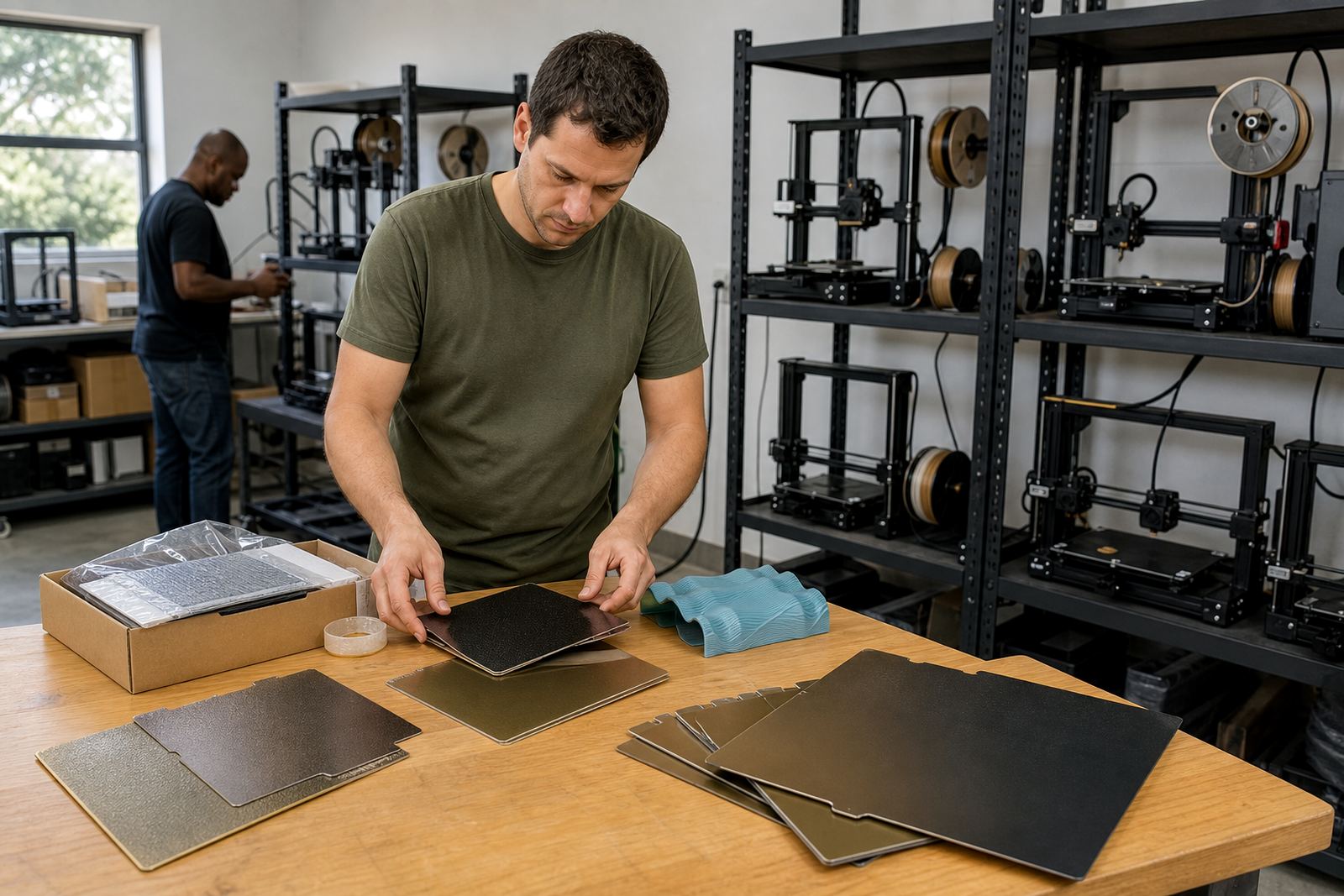
Print farms work best when every printer behaves the same way. That starts with one surface spec, one fitting method, and a clear rule for when a plate or PEI sheet must be replaced. We help you map each machine, record the current setup, and bring the fleet onto a consistent standard so operators are not guessing from one bay to the next.
For larger teams, that consistency matters even more during shift handovers and busy school holiday production periods. A plate that grips well on one machine and releases poorly on another can slow the whole line. We help you remove that variation with straightforward checks and replacement planning that fits the way South African print rooms actually run.
- Identify each printer size and surface type
- Group machines into matching surface sets
- Record spare plates by size and finish
- Set a replacement trigger before quality drops
Bed Flatness Checks That Catch Problems Early
A flat bed is the base for clean first layers. If a machine is slightly out, the same part may print well on one corner and lift on another. Our bed flatness check looks at the practical side of the job: surface condition, magnet seating, wear marks, and whether the plate still sits properly after repeated use.
In Centurion and Pretoria, where many farms run daily and longer print queues are common, this check can save hours of reprints. In coastal areas like Durban and Cape Town, humidity can also affect how materials behave and how often you need to clean or refresh the surface. A quick check now is usually cheaper than scrapping a full batch later, especially when material prices are moving around.
- Check for bowing, edge lift, and uneven contact
- Inspect magnetic bases and alignment
- Review first-layer results for patterns across the bed
- Flag plates that need replacement or surface refresh
PEI Sheet Fitting For Consistent Release And Grip
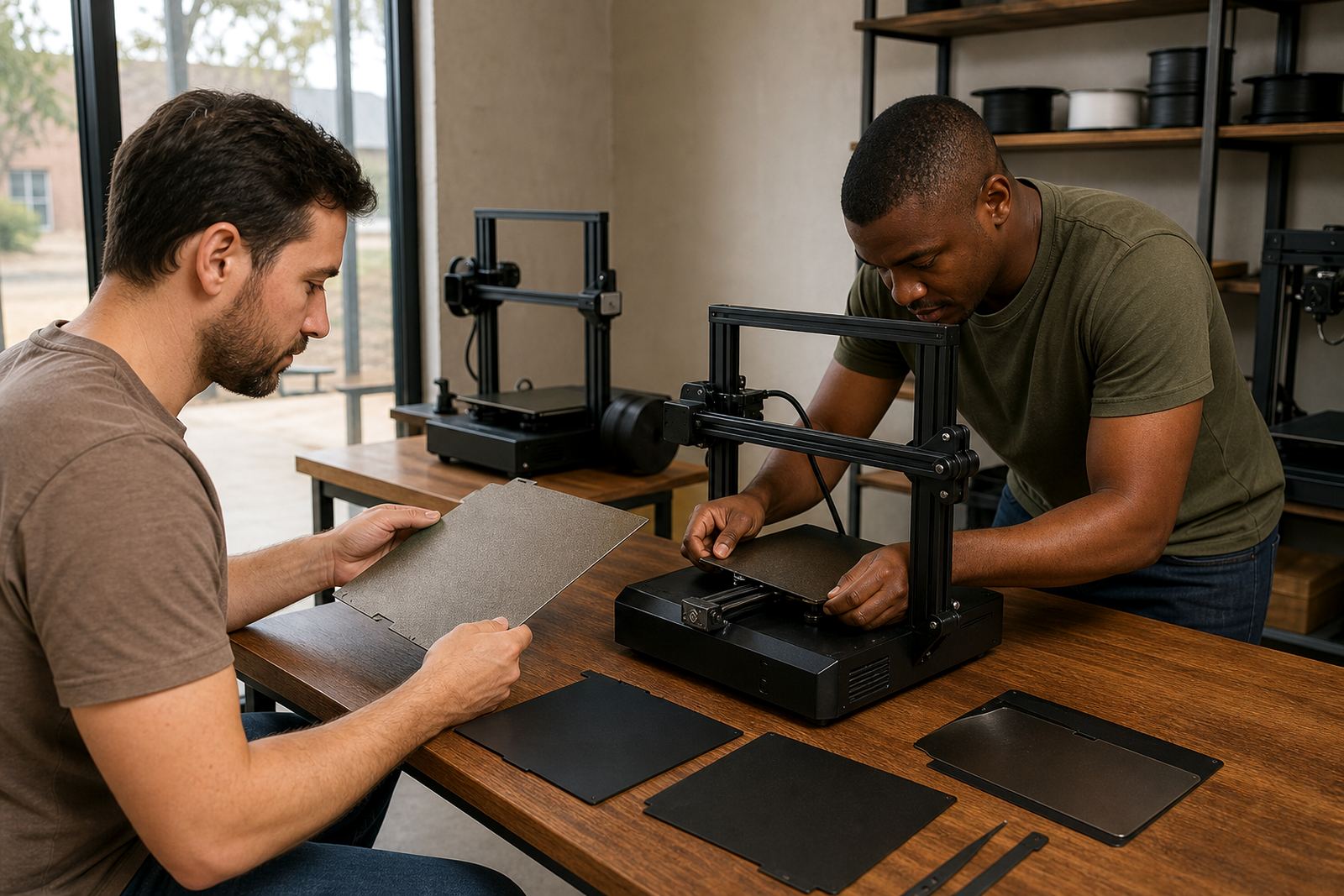
PEI sheet fitting is not just about sticking a sheet onto a plate. It needs the right cut, clean alignment, and pressure in the right places so the surface stays flat through heat cycles and regular cleaning. We fit sheets for farm use where repeatability matters more than a quick one-off fix.
For operators running PLA, PETG and other common materials, the goal is the same: steady adhesion on the first layer and reliable release once the part cools. We also advise on replacement timing, because a worn sheet can still look fine while the surface is already losing grip. That kind of wear is easy to miss when the farm is busy.
- Cut and fit to the correct plate size
- Confirm edge seal and surface contact
- Check for bubbles, lift and contamination
- Match the sheet type to the job volume
Spare Planning For Schools, Makerspaces And Production Farms
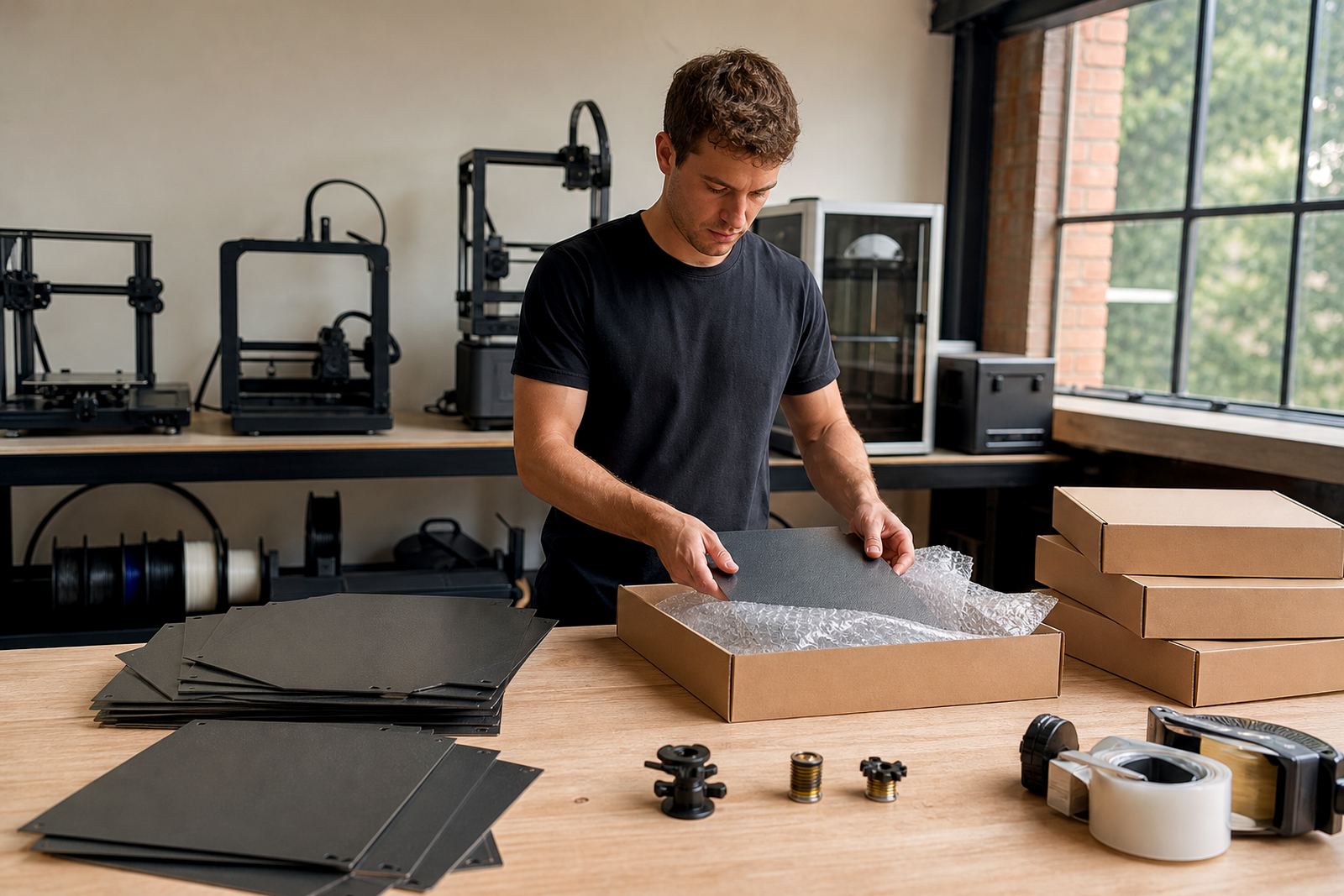
Print farms lose time when a plate fails and there is no spare on the shelf. We help you plan spares around your actual workload, not a best-case scenario. That means knowing how many plates you need per machine group, what sizes must be kept on hand, and which items should be ordered before stock runs low.
Our replacement planning is especially useful for schools, where term schedules and holiday projects can create sudden spikes, and for farms that print in batches for resellers or local engineering work. We can set up a simple rotation so used plates are cleaned, checked and returned to service in a known order.
- Set minimum stock levels for plates and sheets
- Plan replacements by machine count and print volume
- Keep one emergency spare for critical sizes
- Schedule top-up supply before peak periods
Adhesion Troubleshooting For Busy Print Queues
When first layers fail, the cause is often a mix of settings, surface condition and operator habit. We work through the issue step by step: bed temperature, cleanliness, levelling, plate wear, sheet condition and the part design itself. That approach saves time because it separates a true surface problem from a slicer issue or a warped bed.
It also helps during load-shedding and after power interruptions, when machines may restart with a slightly different bed state or a half-warmed plate. If your team is seeing corner lift, centre lift or too much grip, we help identify the cause and put a fix in place. Small issues left alone tend to turn into lost print hours very quickly.
Consumables Supply That Matches Real Farm Usage
Good support is not only about fitting new parts, it is about keeping the right consumables moving through the store room. We supply the items farms use most often and help you keep track of what gets consumed fastest. That includes plate care items, replacement sheets, magnetic base components and other bed-adhesion consumables.
For teams in Johannesburg, Bloemfontein, Gqeberha and other centres, we can support branch or site-based ordering so each location holds the stock it needs without overbuying. The aim is simple: less downtime, clearer records, and fewer surprises when a printer goes out of service mid-run.
- Track monthly usage by site or department
- Separate fast-moving items from slow-moving stock
- Keep surface care items with the maintenance kit
- Order before a full changeover is forced by wear
How To Start A Farm Support Plan
Begin with a list of your machines, plate sizes, current surface types and the problems you see most often. From there we can suggest a support plan that covers installation, checks, spares and refresher training for your team. If your farm is split across more than one site, we can also help you standardise the rules so each location follows the same process.
Clients reach us through the enquiry form on our contact page, and we use that first message to work out the right support route. Whether you are managing a school lab, a growing maker space or a production farm with tight turnaround times, the goal is the same: keep every first layer steady and every plate accounted for.