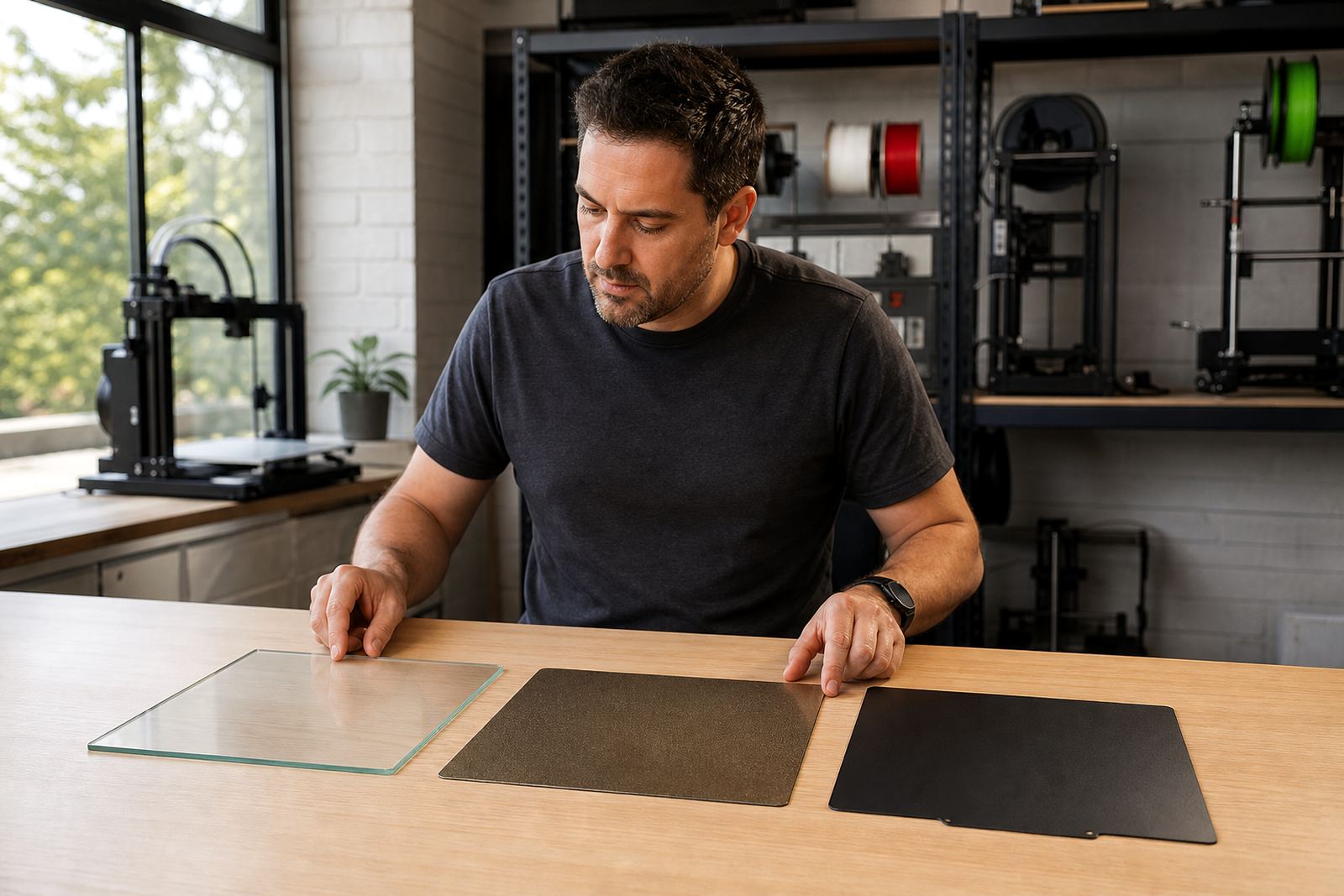

Start with the printer model and the exact bed shape
Before you send any dimensions, confirm the printer model, bed shape and whether the plate sits on a flat bed, magnetic base or spring steel system. A square bed, rounded corners and a cut-out for clips all change the final size. If the machine is running in a school lab or print farm, note whether there are multiple units that must match one standard size, because that affects repeat orders later.
For Centurion, Pretoria and Johannesburg customers we often see mixed fleets where the same model has been modified over time. A replacement order works best when you tell us what is on the machine now, not only what came out of the box. If the bed has been replaced, resurfaced or fitted with a different magnetic layer, that matters too.
- Printer make and model
- Bed type: glass, aluminium, magnetic base or spring steel
- Bed shape: square, rectangular, rounded corners or cut-outs
- Whether the plate must sit inside a frame or overhang slightly
- How the current plate is fixed in place
Measure the active print area, not just the outer bed
Measure the usable print area where the nozzle can actually travel, not only the outside edge of the metal bed. The outer bed may be 235 x 235 mm, but clips, corner radii or a lip can reduce the usable area. We need the true active area to avoid a plate that is 2 or 3 mm too tight or too loose.
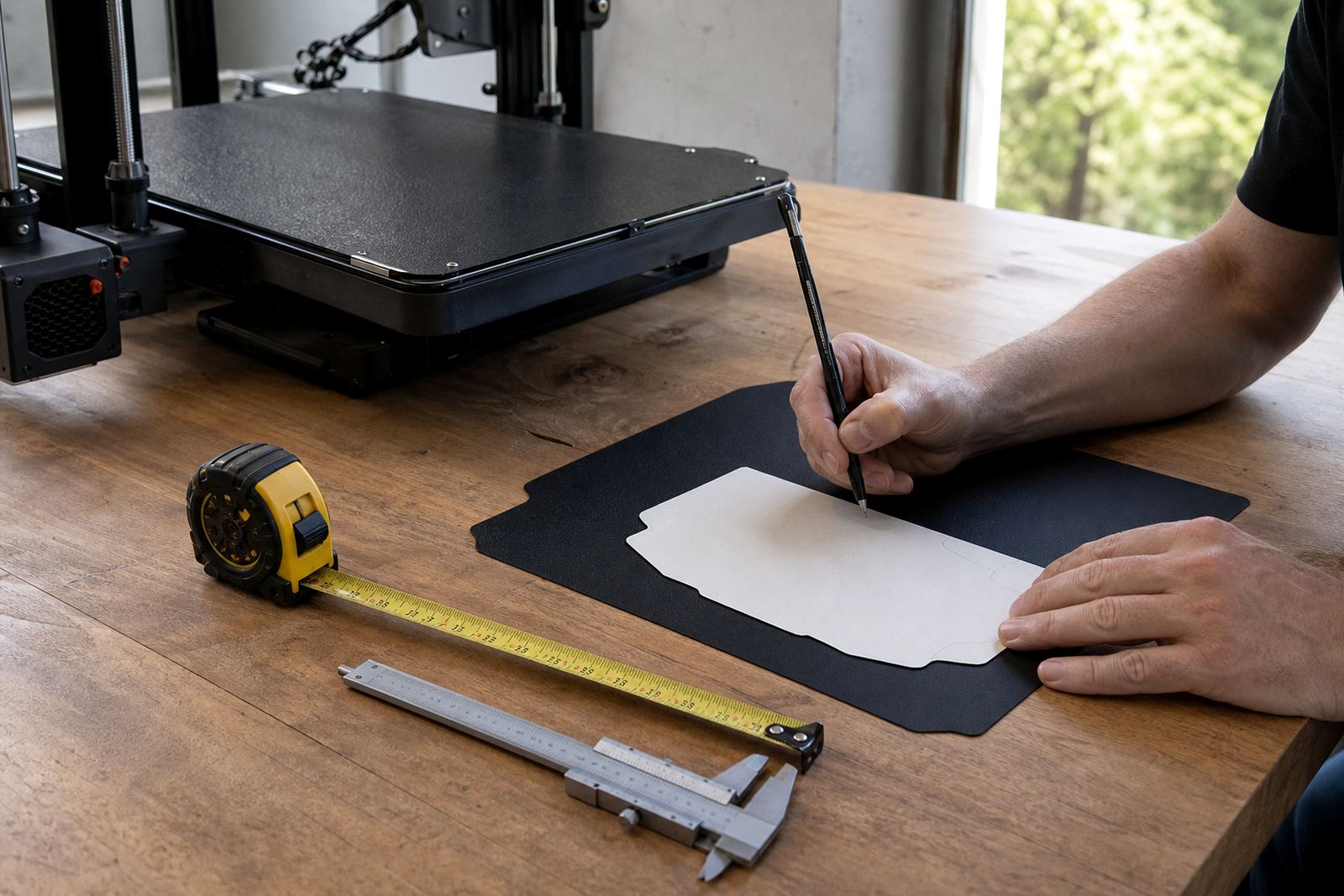
Use a steel ruler or vernier calliper if you have one. Measure left to right and front to back at the widest usable points. If the bed is not perfectly square, give both measurements and mention which side is tighter. If the printer is used in humid coastal conditions, like Durban or Gqeberha, let us know if there is visible warping or corrosion as that can affect fit.
- Measure the usable area in millimetres
- Measure at the widest and narrowest points
- Note any clips, screw heads or magnets that sit proud
- Record whether the bed corners are square or rounded
- Tell us if the bed surface is flat or slightly bowed
Give tolerance values so the plate fits without forcing
Tolerance is the small allowance between the bed and the plate. A plate that is cut exactly to the same size as the bed can be difficult to install, especially if the printer frame has slight variation. In most cases a tiny clearance helps, but the correct amount depends on the machine and the fitting method.
Please include the tolerance you want if you already know it, for example a snug fit, a small clearance fit or a loose fit for easy removal. If you are not sure, say so and we will work from the bed photos and measurements. On multi-machine orders, standardising the same tolerance across the fleet helps with replacement planning and reduces mistakes later. This is one of those small details that saves time, nogal.
- State whether you want a snug, standard or easy-removal fit
- Say if the plate must allow for thermal expansion
- Include any previous fit problems such as jamming or movement
- Tell us if the machine uses clips, magnets or a locating lip
Send clear photos from the right angles
Photos make a big difference when the bed has clips, curved corners or a modified mounting surface. A single straight-on picture from above is helpful, but it is not enough on its own. We need to see the edges, the mounting points and anything that could affect flatness or adhesion.
Take the pictures in good light and place a ruler or tape measure in frame where possible. If the bed has a PEI sheet already fitted, show the whole surface and a close-up of the edges. If there is any old adhesive residue or lifted corners, photograph that too. A clean image helps us avoid guesswork and means the order is more likely to fit first time.
- Top-down photo of the full bed
- Close-up of each corner
- Side photo showing thickness and clips
- Photo of any labels or model markings on the machine
- Photo of the current plate if you are replacing an old one
Tell us how the plate will be used day to day
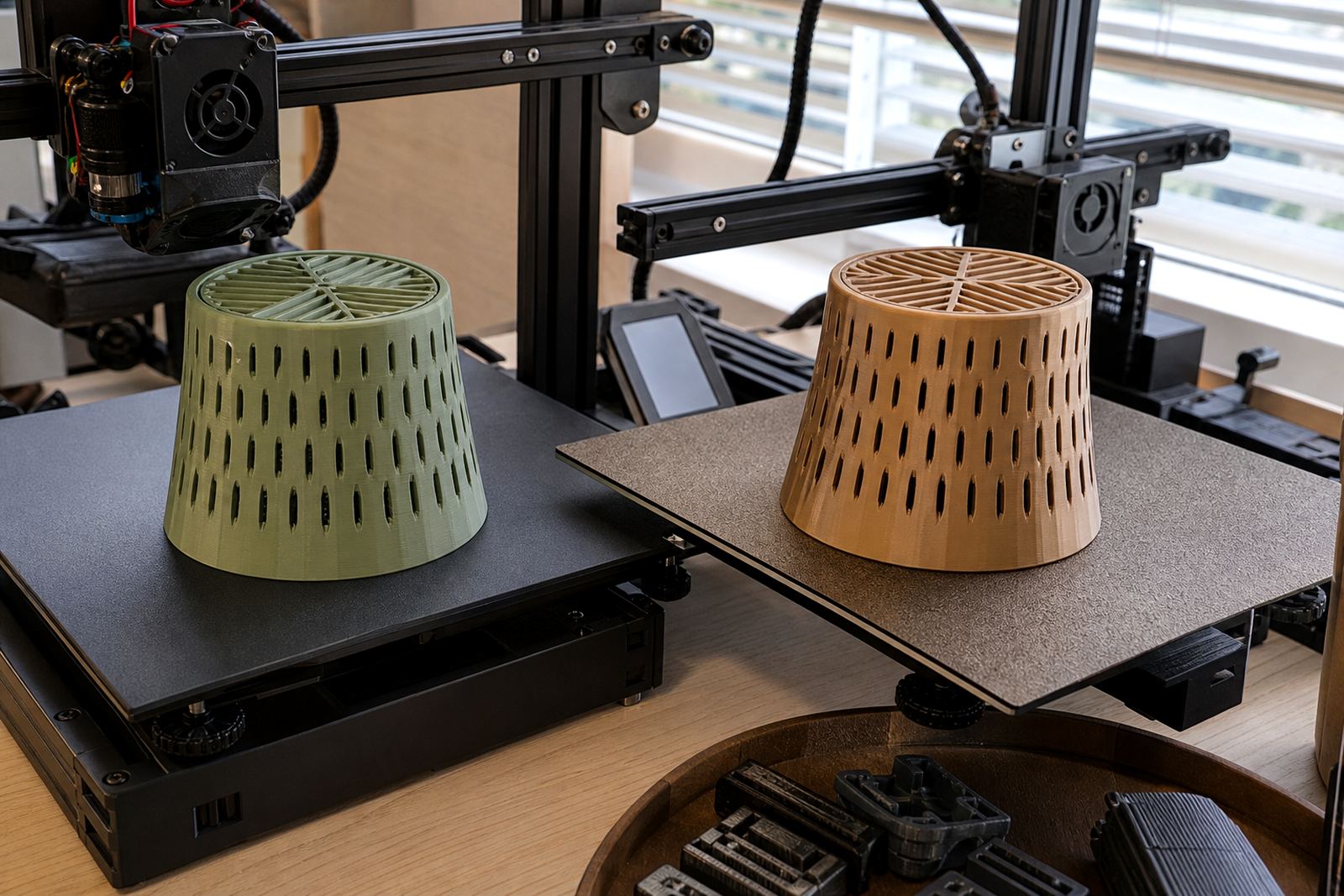
A school lab, a home workshop and a production print farm do not need the same plate specification. If the printer runs long jobs, changes operators often or handles different materials, tell us up front. That helps with advice on surface type, cleaning method and whether a magnetic base or replacement schedule makes sense.
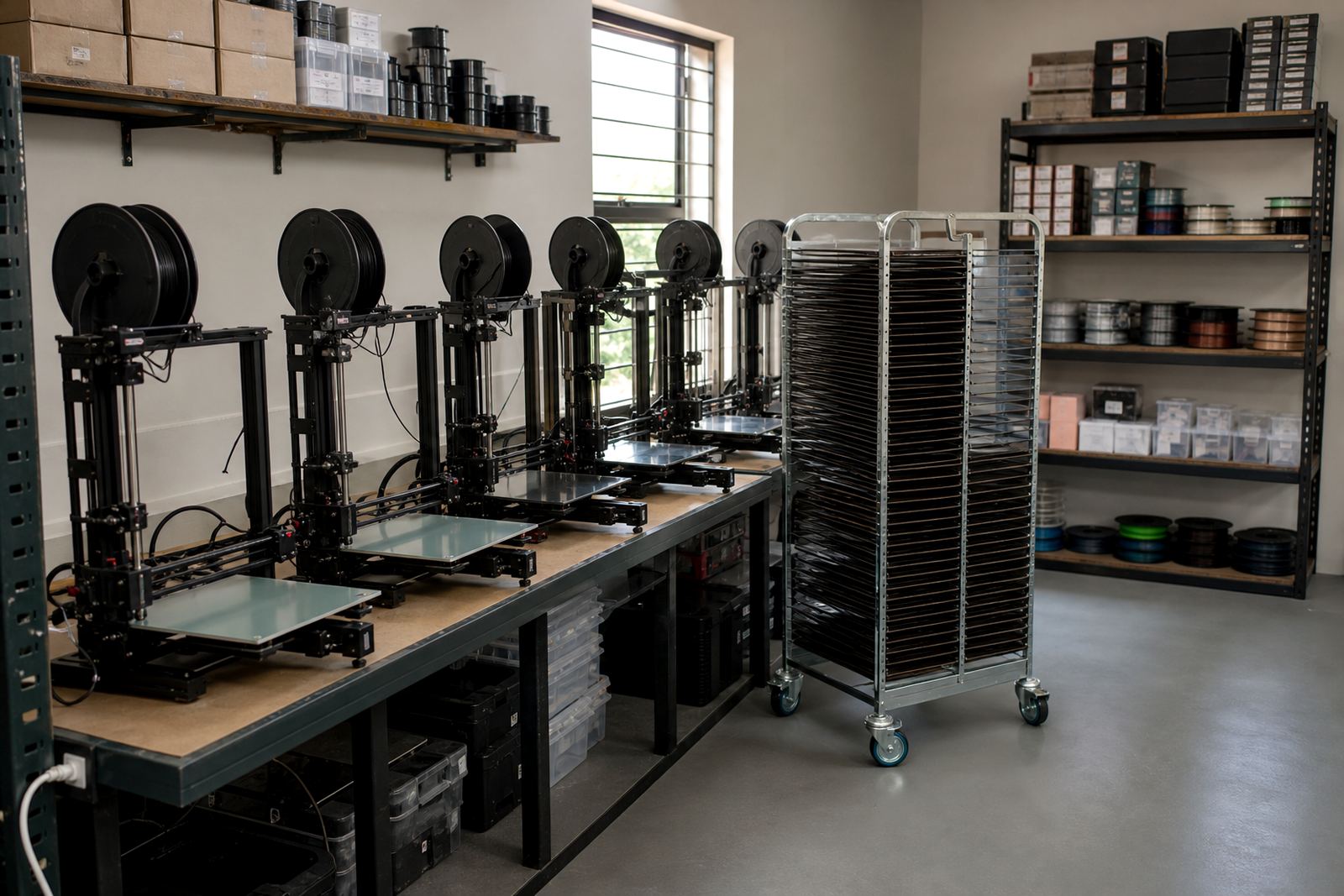
For schools in Gauteng and the wider country, it is useful to mention if learners will remove the plate regularly or if staff will handle all maintenance. For print farms, give us the number of machines and how often plates are swapped. If the site has load-shedding or unstable power, mention whether the bed is sometimes left warm for longer periods, as that can affect wear over time.
Use this checklist before you submit the enquiry form
If you have everything ready before sending the form, the order usually moves faster and with less risk of rework. You do not need technical jargon, just clear information. A short note with accurate measurements is better than a long note with missing numbers.
- Printer model and bed type
- Usable bed measurements in mm
- Tolerance preference or fit note
- Photos from above and the sides
- Any clips, screws, magnets or locating points
- Current surface condition and any damage
- Quantity needed for single units or a full farm
If you are ordering for a school, a business or a small maker group, it also helps to say whether you want one test piece first or a full batch. That makes replacement planning simpler and avoids holding up the rest of the machines while one fit is confirmed.
What happens after we receive the measurements
Once the measurements and photos are in, we check the fit against the intended use and the fitting method. If anything is unclear, we will ask for one more photo or a confirmation on the dimensions before cutting. That extra step is worth it, because a plate that fits properly saves time on levelling, adhesion problems and repeated reprints.
For customers in Centurion, Pretoria East and Midrand, collection or dispatch can be arranged according to the order details. For customers in Cape Town, Durban, Bloemfontein, Johannesburg and Gqeberha, the same process applies, with the right measurements doing most of the heavy lifting. Good information at the start means fewer delays later and a cleaner result on the bed.