
Start with one standard across every machine
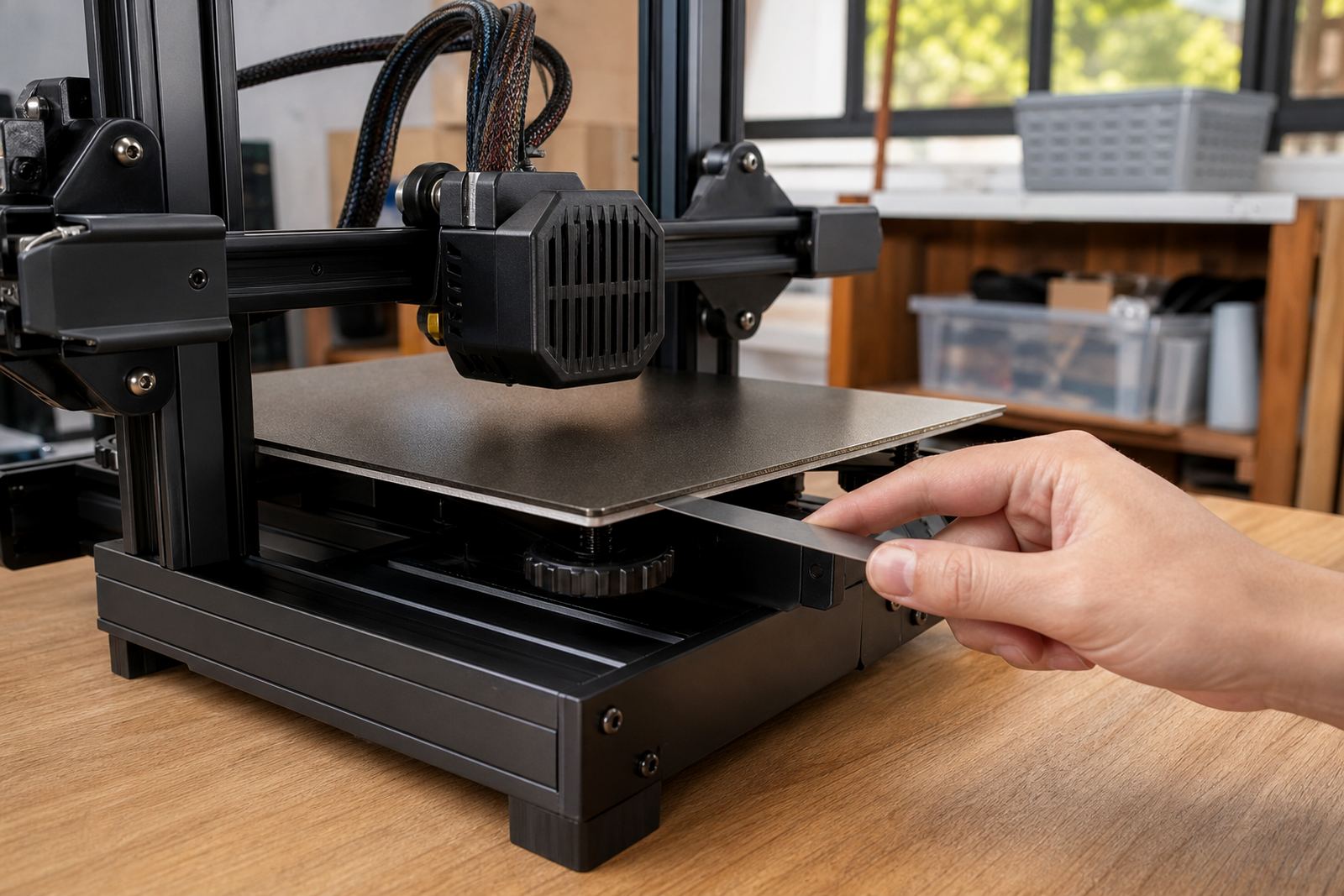
The first step in any print farm is to lock down a standard build surface size, fixing method and finish across your fleet. When one machine uses a smooth sheet, another a textured surface and a third an ageing flexible plate, your first layer settings drift fast and operators end up compensating for each printer by feel. That is where waste starts. Standardising the bed surface makes job setup quicker, cuts training time and helps you keep one set of profiles for similar machines.
For teams in Centurion, Pretoria and Johannesburg, this matters even more when machines are shared between day and night shifts. A clear standard means a new operator can swap a plate, check the first layer and move on without guessing. It also helps when you are comparing output from school labs, makerspaces or a commercial farm where the same part may need to run on several units in the same afternoon.
- Choose one plate size for each printer model and record it on a simple stock sheet.
- Keep the same surface type for all machines in a group where possible.
- Label each plate with the printer it belongs to and the date it was fitted.
- Set one first layer process and train every operator on it.
Plan plates and spares before they become urgent
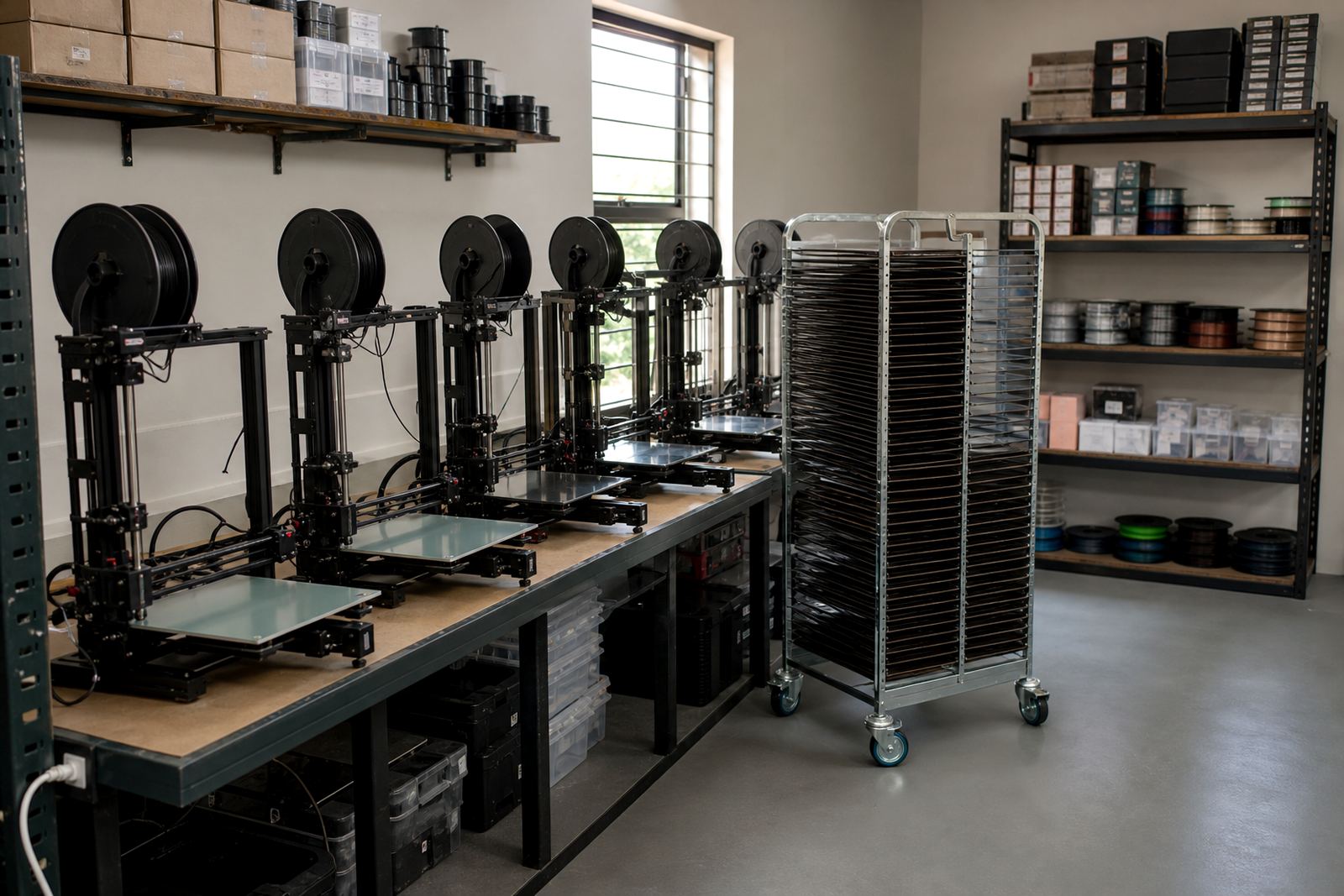
A print farm should never be waiting for one worn plate to fail before ordering its replacement. Keep at least one spare build plate for every three to five active printers, and more where your farm runs long production jobs or supports school demonstrations. If a plate is scratched, warped or losing grip, move it out of production before it starts creating rejects. On a busy site, one poor surface can affect an entire batch.
Spare planning should also cover magnetic bases, clips if used, and any consumables needed for surface refresh. Coastal humidity in Durban and Gqeberha can shorten the useful life of some adhesion products, while dust and temperature swings inland can affect cleaning routines. The best farms keep a small buffer so they are not caught out when a delivery is delayed or a machine is under extra load during exam season, holiday printing or a client deadline.
- Keep a spare plate count against each printer group, not just the whole farm.
- Store replacement sheets flat and clean in labelled sleeves.
- Hold backup adhesion products for at least one month of normal use.
- Review spares after every major print run or machine expansion.
Check flatness, fit and first layer before production runs
Even a well made plate can struggle if the bed underneath is not flat or the fit is inconsistent. Before a print farm starts production for the day, check the bed surface, mounting points and basic levelling on each machine. A quick flatness check can prevent a full tray of parts lifting at the corners. If the bed needs manual correction every morning, the root issue may be the plate, the magnetic base or the printer hardware itself.
It helps to write a simple inspection routine that every shift follows. Look for wear near the centre and edges, test that the plate seats correctly and confirm that the first layer is even across the full area. If you are running mixed models, do not assume the same settings will work on all of them. A small change in nozzle height or bed temperature can make the difference between a clean release and a failed job. A consistent check takes minutes, but it can save a whole day of reprints.
- Inspect the bed surface for scratches, dents and residue.
- Check that the plate sits square and does not rock.
- Confirm first layer adhesion on a small test print before batch production.
- Log any printer that needs repeated adjustment.
Match the surface to the job, not the habit
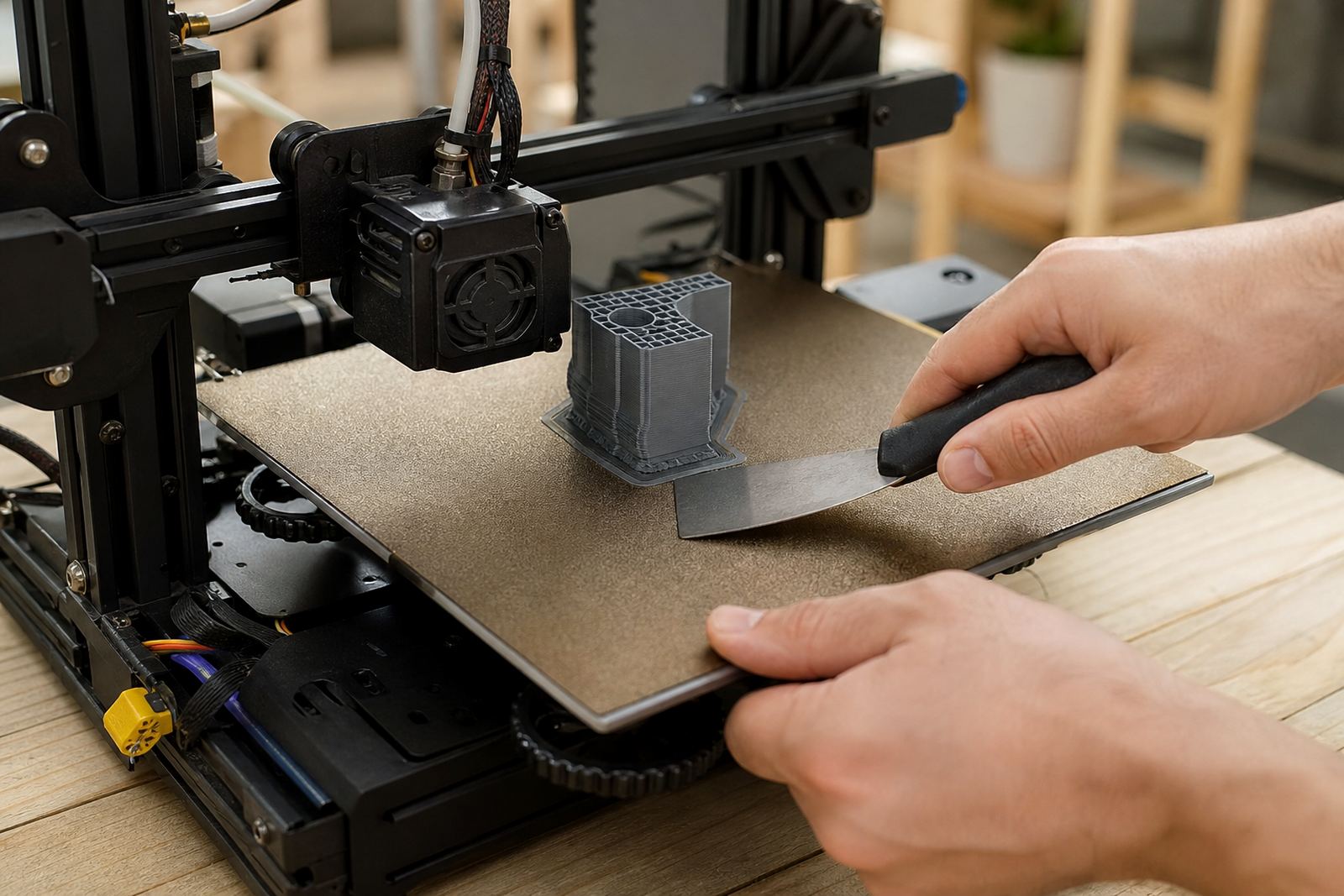
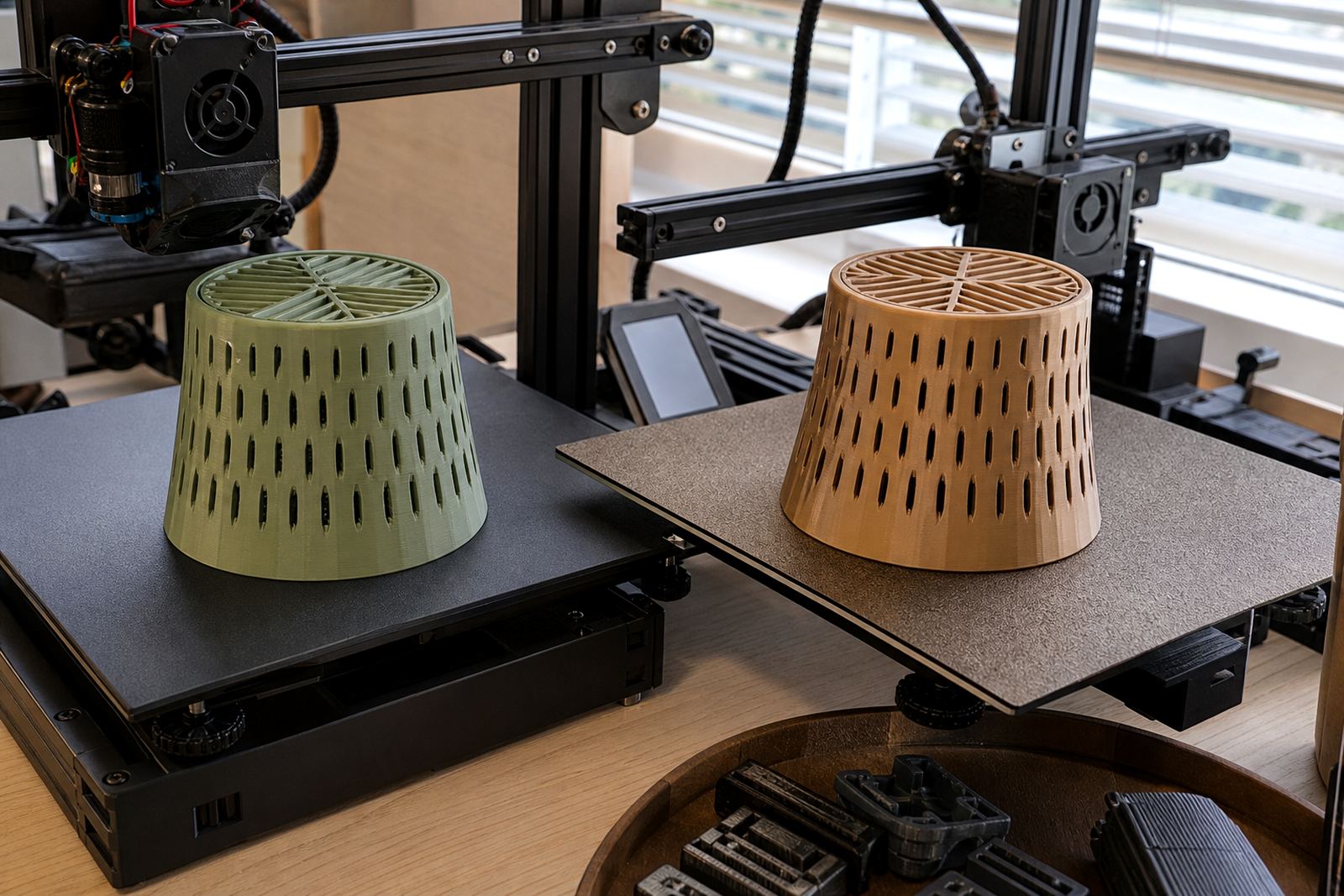
Print farms often fall into routine, using the same surface for every part because it is familiar. That works until a client wants a long, flat component, a detailed school project or a high volume production run with tight turnaround. Different materials and geometries need different adhesion behaviour. Smooth surfaces can suit presentation pieces while textured options may help with stronger grip on larger parts. The point is to choose with purpose, not habit.
For schools and training labs, the goal is often reliability and easy teaching. For commercial farms, the goal may be predictable release and fast turnaround. Bed adhesion products should fit that use case. If you are printing at scale, the wrong finish can cause damage during removal or leave too much residue for the next job. That adds cleanup time and can affect consistency across the whole queue.
- Use the surface finish that suits the material and part shape.
- Keep one test part for every new material or profile change.
- Record release behaviour after each production run.
- Avoid mixing surfaces across printers unless the settings are updated too.
Set a consumables plan that fits South African operating conditions
Consumables planning is often overlooked until a farm runs short of the basics. A proper schedule should cover cleaning, surface refresh, replacement planning and storage. In South Africa, load shedding can interrupt warm-up routines and leave beds cooling between runs, so it is wise to build extra time into your daily schedule. If the machines stop and start often, your team needs a clean, repeatable restart process.
Centurion and Pretoria sites may deal with dust from open workshops, while coastal sites may deal with higher moisture in storage rooms. That means cleaning cloths, surface care products and safe storage matter just as much as the plates themselves. Keep a written routine for cleaning each bed, checking grip and recording when a surface needs to be refreshed. The best farms do not rely on memory, because memory gets stretched when orders spike.
- Set weekly cleaning and monthly inspection cycles for every machine.
- Keep consumables in a dry, labelled cabinet or sealed storage box.
- Plan for delays caused by load shedding and back up your production schedule.
- Track usage so you know when a refresh or replacement is due.
Use a simple training checklist for every operator
A print farm runs better when every operator follows the same steps. Training does not need to be complicated, but it must be consistent. New team members should learn how to fit a plate, check adhesion, spot early failure and report a problem before a job is lost. This is especially important where one team member handles setup and another handles removal, because small mistakes can carry through the full shift. Clear training also helps schools and maker groups where the printer may be shared by learners with different levels of experience.
Once the basics are in place, revisit the checklist every few months. Machines wear, staff change and print volumes move up and down. If your team is growing, standardising the process now will make future scaling easier. A farm that can repeat the same result from Pretoria East to Midrand, and from Johannesburg to Cape Town, is a farm that spends less time correcting errors and more time producing parts that meet the brief.
- Show how to install the plate and confirm alignment.
- Teach the signs of poor adhesion and first layer failure.
- Explain when to refresh a surface versus when to replace it.
- Keep one written procedure at each printer bank.