
What a Bed Clip Set Does on a Printer Bed
A bed clip set is used to hold a removable build surface down on the printer frame so the plate stays flat and does not lift at the corners. On glass beds and smooth sheet systems, that matters more than people think, because even a small movement can change first-layer height and cause poor adhesion, dragging or uneven extrusion.
These clips are made to sit low against the bed edge, so they do not steal valuable nozzle clearance. That helps on machines with tight Z travel or when you are printing large parts close to the full bed area. For schools, hobby users and print farms in Gauteng, KwaZulu-Natal and the Western Cape, a neat clip set is often the difference between a bed that just sits there and a bed that stays put through long prints.
LayerPad supplies clip sets for makers who want a practical hold-down method without bulky hardware getting in the way. The design is especially useful where the bed must be removed often for cleaning or where the surface is swapped between glass, PEI and other sheet materials.
Sizes, Fitment Styles and Where Each One Works Best
Different printer beds need different clip counts and clip shapes. A smaller machine may only need four clips, while a wider bed on a farm printer may need six or more for even pressure. The main thing is to secure the plate without bending it, because over-clamping can create a dip in the middle or a raised edge that spoils the first layer.
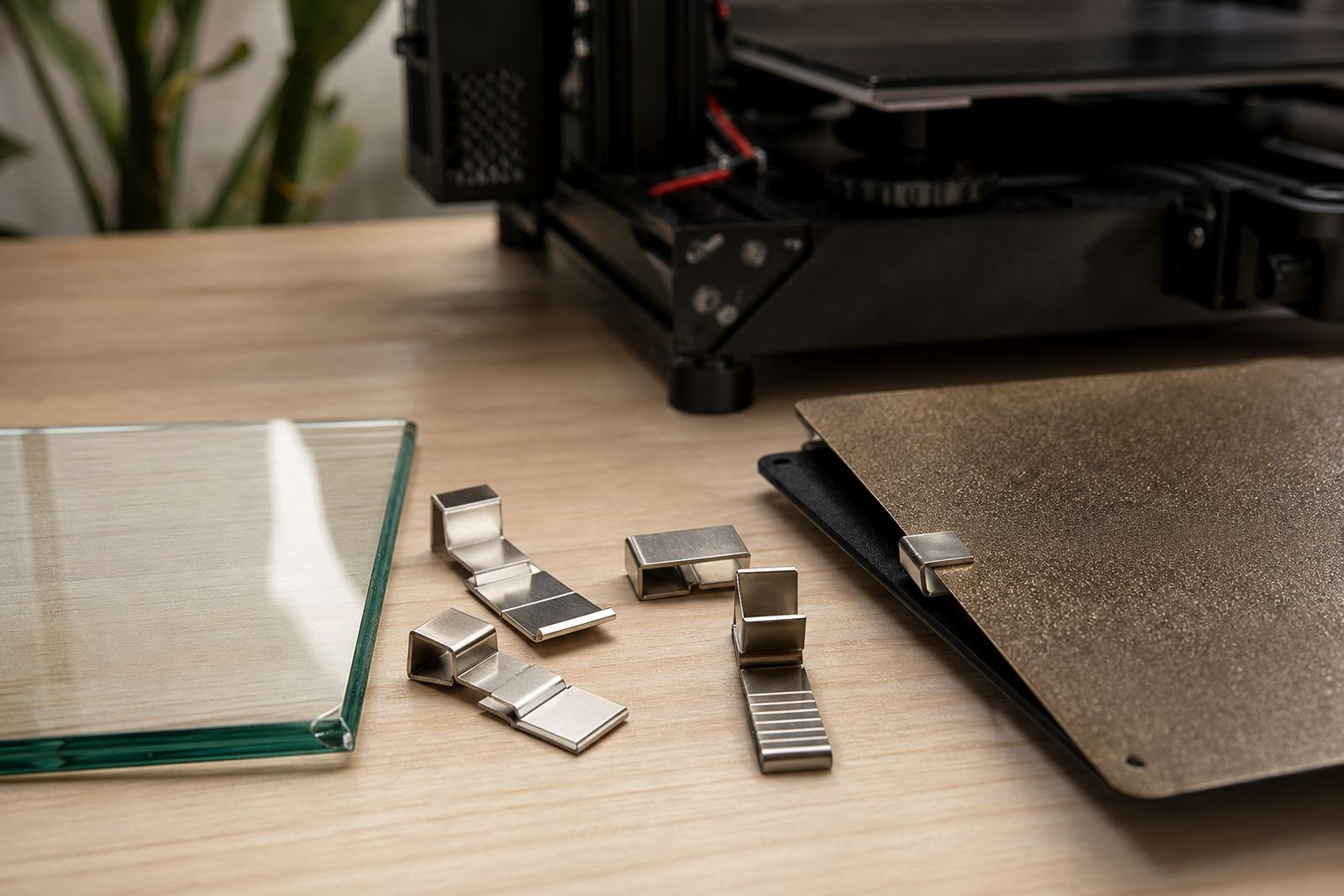
Common fitment choices include low-profile spring clips and compact metal hold-down clips suited to 3D printer glass beds, aluminium carriers and sheet-on-bed setups. Some users prefer a light grip for quick removal. Others want a firmer hold for heavier glass or for print environments where beds get knocked during cleaning and maintenance.
- Small-format beds: suitable for compact hobby printers and starter classroom machines
- Mid-size beds: useful for general workshop printers and engineering labs
- Large beds: better for wider machines, batch jobs and print farm bays
- Glass plates: ideal when a clean, removable surface is needed
- Sheet surfaces: useful where a low clip profile is needed near the edge
If you are not sure what size suits your frame, measure the bed edge thickness and check the available lip or frame clearance. A clip that is too tall can interfere with the nozzle path or the gantry, while one that is too small may not hold the surface securely. It is worth checking this carefully before ordering, especially on imported printers where frame tolerances can vary a bit.
Best Use Cases in Workshops, Schools and Print Farms
Bed clip sets suit most printers that use a removable flat surface and need reliable hold-down at a sensible cost. They work well in school labs where learners handle the machine, in print farms where beds are removed for cleaning, and in home workshops where users run long parts over weekends or during load-shedding schedules.
They are especially helpful in places with changing room temperatures, coastal humidity, or dusty workshop conditions. In those settings a bed surface can shift slightly if it is not clipped down properly, and that movement shows up very quickly in the first layer. A secure clip set gives a more predictable result from job to job.
- School labs that need quick bed removal between lessons
- Print farms that clean and rotate surfaces daily
- Maker spaces with mixed printer models
- Engineering workshops printing jigs, brackets and test parts
- Users working with glass plates on machines that do not have magnetic bases
For beds that need frequent surface swaps, clips are a low-cost way to keep the system practical. They also suit users who want to test different build surfaces without changing the printer frame or adding powered accessories.
Installation, Clearance and Power Requirements
Most bed clip sets are fitted by hand and do not need any power, wiring or gas supply. There is no electrical connection, no heated fitting tool and no special utility requirement. That makes them a simple workshop item that can be fitted in minutes with basic care.
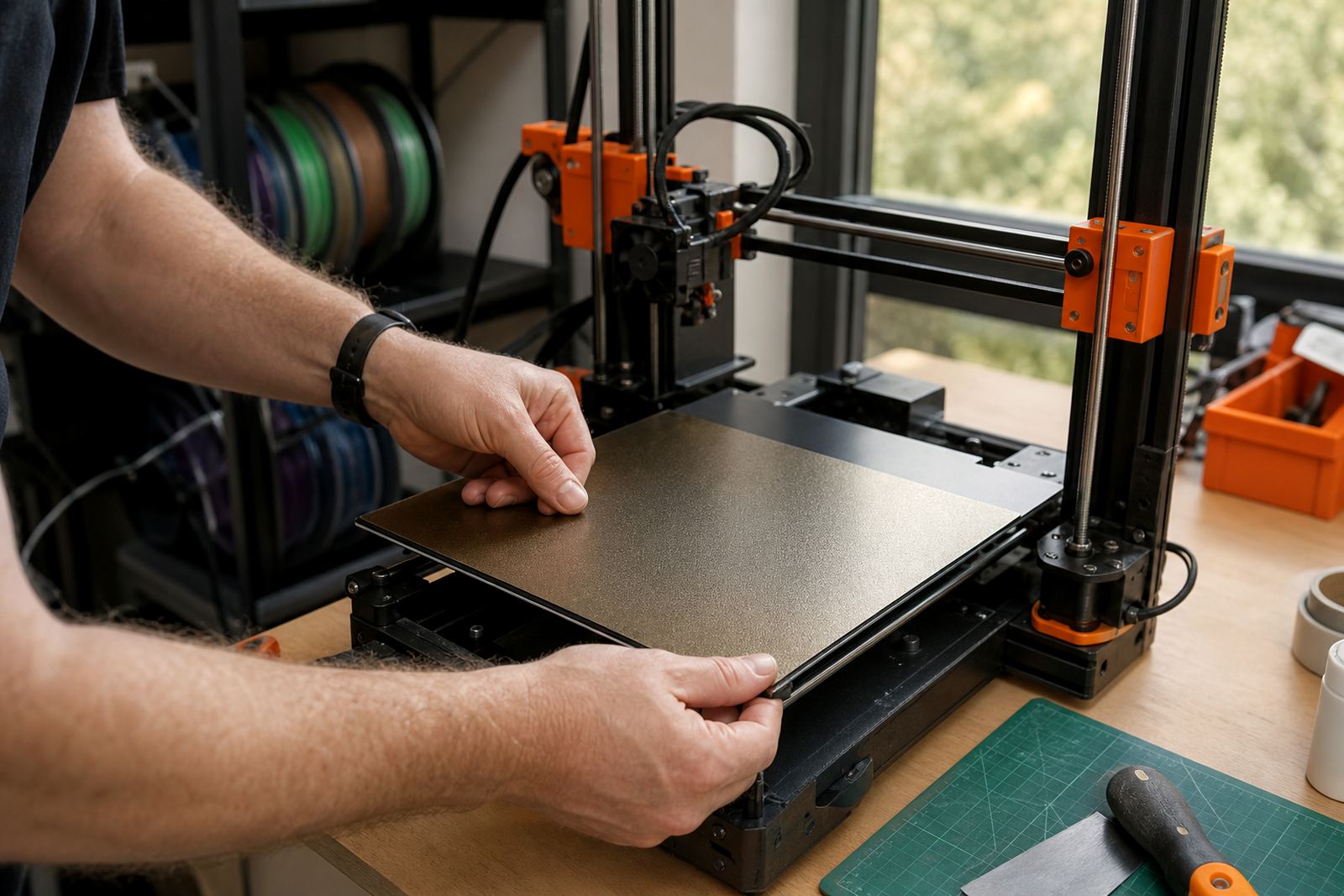
Installation starts with a clean bed edge. Make sure the frame is free of dust, filament scraps and any old adhesive. Position the clips evenly around the plate, then check that the nozzle and the moving gantry clear the highest point of each clip across the full travel area. On printers with a close Z gap, this step matters more than the clip itself.
If you are fitting clips to a hot bed, leave enough room for thermal expansion. A bed can move slightly as it warms up, so do not pinch the plate so tightly that it cannot expand normally. That is one of the most common fitment mistakes and it can make the surface bow or chatter during a print.
For users in Centurion, Pretoria East or Midrand, we often see printers that are mechanically sound but have inconsistent first layers because the bed surface is not being held evenly. A correct clip arrangement gives better repeatability without adding complicated parts.
Care, Servicing and Replacement Planning
Bed clips do not need much maintenance, but they should be checked as part of regular printer care. Look for loss of spring tension, rust, bends from removal and any marks left on the build plate edge. If a clip has lost its grip it should be replaced before it starts allowing the surface to move during a print.
Clean the clips when you clean the bed. A quick wipe is usually enough, although heavier workshop dust may need a little more attention. If your printer works in a humid or coastal area, inspect the clips more often because moisture can shorten the life of thin metal parts. It is a small item, but it affects the whole first-layer process.
- Check clip tension during weekly machine checks
- Replace clips that have bent or opened out
- Keep spare clips with other consumables
- Inspect the plate edge for chips or cracks
- Confirm clearance after any nozzle or carriage change
For schools and print farms, it helps to keep one standard clip type across all similar machines. That makes replacement planning easier and avoids mix-ups when a machine is serviced in a rush.
What to Confirm Before You Order a Clip Set
Before placing an order, check the bed thickness, frame lip size and how much free space there is around the edge of the plate. You should also confirm whether the clips will sit beside a glass bed, a smooth spring steel sheet or another flat surface. The wrong clip profile can foul the nozzle or lift the plate on one side.
It also helps to note the printer model, bed size and whether the machine uses a heated bed, a removable plate or a fixed carrier. If you run several identical printers, check whether you want the same set across all machines or a mix for different jobs. In farm settings, standardising the clip type makes training and stock control easier.
When ordering from LayerPad, use the enquiry form on the contact page and include the bed dimensions, surface type and how many machines you need to cover. That gives enough detail to match the right hold-down approach to the printer setup, with less back and forth and fewer fitting issues later.
Key facts
| Product type | Low-profile bed clip set for 3D printer build surfaces |
|---|---|
| Typical use | Securing glass plates, removable sheets and flat build surfaces |
| Clearance profile | Low height to reduce nozzle and gantry interference |
| Installation | Manual fitment, no power or gas required |
| Maintenance | Periodic inspection, cleaning and replacement when tension drops |
| Sizing | Available for small, medium and larger bed formats depending on printer setup |