
Why school labs lose hours on the print bed
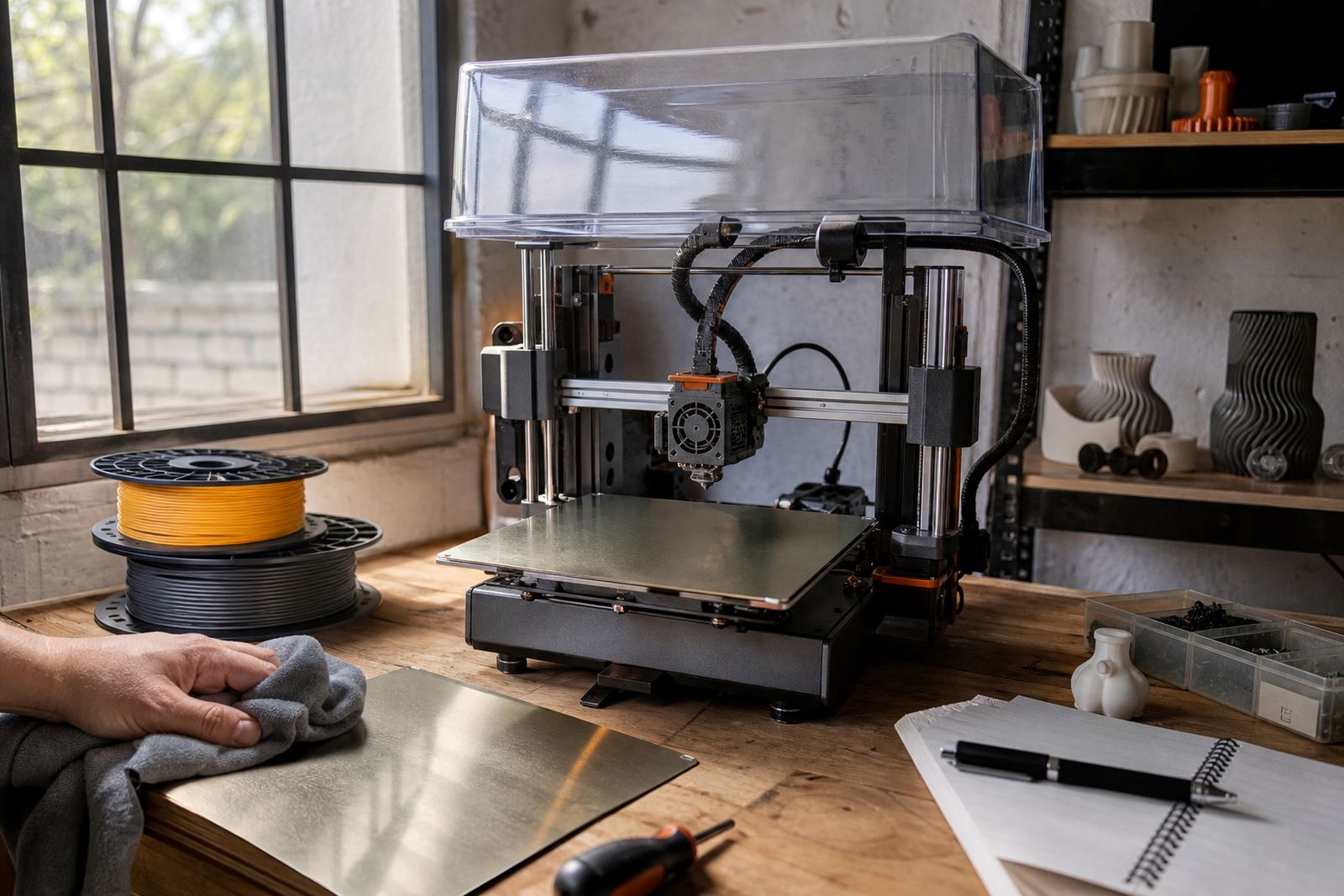
In a busy school lab, the printer itself is often not the real problem. Most delays start at the bed. A warped plate, a worn surface, or a messy first layer can turn a 40 minute print into a full morning of rework. In classes with 20 or 30 learners, that kind of delay knocks the whole lesson off track.
Schools in Gauteng, the Western Cape and KZN see the same pattern. One class has a clean build surface and gets consistent results. The next class uses a dirty plate, touches it with oily fingers, and suddenly corners lift or models slide. If the bed system needs constant tweaking, the teacher spends time fixing printers instead of teaching design and problem solving.
Load-shedding makes this worse because printers are stopped and started more often. If the bed surface is temperamental, every restart becomes another round of levelling and test prints.
Keep the bed system simple enough for learners to use
The best classroom setup is not the fanciest one. It is the one that can be repeated by different learners without a technician standing over every print. For many school labs, that means moving toward a consistent plate and a clear routine for fitting, cleaning and storage.
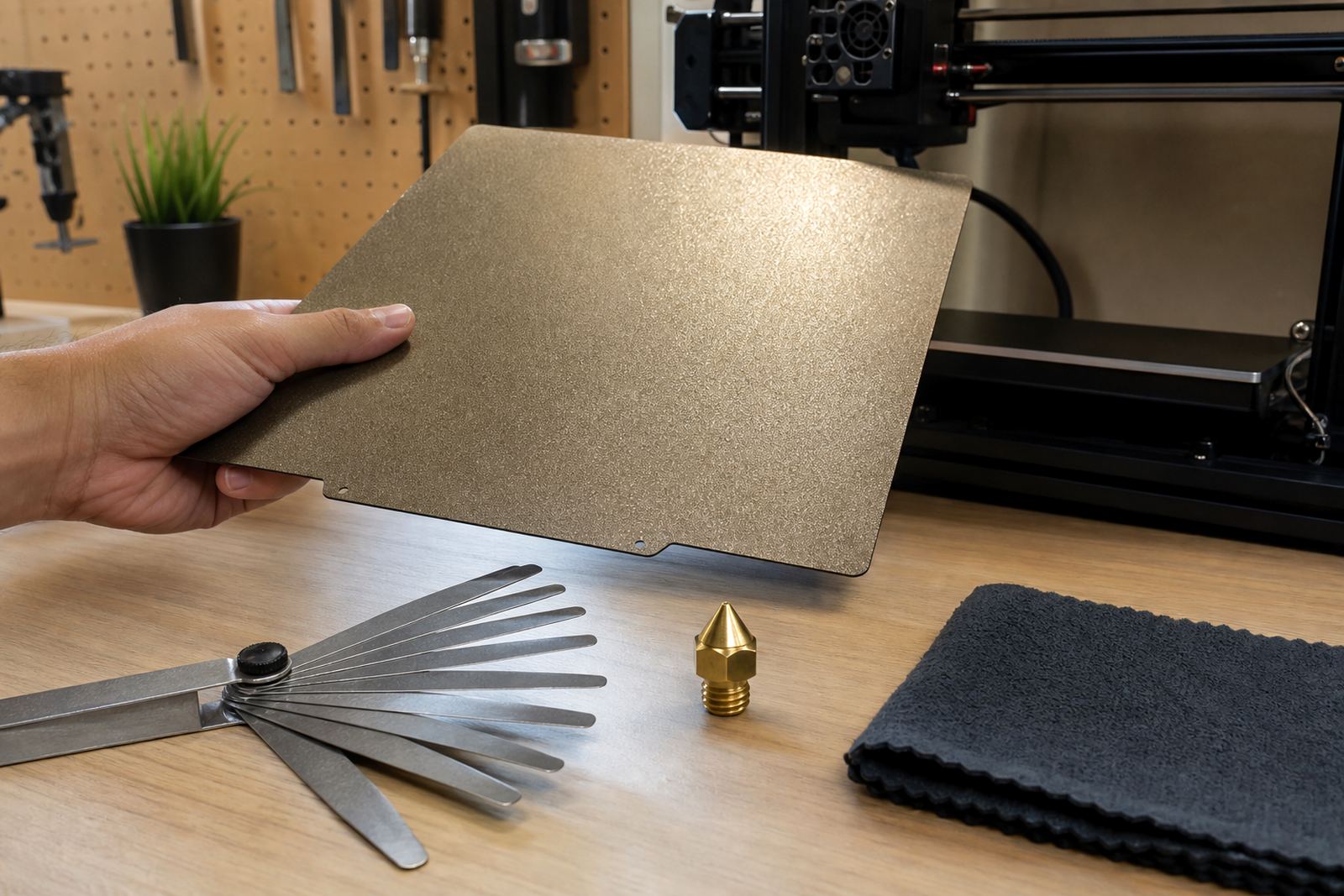
When the same build plate type is used across several printers, learners do not have to relearn a different process on each machine. That saves time and reduces mistakes. A magnetic base can also help when plates need to be swapped for cleaning or replacement, provided it is fitted properly and the bed is checked for flatness first.
- Choose one standard plate size for the lab where possible.
- Label each printer with the correct plate type and cleaning method.
- Keep spare surfaces ready so a damaged plate does not stop the class.
- Train one or two learners per group to handle setup, not everyone at once.
Cleaning rules that stop repeat failures
Adhesion problems in schools are often caused by handling, not hardware. Learners place prints on dusty tables, touch the build surface, then wonder why the next print lifts. In coastal towns like Gqeberha or Durban, humidity and salt in the air can add to the problem, especially if plates are left exposed overnight.
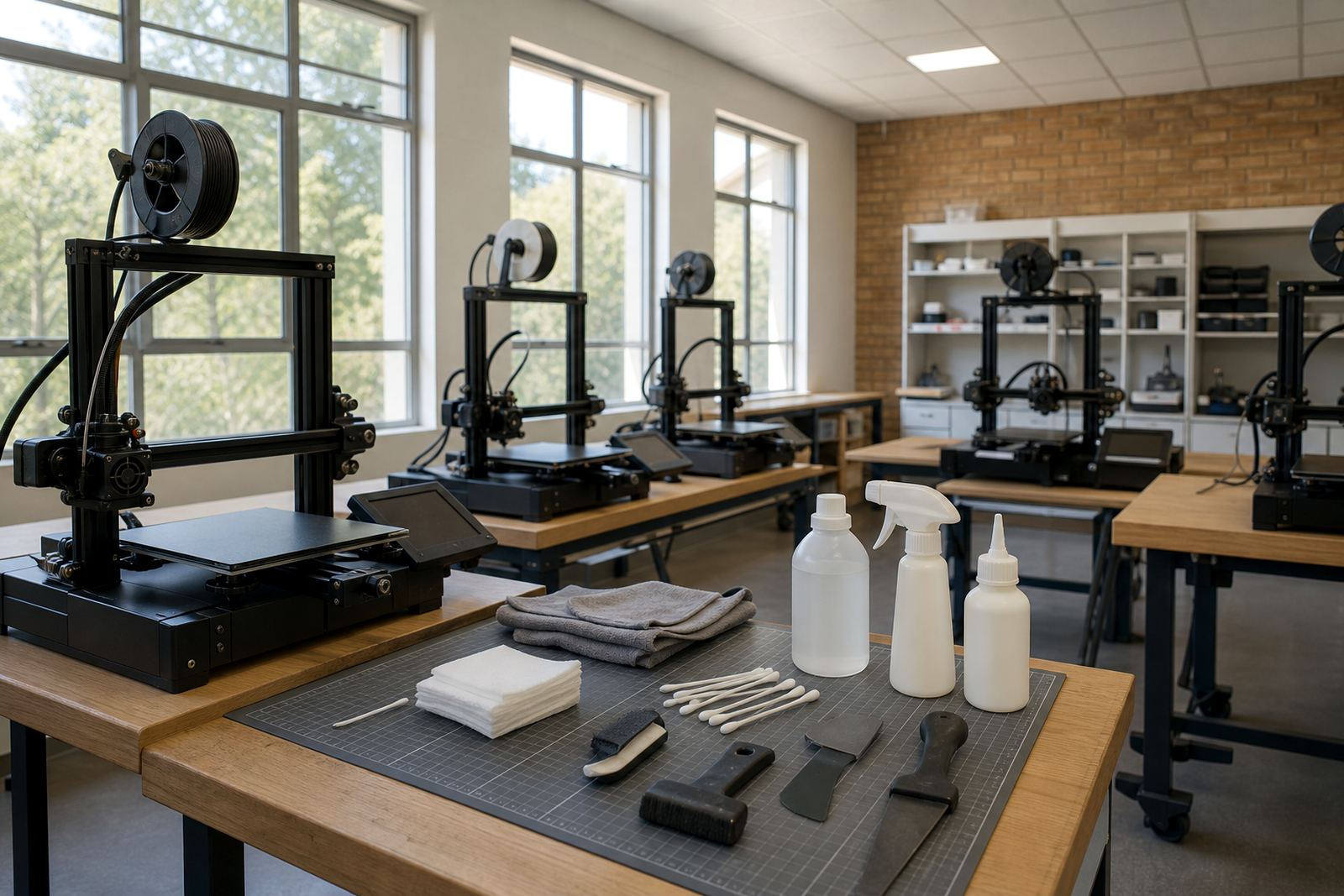
A simple cleaning routine before each session makes a big difference. Use a method that is easy to repeat and easy to supervise. If the lab uses the same rule every time, the teacher does not have to guess whether the bed is ready.
- Wipe the surface before each print block, not only when problems appear.
- Store plates flat and covered when not in use.
- Keep glue, sprays or other adhesion aids controlled and limited to approved use.
- Do not let learners scrape the surface with sharp tools.
One Pretoria East school told us their biggest improvement came after they assigned one learner to inspect the bed before each job. The printer stopped wasting time on failed first layers and the class began finishing projects within the lesson slot.
Teach first-layer habits, not just printer buttons
Most classroom failures show up in the first layer. If that layer is too high, too low, or uneven, the rest of the print will usually fail later. That makes first-layer teaching one of the best ways to reduce downtime. Learners should know what a good first layer looks like and how to spot warning signs early.
It also helps to teach the difference between a printer problem and a surface problem. A school might spend half an hour adjusting temperatures or belts when the real issue is a worn PEI sheet or a bed that is not flat enough for the print area. If the lab has a checklist, the teacher can rule out the obvious causes quickly.
- Check the bed flatness before blaming the slicer settings.
- Watch the first two layers, not the full print only.
- Replace worn surfaces before they become a class disruption.
- Keep a log of failed prints so patterns can be spotted early.
Standardise for class sets and print farms
Schools running several printers need the same discipline as a small print farm. When each machine has different settings, different plates and different cleaning habits, downtime rises fast. Standardising the bed setup across the lab is one of the most practical ways to cut losses.
This does not mean every printer must be identical. It means the school should decide on one way of handling surfaces, replacement planning and maintenance checks. If a plate wears out, the swap should be simple. If a learner moves from one machine to another, the process should feel familiar.
Centurion and Midrand schools with shared computer and maker spaces often face this exact issue. Once the lab standardised its plates and moved to a clear cleaning schedule, the staff spent less time on troubleshooting and more time on design tasks, tests and learner assessment.
A practical maintenance rhythm for the school term
The easiest way to protect class time is to plan bed care as part of the term, not as a crisis response. A short weekly check is usually enough to spot wear before it causes a lesson to fail. It also helps schools budget properly, since consumables and replacement surfaces can be ordered before they become urgent.
A useful rhythm is simple: inspect, clean, test, record. The technician or responsible teacher checks the plate condition, confirms the bed is level, runs a small test print and notes anything that needs attention. If a surface is reaching the end of its usable life, replace it before it starts wasting whole periods.
This approach is especially helpful in schools with limited relief teaching time. When the printer is predictable, learners stay engaged and staff are not pulled away from other duties.
Local support that fits South African school timetables
South African schools do not need complicated systems to get better results from 3D printers. They need parts that fit properly, clear instructions and a setup that works in real conditions. That includes power interruptions, mixed skill levels and busy rooms where equipment must be ready to use again the next day.
For schools in Pretoria, Johannesburg, Cape Town, Durban and Bloemfontein, the practical answer is usually the same: use simpler bed systems, keep the cleaning rules strict and replace worn surfaces before they slow the class down. When the first layer behaves, the rest of the lesson can move forward without interruption.
With the right plate, the right routine and a bit of discipline, classroom downtime drops and learners spend more time making things instead of waiting on the machine.