
Why PEI needs a different cleaning routine
PEI is popular because it grips well when it is clean and releases parts when the plate cools. That balance depends on the top surface staying free of skin oils, dust, filament residue and any old glue or spray that has built up over time. If you clean it the wrong way, the plate may look fine but start losing grip or showing shiny patches where the texture has been worn down.
In Centurion, where many printers run through winter mornings and warm afternoons on the same machine, we often see adhesion problems that are not really mechanical. The plate has simply picked up grease from hands, a fingerprint near the centre, or a bit of support material left behind after a long job. A careful clean usually fixes it. The key is to treat PEI like a working surface, not a scrubbing board.
For most users, the best routine is regular and light. You do not need harsh chemicals, and you do not need to sand the surface every time prints start lifting. Use the right method, and the plate can give you many months of reliable service.
What to use for everyday cleaning
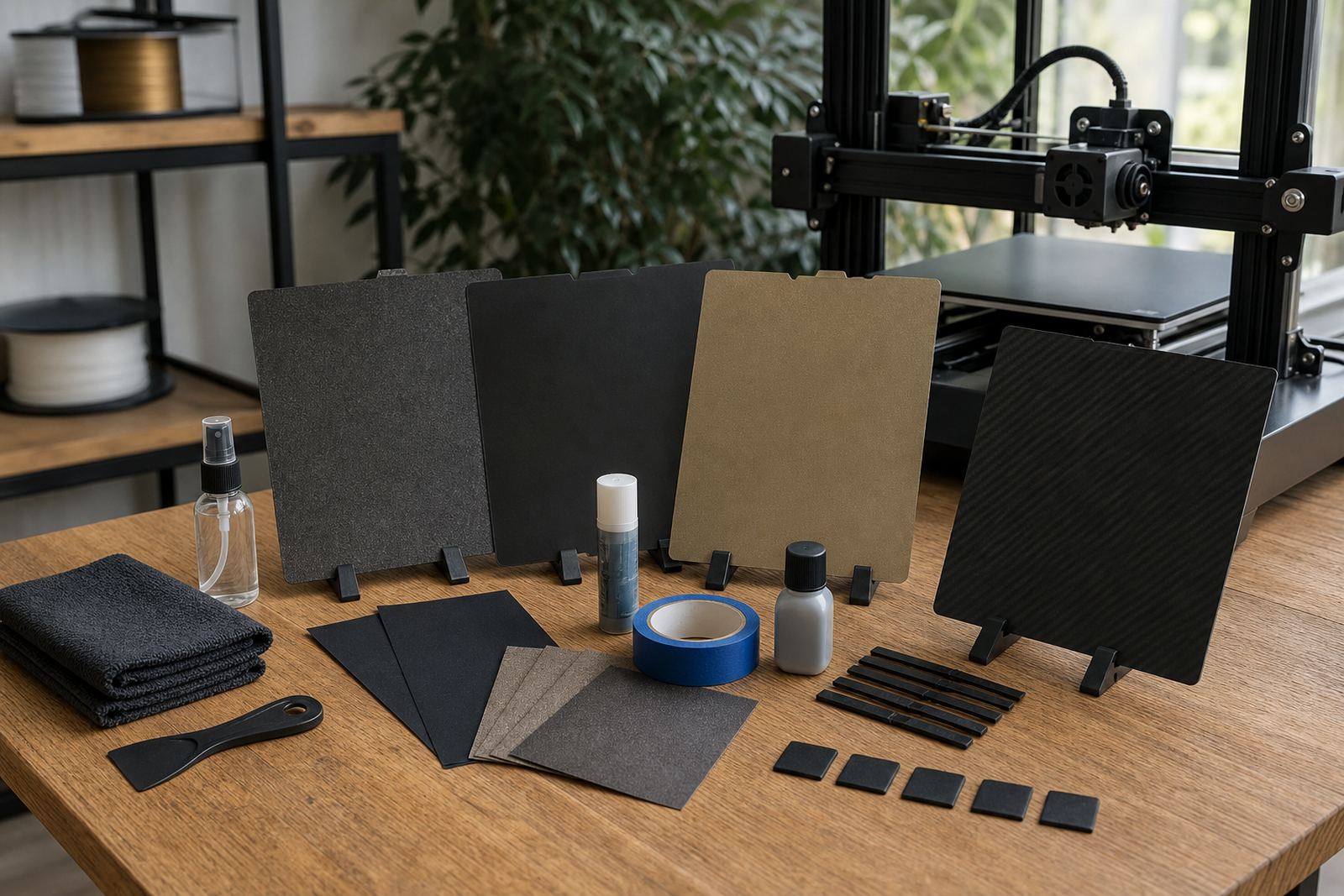
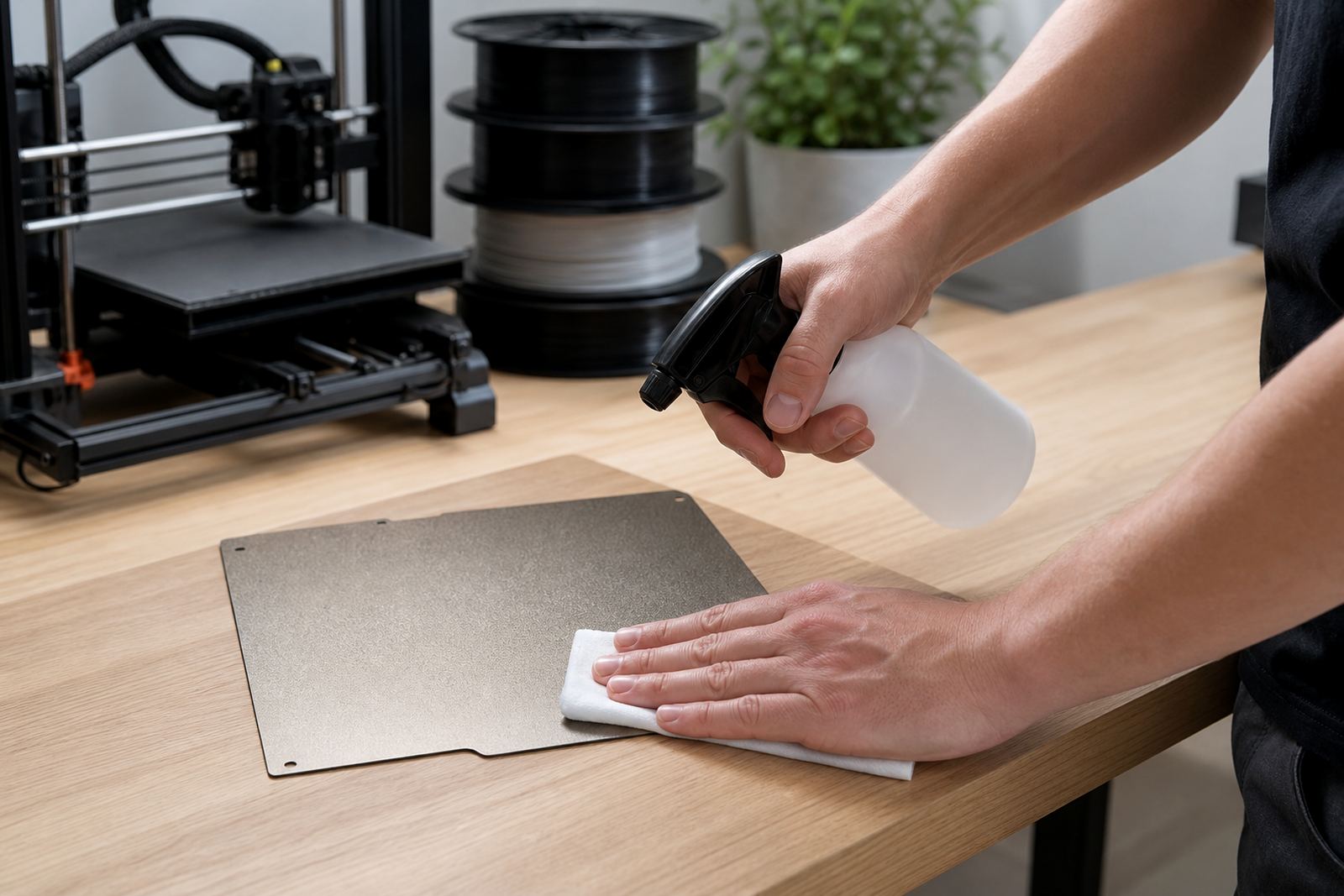
The safest everyday cleaner is plain isopropyl alcohol on a clean, lint-free cloth. Wipe the surface gently while the plate is cool, then let it dry fully before the next print. If the plate is removable, take it off the machine so you can clean the edges and corners properly. This also helps if your printer sits near a window, a workshop door or an open area where dust settles quickly.
For heavier residue, a wash with warm water and a small amount of mild dish soap works well. Rinse thoroughly and dry with a clean cloth. Do not leave soap film behind, because that can be just as bad as oil. A plate that feels slightly slippery after washing usually still has residue on it.
- Microfibre cloth for light wiping
- Warm water with mild dish soap for deeper cleaning
- Isopropyl alcohol for routine degreasing
- Soft sponge or your fingertips, not scouring pads
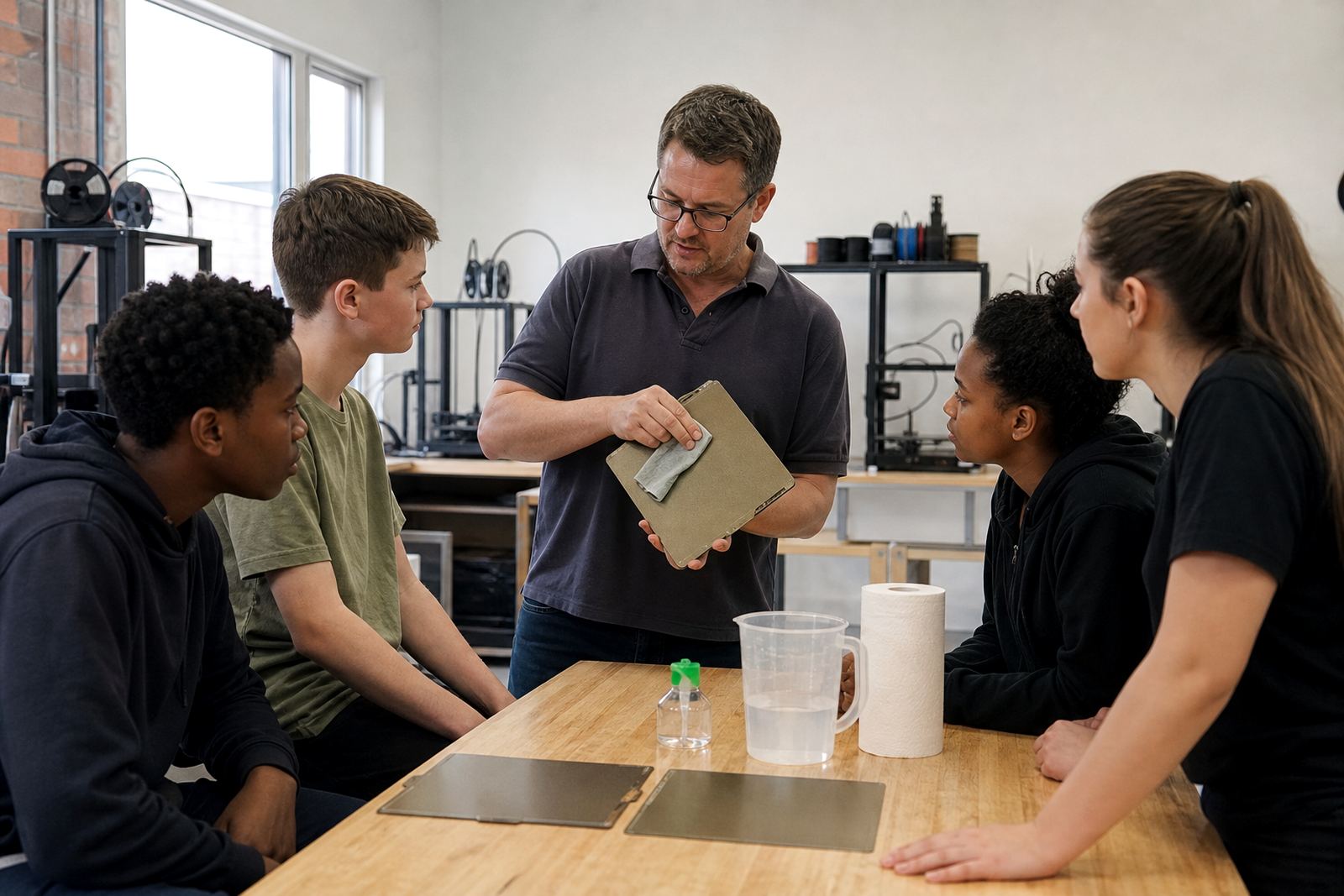
If you run a school lab or a small print farm, it helps to keep one cleaning kit beside the printer rather than shared across the room. That makes it easier for learners or operators to follow the same routine every time.
What to avoid if you want the surface to last
PEI can be damaged by aggressive cleaning habits. The surface may seem tough, but repeated abrasion changes how it grips filament. Once that texture is gone, the plate can become patchy and harder to recover. Many people think they need to restore adhesion with force, when really they have worn the surface unevenly.
Avoid these common mistakes:
- Steel wool, scouring powder or abrasive pads
- Acetone on a routine basis unless the plate maker specifically allows it
- Scraping with metal tools
- Touching the print area with bare hands after cleaning
- Leaving glue, tape residue or oily release agents on the plate
On some machines, users add extra adhesives to solve a separate bed levelling issue. That can make the surface harder to clean later and the problem comes back anyway. If adhesion is inconsistent, check flatness, first-layer height and temperature settings before reaching for stronger cleaners. A clean plate wont fix a bad first layer on its own.
A simple routine for busy printers and schools
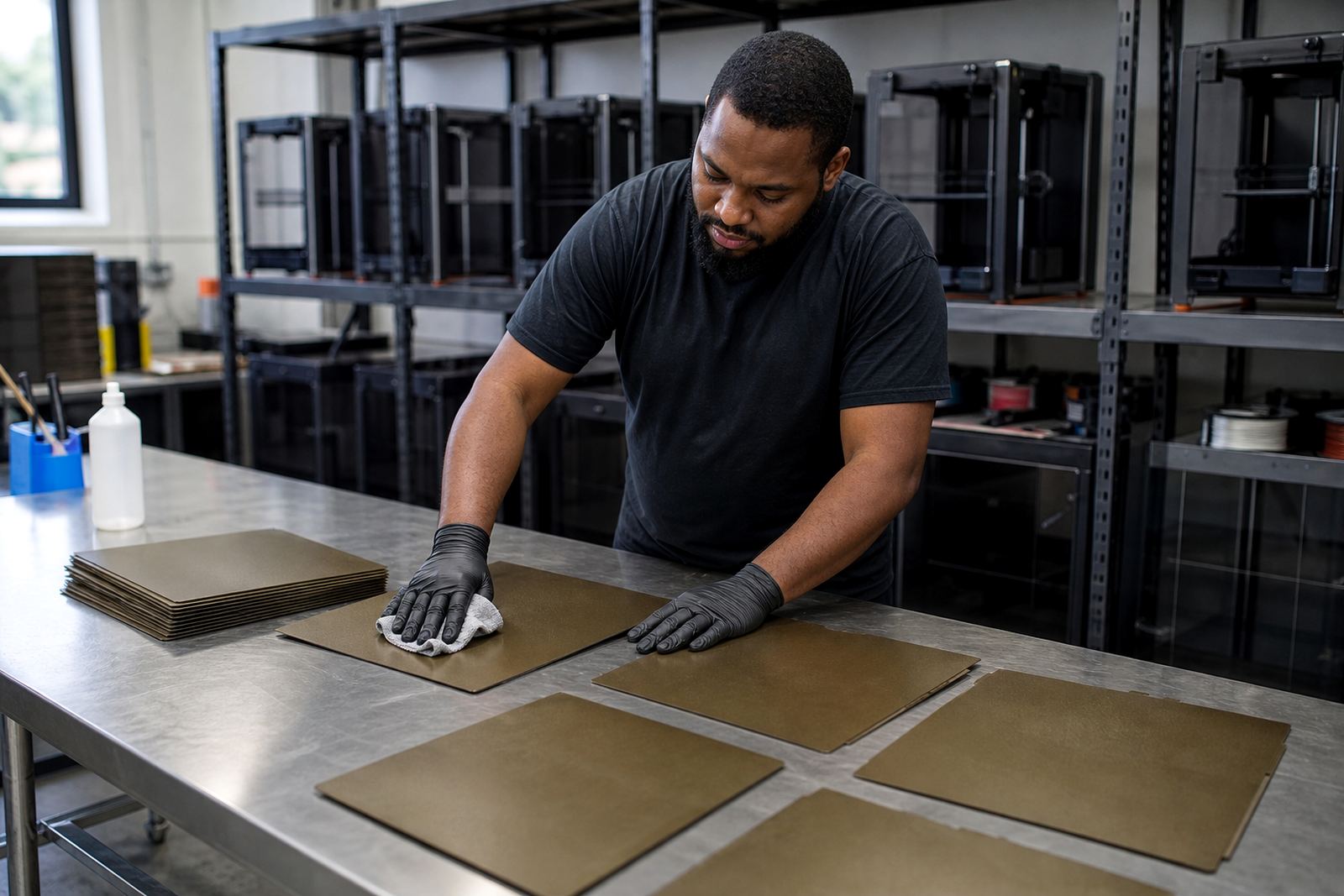
For a home printer, a quick wipe before each long job and a proper wash every few weeks is usually enough. For print farms, classroom setups or shared machines, build a routine into the changeover process. The goal is consistency, not perfection.
A practical schedule looks like this:
- Before each print: check for fingerprints, dust and stuck bits
- After a failed print: remove residue and inspect the surface under light
- Weekly: clean with warm water and mild soap if the printer runs often
- Monthly: review whether the plate still grips evenly from edge to edge
If you are running a lab in Pretoria or a farm in Johannesburg, assign one person to sign off the cleaning step. It takes only a minute, but it prevents the common pattern where each operator assumes the last person already cleaned the plate. That small gap can waste time and filament fast.
Also remember that dust builds up more quickly in dry winter months and in rooms with open windows. In coastal areas such as Cape Town or Durban, humidity can attract more fine residue to the surface, so a regular wipe becomes even more important.
When cleaning is not enough
If your prints still lift after a proper clean, the problem may be deeper than surface contamination. A plate can be clean and still underperform if it is warped, the magnetic base is uneven, or the first layer is too high. The same applies if the surface has worn smooth in the middle from repeated use.
Look for these warning signs:
- Good grip at the edges but poor grip in the centre
- Visible shiny spots where the texture has worn down
- Parts release too early even when the bed is hot
- One corner always fails, no matter how clean the plate is
In that case, a bed flatness check or replacement planning is more useful than another round of scrubbing. Schools and print farms in South Africa often save time by keeping one spare plate ready, especially when jobs are time-sensitive. That is good practice when you have exams, customer orders or production deadlines, and load-shedding means you need every run to count.
Bed care habits that keep PEI performing longer
Cleaning works best when the rest of the machine is cared for too. Keep the nozzle clean, avoid dragging the nozzle across the surface, and make sure the build plate is seated correctly after every removal. Even a small misalignment can make one area of the plate wear faster than the rest.
These habits help most:
- Remove prints only after the plate has cooled enough to release naturally
- Use clean hands or gloves when handling the plate
- Store spare plates flat, not leaning against a wall
- Keep labels, tape and adhesives off the active print area
- Review your slicer settings when switching filament types
For makers who print regularly, a PEI surface is not something to replace quickly. It is worth protecting. A few careful minutes after each job can add months to the life of the plate and keep first-layer problems from becoming a weekly headache.
That matters whether you are printing spare parts in Bloemfontein, classroom projects in Gqeberha, or production batches in Midrand. Clean surfaces save time, save filament and keep the machine predictable.
A local example from a busy workshop
A small workshop in Centurion was struggling with lifting corners on long prints, mostly on the same side of the bed. The operator had been wiping the plate with a paper towel and a stronger cleaner after every job, then handling it with bare hands while changing files. The plate looked fine but the grip kept changing.
We changed the routine to a light alcohol wipe before each run, a warm water wash once a week, and clean handling after that. We also checked the bed flatness and corrected the first-layer height. The result was immediate: fewer failed starts, cleaner bottoms on parts and less wasted filament. Nothing fancy, just better habits and a steadier process.
That is often the real answer with PEI. Not more pressure, not more solvent, just a clear routine and a bit of discipline.