
Why the bed surface matters before the first layer starts
A good 3D print starts long before the nozzle moves. The build surface sets the tone for adhesion, part finish and how much time you spend prying parts loose after a job finishes.
In South African homes, school labs and small print farms, the bed also has to deal with load-shedding, summer humidity and dusty rooms that are common in Gauteng and the coastal cities. That is why the choice between glass and flexible steel is not just about preference, it is about how you print every week.
What glass beds do well, and where they frustrate users
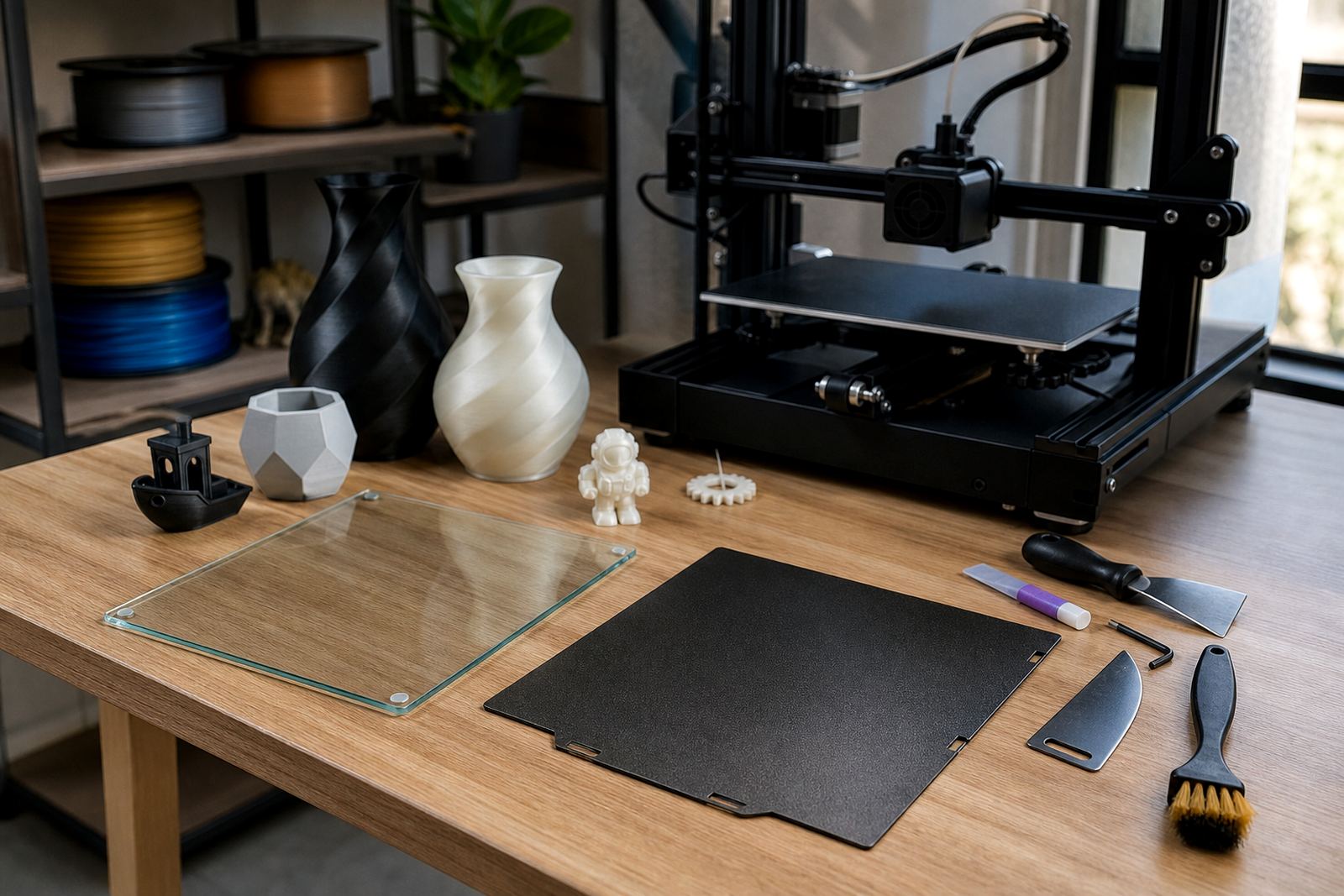
Glass beds are valued for flatness and a smooth underside finish. If the bed is well levelled and the first layer is set correctly, glass can give a neat, glossy base on many prints. For users who like a very even surface, that is a real advantage.
The trade-off is release. When a print cools, some parts let go cleanly while others stay stuck until the bed is fully cold. On larger jobs that can be helpful, but on small repeated prints it slows down turnover and can make production feel clumsy.
- Good flatness for first-layer consistency
- Smooth bottom finish on many materials
- Often cheaper to replace than a full magnetic system
- Can be slower when removing parts between jobs
Glass also adds weight. On a moving bed printer that extra mass can affect speed and ringing, especially if the machine is already working hard. For hobby use that may not matter much, but in a school lab or print farm every minute counts.
Where flexible steel systems earn their keep
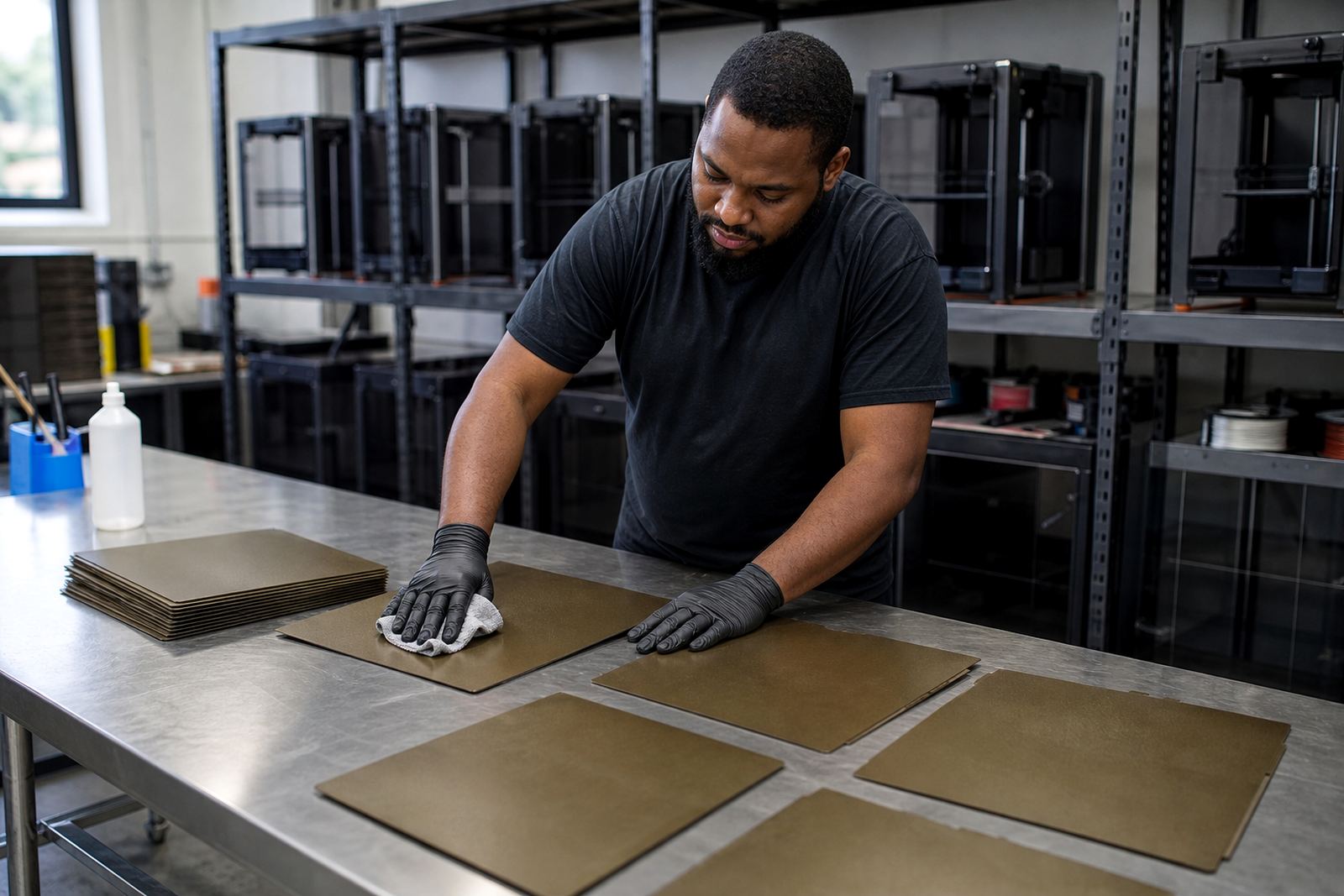
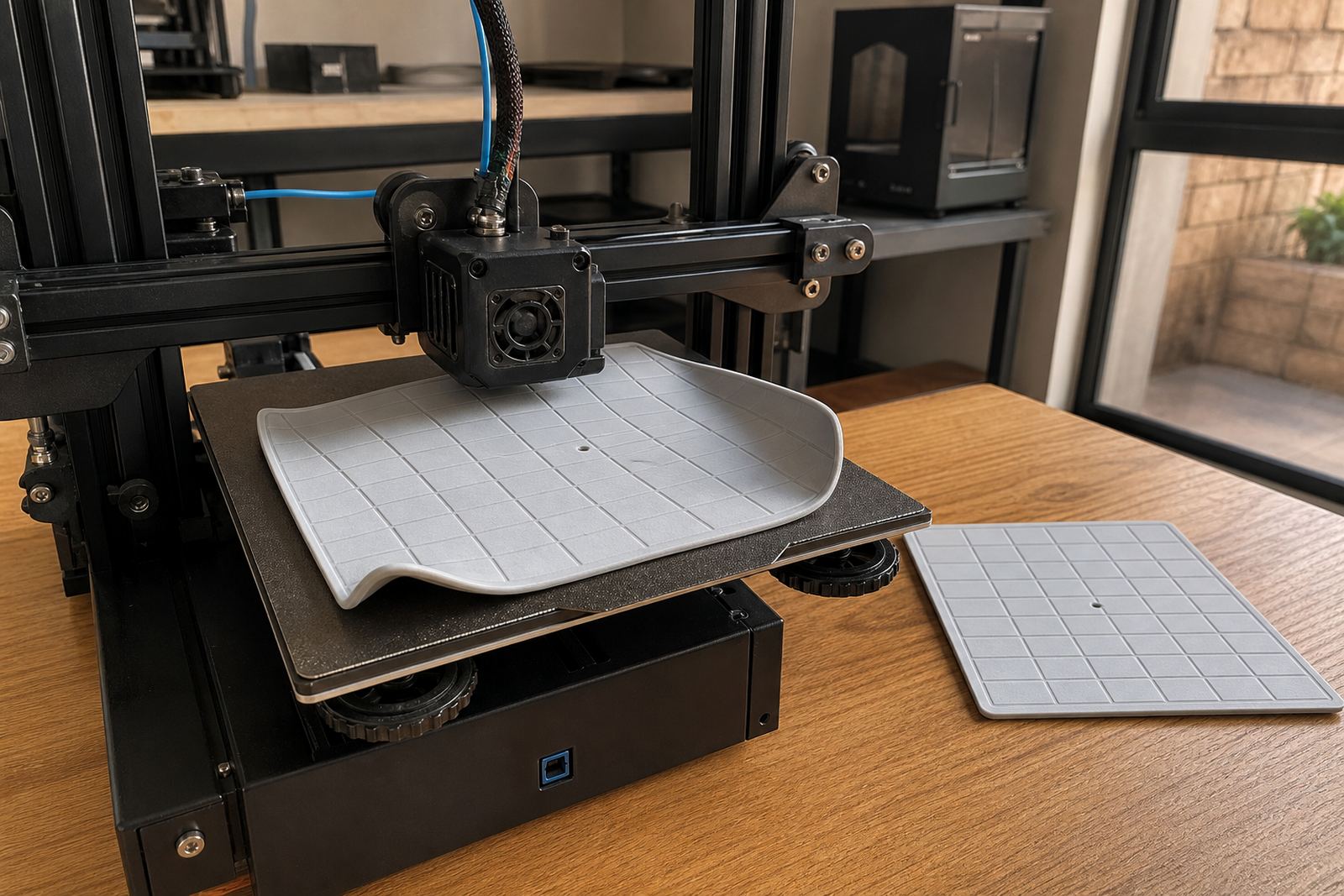
Flexible steel build plates are popular because they make part removal quick and simple. Once the bed cools, you can flex the sheet and many prints pop free without a scraper or heavy force. That is useful for operators who run many short jobs in a day.
They also suit users who want a quicker workflow. In a Midrand dispatch point, for example, a small team printing brackets, clips and jigs can clear the bed, start the next file and keep production moving. That kind of speed matters when orders stack up and the power goes off at 4 pm.
- Fast part removal after cooling
- Works well for repeated short runs
- Less risk of chipping parts with a scraper
- Fits better into print farm routines
The main thing to get right is the base under the sheet. A flexible top surface performs best when the magnetic layer is fitted properly and the bed is flat enough. If the base is warped, no top sheet will fix that by itself.
Heat, adhesion and the reality of South African workshops
South African users need bed choices that work in changing conditions. In Bloemfontein, the air can be dry and prints may release too easily if settings are off. In Durban, coastal humidity can affect storage, adhesion and how cleanly some materials bond to the bed. In Pretoria East and Centurion, dust from open windows and workshop traffic can also change first-layer behaviour.
Glass usually needs a bit more patience with bed temperature and cooling. Flexible steel systems often reward clean surfaces and consistent maintenance more than brute force. Neither one is magic, if the bed is dirty or the nozzle height is wrong, both will give trouble.
- Keep the surface free of grease and dust
- Check nozzle height after any bed change
- Use the right temperature for the material
- Let the part cool before forcing removal
Load-shedding adds another layer. When a print restarts after a power cut, a surface that holds the first layers well can save a long job. That makes bed consistency more important than many users expect.
Which option suits schools, homes and print farms best
For schools, the safest choice is often the one that gives predictable results with less rough handling. Flexible steel systems are easier for learners to use because parts can be removed without scraping, which helps protect the print surface and the machine.
For home users who print a mix of prototypes and decorative items, glass can still be a solid option if they want a smooth underside and do not mind waiting for cooling. If you print often and need quick turnaround, flexible steel usually becomes the better long-term fit.
In a print farm, standardising the bed setup across machines matters more than personal taste. A farm that runs the same sheet size, adhesive method and removal routine on every machine will waste less time on rework, test prints and operator mistakes.
How to choose between glass and flex without overthinking it
A practical decision starts with your real workload, not theory. If you print large flat parts, want a polished bottom and do not mind extra cooling time, glass can still serve you well. If you print many small jobs, need faster turnaround or want easier removal for staff and learners, flexible steel is usually the better day to day option.
Ask three simple questions before you decide: how often do you print, how quickly do you need to clear the bed, and who will handle the parts after printing? The answers will point you in the right direction more reliably than any online argument.
- Choose glass for flatness and a smoother bottom finish
- Choose flex for speed, easy release and repeated use
- Choose based on your machine, not just the material
- Match the bed to your local conditions and workflow
If you are in Centurion, Pretoria, Johannesburg, Cape Town, Durban or Bloemfontein and you need help comparing surfaces, the right setup should be matched to the printer model, the material you use and how your team handles finished parts. That saves money over time and makes adhesion problems easier to manage.