
What the plate surface changes first
A build plate does more than hold a part in place. It affects first-layer grip, bottom-surface finish, and how much force you need to lift the print once it has cooled. That is why the choice between textured and smooth matters just as much as nozzle size or bed temperature.
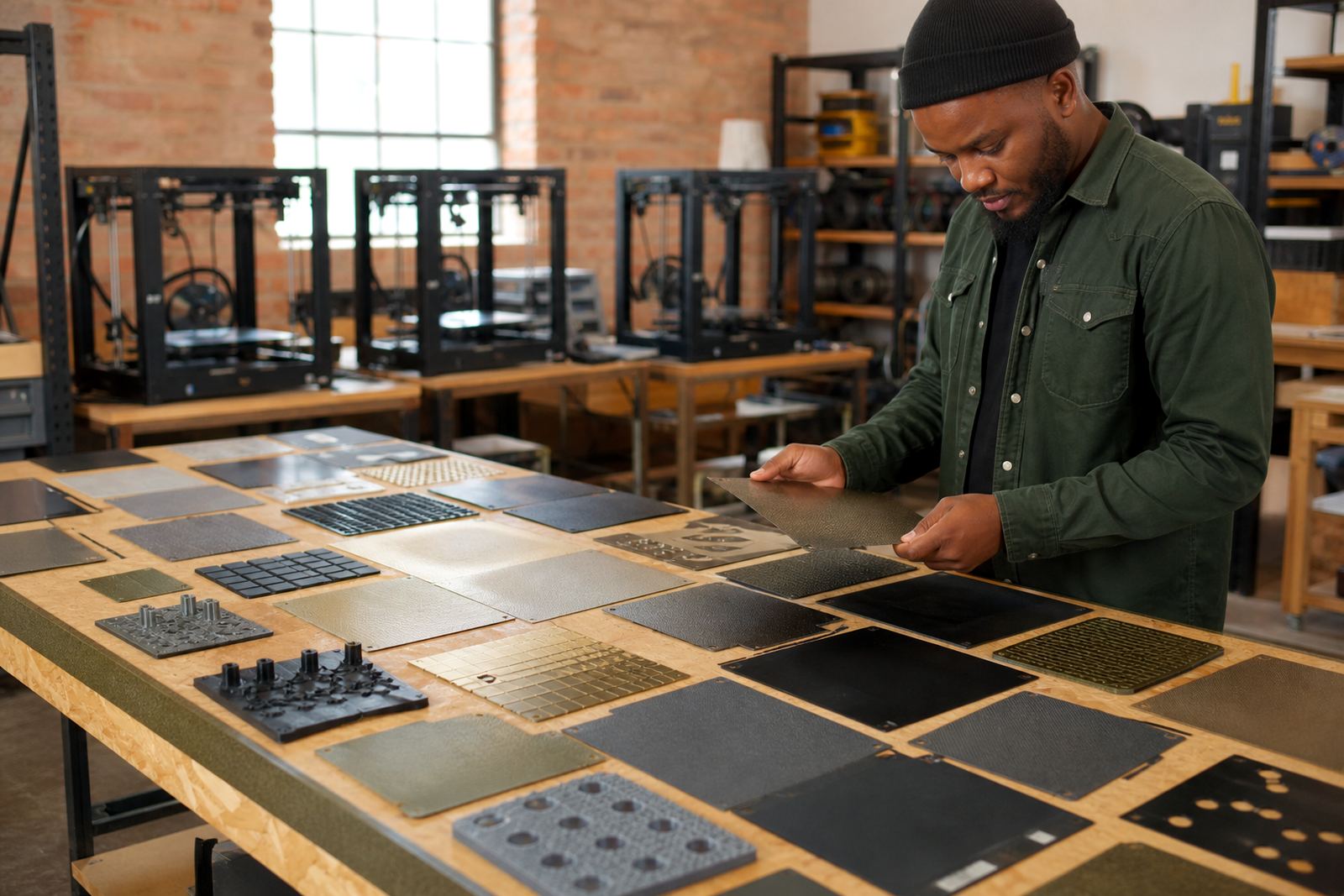
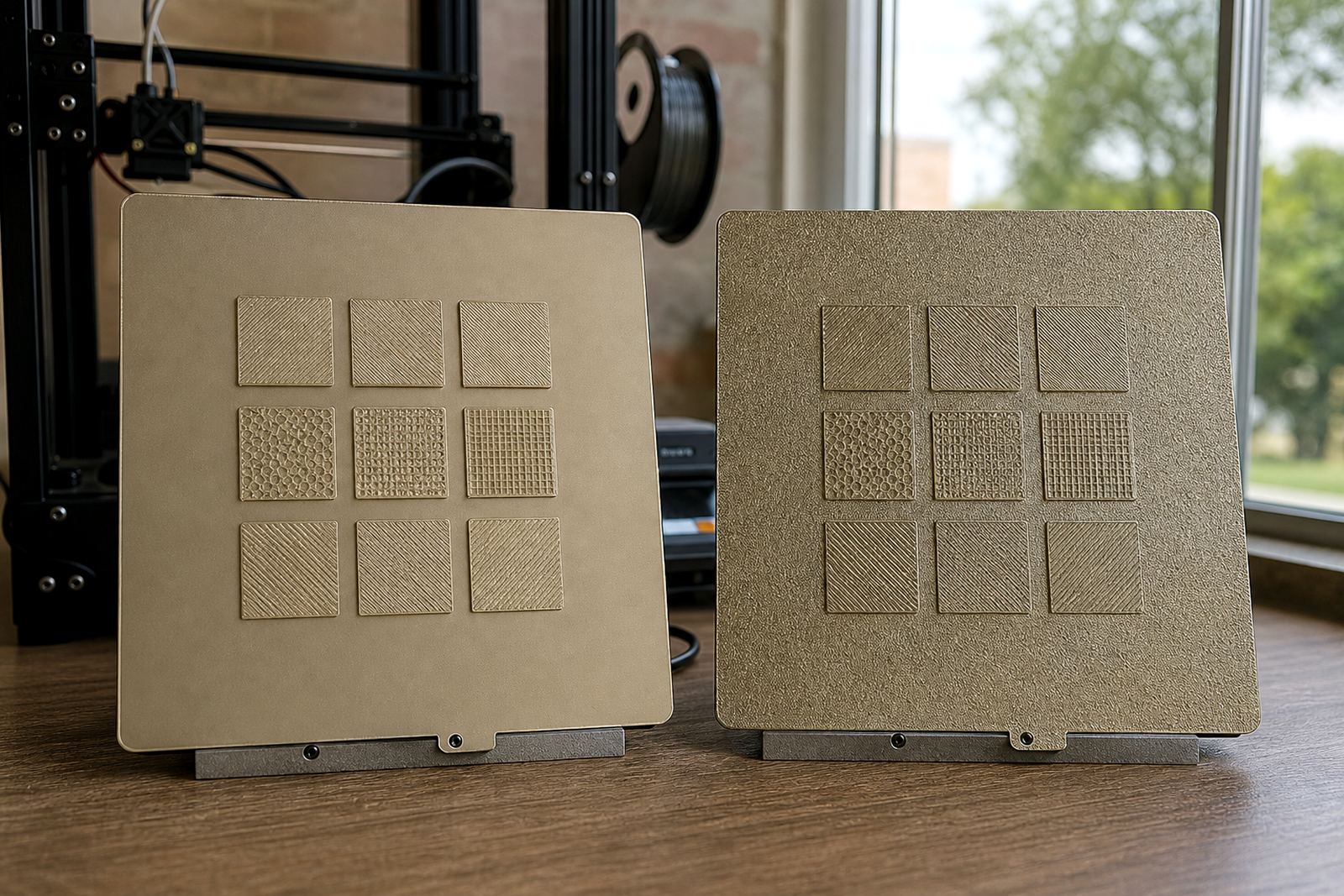
Smooth plates usually give a flatter, more even base finish. They suit parts where appearance on the underside matters, such as display pieces, enclosures, jigs and light industrial covers. Textured plates leave a patterned surface that can hide minor first-layer marks and often release parts more cleanly once the bed drops to room temperature.
Neither option is automatically better. The best choice depends on the material, the part shape, and how often you need to remove prints during the day. If your workshop runs several jobs back to back, the plate should match your workflow not only the filament.
When a smooth plate makes more sense
Smooth plates are the better pick when you want a neat, flat underside and accurate first-layer detail. They are often used for parts that will be seen from below, or where mating surfaces need a cleaner finish. If you are printing clips, test pieces, organisers, fixtures or classroom models, a smooth surface can give you more predictable results.
They do need a bit more attention. Bed levelling has to be right, the first layer must be set carefully, and the bed surface should stay clean. Fingerprints, dust and leftover adhesive can affect grip. On humid days in Durban or Gqeberha, a smooth surface may also need closer checking because moisture and fine contamination can change how the first layer behaves.
- Best for parts where base finish matters
- Useful when you want a flatter, cleaner underside
- Good for smaller prints with controlled first-layer settings
- Needs careful cleaning and levelling before each run
For schools, smooth plates are often easier to explain in a teaching setup because learners can see how small changes in Z offset affect the final part. It makes first-layer tuning easier to understand, though it is a little less forgiving if the machine is out by even a fraction.
Why textured plates are popular in busy shops
Textured plates are a practical choice for high-volume printing. The surface gives parts a grippy start and can make removal easier once the plate cools. That is useful in print farms, maker spaces and workshops where jobs are started early and collected later in the day.
The texture also helps hide tiny flaws from the first layer. If a machine in Midrand or Pretoria East is being used by multiple operators, the extra tolerance can be helpful. It is not a fix for poor levelling, but it does offer a bit more forgiveness when print conditions change during the day.
- Good for faster turnaround and repeated print removal
- Helps reduce visible first-layer marks on the underside
- Useful when several operators use the same machine
- Often preferred for functional parts and production runs
In a South African setting, that extra convenience matters. If a print farm in Centurion loses power for an hour, the bed may cool and the part may release more cleanly on a textured surface once the machine comes back on line. It is one small way to keep prinitng moving without a lot of extra handling.
Part removal, grip and how much force is too much
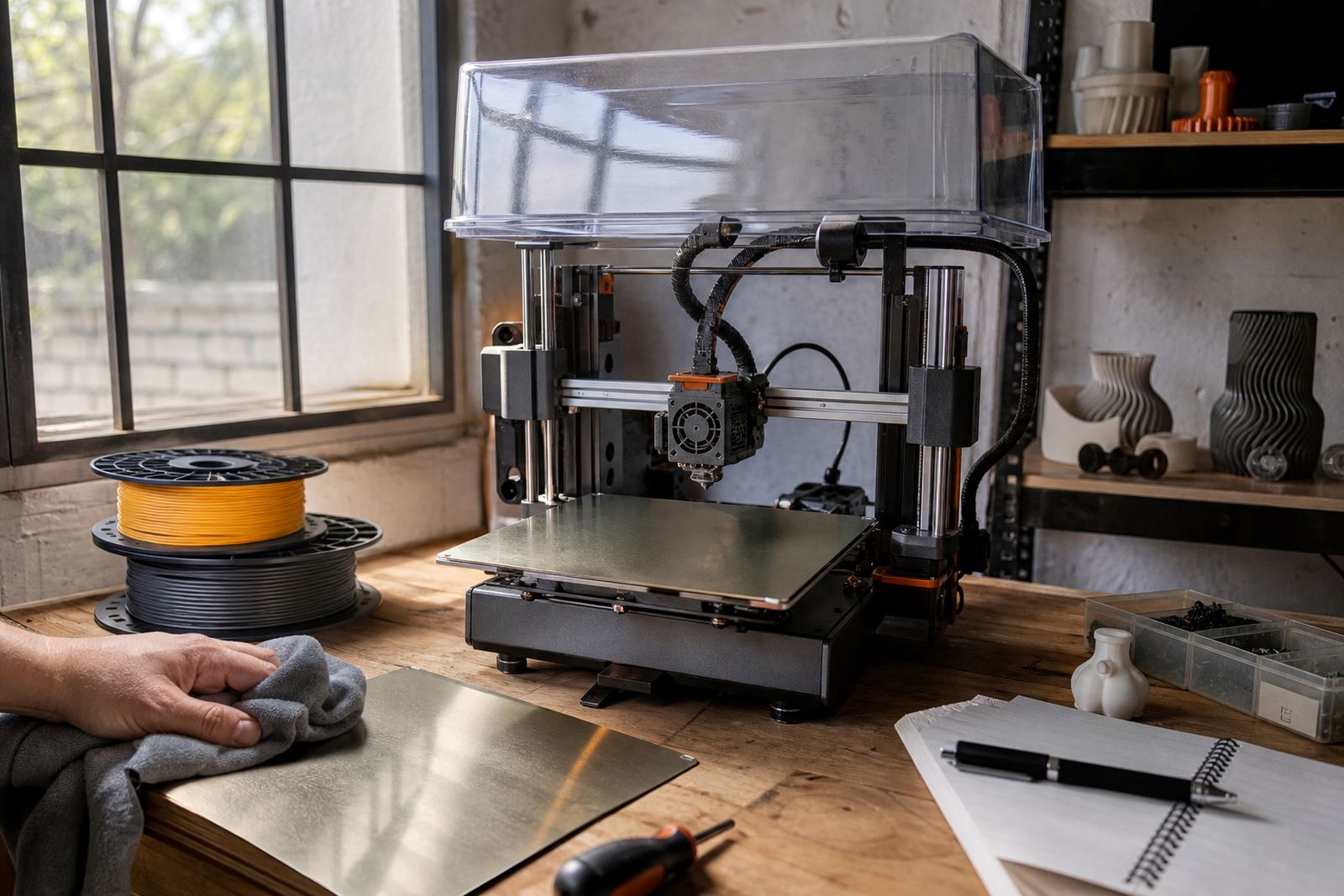
Part removal should be controlled, not forced. Whether you use textured or smooth plates, the print should release with a gentle flex or a light tool once the bed is cool enough. If you are using too much force, the plate may be too hot, the surface may be dirty, or the first layer may be over-squashed.
Smooth plates often hold on harder while warm, especially with some materials. That can be helpful during the print, but it means you may need to wait for full cooling before removal. Textured plates usually make this step easier, especially for larger parts with a broad base. In both cases, the goal is simple: enough grip for the print to stay put, but not so much that removal becomes a fight.
If parts are curling at the edges or lifting on one side, the issue may not be the plate type at all. Drafts, a dirty bed, uneven heating, or poor bed flatness can create the same problem. A bed flatness check is often worth doing before switching plate styles.
Material choice changes the answer
The best surface depends on the filament you use. PLA often works well on both surface types, but the exact setting depends on the printer and the base layer height. PETG can bond strongly to some smooth surfaces, so release method and surface care matter more. ABS and other higher temperature materials usually need better heat control and a plate that matches the machine setup.
For print farms across South Africa, it helps to standardise by material and machine rather than choosing one plate for every job. That makes settings easier to repeat and support training simpler for new operators. It also reduces the number of failed parts caused by someone using the wrong profile on the wrong bed surface.
- Match the plate to the filament, not only to the printer
- Keep a record of bed temperature and first-layer settings
- Separate profiles for school lab use and production use
- Review adhesion after surface refresh or replacement
A consistent setup is especially useful for schools in Bloemfontein or Cape Town where several learners may use the same machine over a week. One clear standard saves time and cuts down on avoidable reprints.
A practical choice for South African workshops
If you are deciding between textured and smooth plates, start with the result you need most often. Choose smooth when appearance and flat underside finish matter. Choose textured when you need easier part release, better repeatability in busy production, or a surface that tolerates everyday handling a bit better.
For many South African users, the answer is not one or the other. Some keep a smooth plate for display parts and a textured plate for repeat jobs. That approach works well in Centurion workshops, Pretoria East school labs, and Johannesburg print rooms where different users need different results from the same printer.
When in doubt, check the machine, the material, and the working conditions. Coastal humidity, seasonal temperature swings, and load-shedding can all change how a bed behaves. A good plate choice will not fix every issue, but it can make printing steadier and the day a lot easier to manage.
How LayerPad helps you match the plate to the job
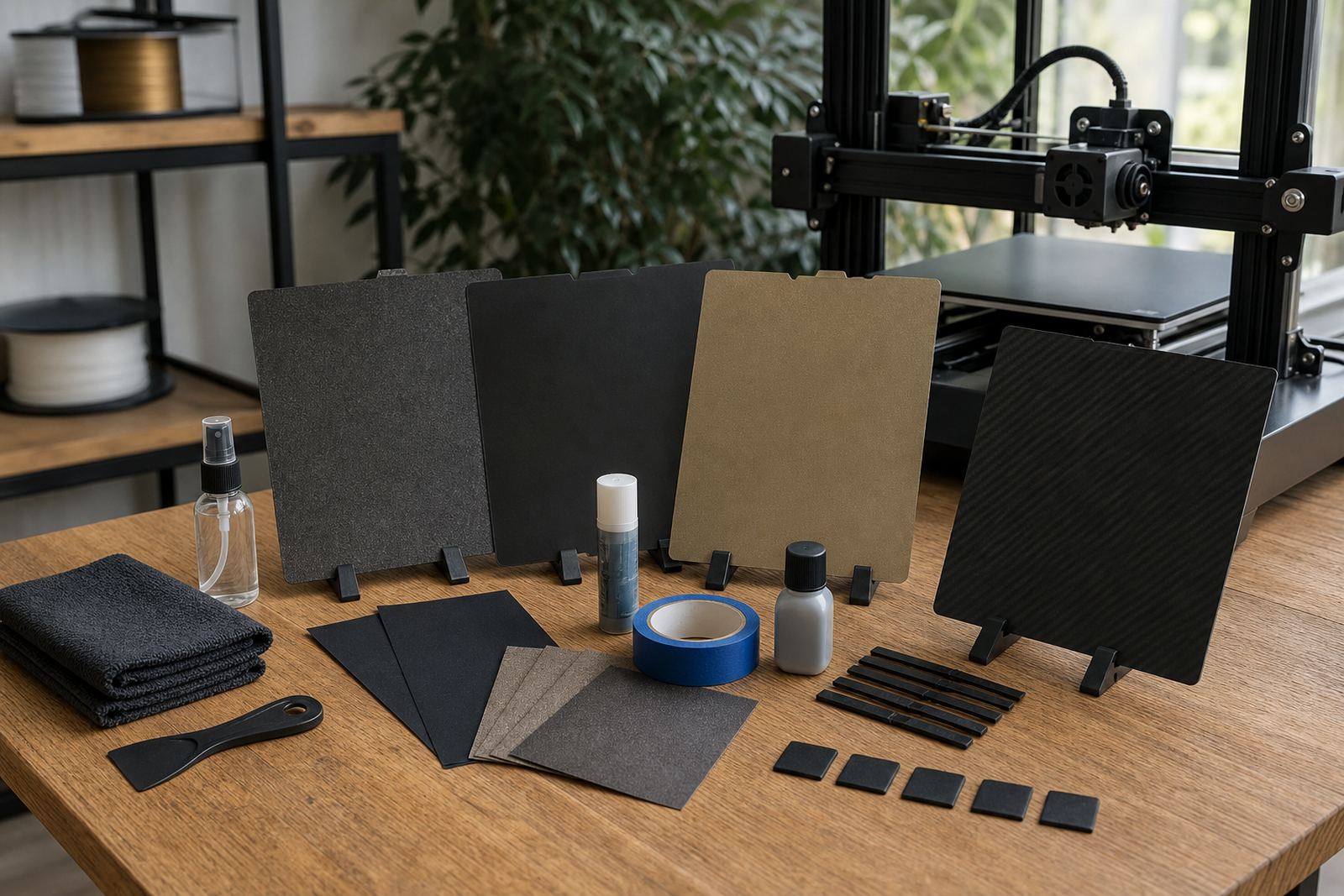
LayerPad works with makers, schools and print farms that need practical advice, not guesswork. The team can help with plate installation, PEI sheet fitting, magnetic base fitting, bed flatness checks, surface refresh, custom size cutting, replacement planning, farm standardising, school lab setup, adhesion troubleshooting, bed care training and consumables supply.
If you are not sure whether smooth or textured is the better fit, start with the part you print most often and the conditions you run in. A small change in surface can improve part removal, reduce first-layer problems and save time on every batch. That is the sort of change that shows up in the workshop straight away.
For enquiries, use the form on the contact page. From Centurion, LayerPad supports customers across Pretoria, Johannesburg, Cape Town, Durban, Bloemfontein and Gqeberha with advice that fits real machines and real production demands.