
What the studio needed in Bellville
The studio was handling short-run product models, presentation pieces and test parts for clients across Cape Town. Their printers were getting pushed hard during busy weeks and every bed reset was eating time, especially when different materials and part sizes were coming through one after another.
The brief was straightforward: reduce downtime, keep first-layer performance steady, and make it easier for staff to move from one job to the next without waiting for a bed to cool fully. They also wanted a cleaner process for keeping spare build surfaces ready for the next print, rather than scraping, re-taping or re-leveling between every change. The team had limited floor space and could not afford a messy setup.
The constraints we worked around
Bellville can be a mixed environment for print work. Coastal humidity can affect storage of sheets and adhesive parts, and power interruptions mean printers are often stopped and started more than once in a day. The studio also had to keep their machines usable by different staff members, so the setup needed to be simple enough for day-shift handovers.
- Small workspace with shared printers and limited storage for accessories
- Frequent job changes across PLA, PETG and support-heavy prototype work
- Need for repeatable bed flatness after removals and re-fits
- Downtime risk during load-shedding and evening catch-up runs
There was also a practical issue with older build surfaces that had uneven wear at the edges. That made one side of the plate behave differently from the other, which is a common cause of inconsistent adhesion on smaller beds.
What we supplied and fitted
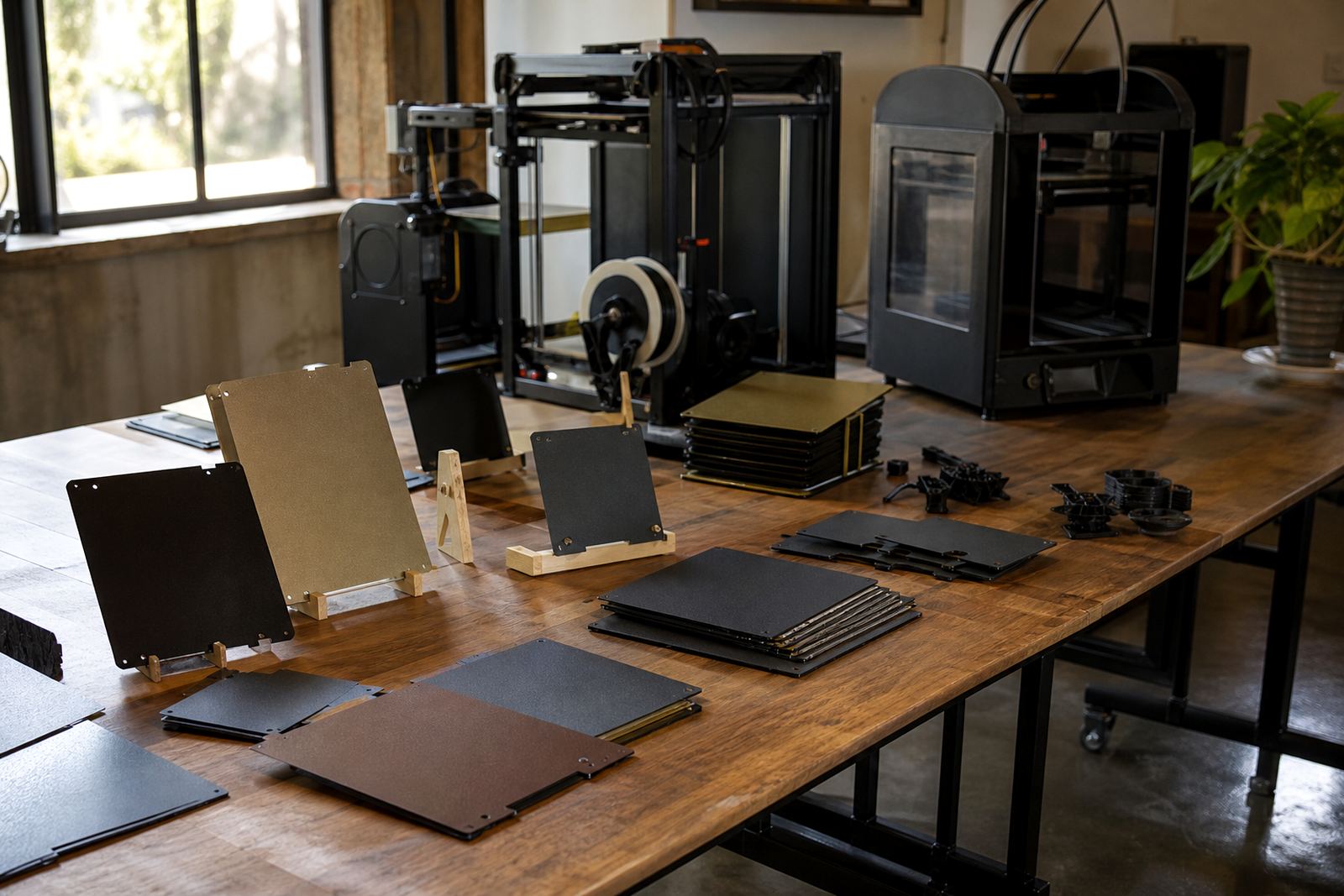
We supplied magnetic bases matched to the printer beds, spare flex plates sized for the machines in use, and PEI sheet options for better adhesion and cleaner part release. We also did the installation work and checked bed flatness before fitting so the team could start from a known baseline.
- Magnetic base fitting for quick plate swaps
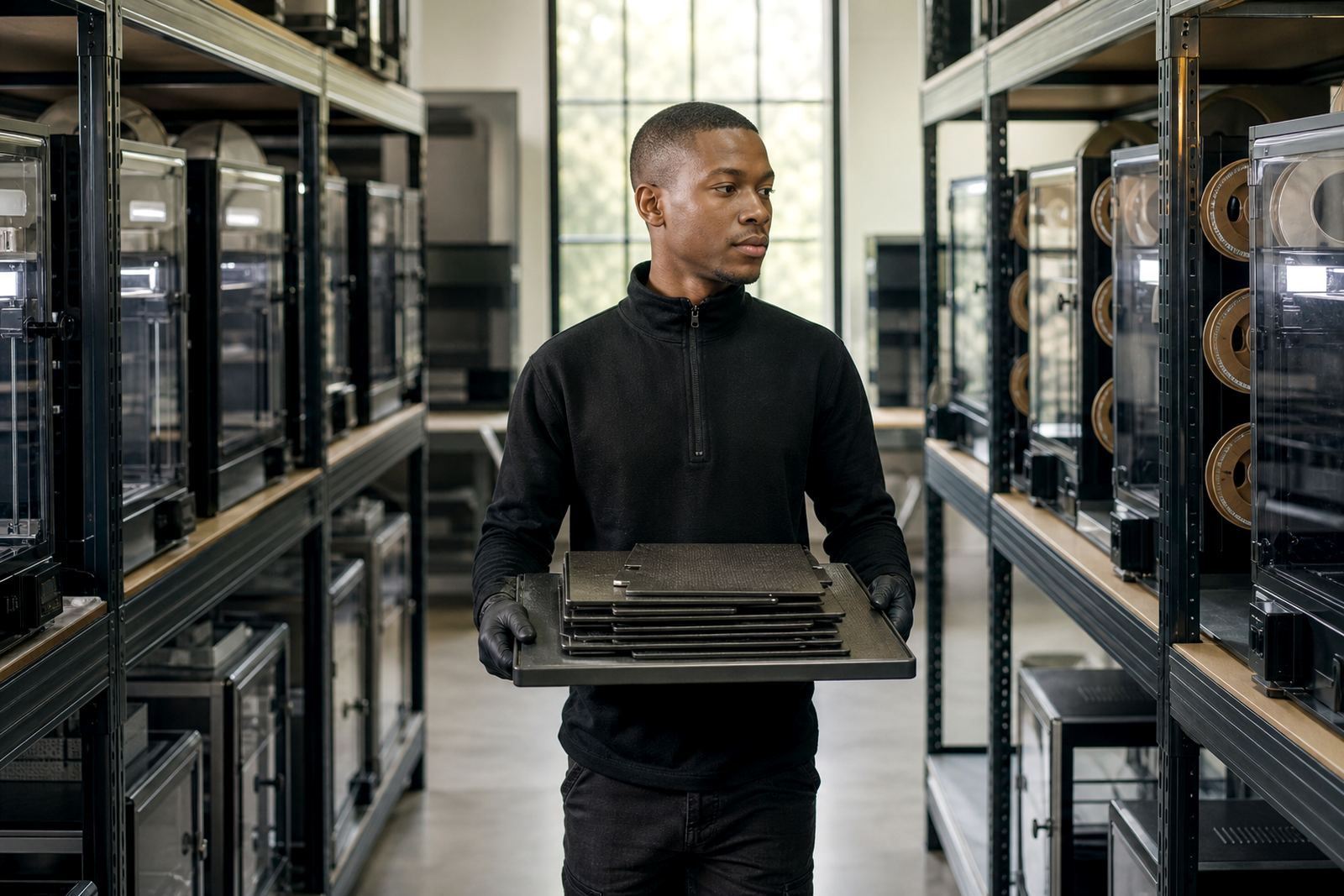
- Spare flex plates for rotation between jobs
- PEI sheet fitting for consistent first-layer grip
- Bed flatness check before and after installation
- Surface refresh on worn plates that were still structurally sound
Where the studio had slightly different machine footprints, we cut parts to suit rather than forcing one standard size across all units. That kept the fit tidy and reduced the chance of edges lifting during long prints. We also walked the team through bed care, including cleaning methods that do not leave oily residue behind.
Installation and handover over 2 weeks
The work was completed over 2 weeks, with the first visit used for assessment, measurements and selecting the right combination of plates and fitting parts. The second visit covered installation, test prints and a short handover with the production team.
We tested the setup using small calibration prints and then a few longer prototypes to check adhesion at different corners of the bed. That showed up one printer with a slight low spot near the rear left, so we adjusted the process before putting it into daily use. The studio preferred a simple rotation system, so we labelled the spare flex plates and set out a basic changeover routine for morning and afternoon shifts.
Because the team works on deadline, we planned the handover around their quieter hours. That meant less interruption, and they could keep their active machine running while the others were being updated. No one had to stop a live job just to set up the next plate.
Results the studio saw straight away
The biggest change was speed. The team could remove one plate and fit another in a few moments rather than waiting on cleaning, scraping or re-taping. That shaved time off each job handover and made same-day prototype work much easier to manage.
- Faster turnaround between test prints and client presentations
- More consistent first layers across repeated jobs
- Less wear on individual plates because they could be rotated
- Cleaner workflow for different staff members using the same machines
- Fewer interruptions when a bed needed to cool before the next run
The studio also reported fewer failed starts on smaller parts. When the build surface is level and clean, you spend less time rescuing a print at layer one, and more time getting the next file out the door. That matters in a Bellville studio where clients often want one more revision by the end of the day.
What we would do again
If we were starting the same project again, we would still begin with bed checks before fitting anything new. That saves time later and avoids blaming the wrong part when the real issue is bed flatness or a worn corner. We would also keep spare plates in a labelled rotation from day one, because that is what keeps the workflow steady once the studio gets busy.
For a small design team, the best setup is the one people will actually use every day. In this case, the combination of magnetic bases, spare flex plates and simple care training gave the studio a practical system they could maintain without extra fuss. That is usually the difference between a neat idea and a setup that keeps paying off.
We would handle the next one in much the same way: measure properly, fit cleanly, test under real use and make sure the staff can carry on without guesswork.
Key facts
| Project location | Bellville, Cape Town |
|---|---|
| Client type | Small design studio |
| Project duration | 2 weeks |
| Core products supplied | Magnetic bases, spare flex plates, PEI sheets |
| Key services used | Plate Installation, Bed Flatness Check, Surface Refresh, Adhesion Troubleshooting |
| Outcome | Faster prototype turnaround and more consistent first-layer performance |