
What the Pietermaritzburg team needed from us
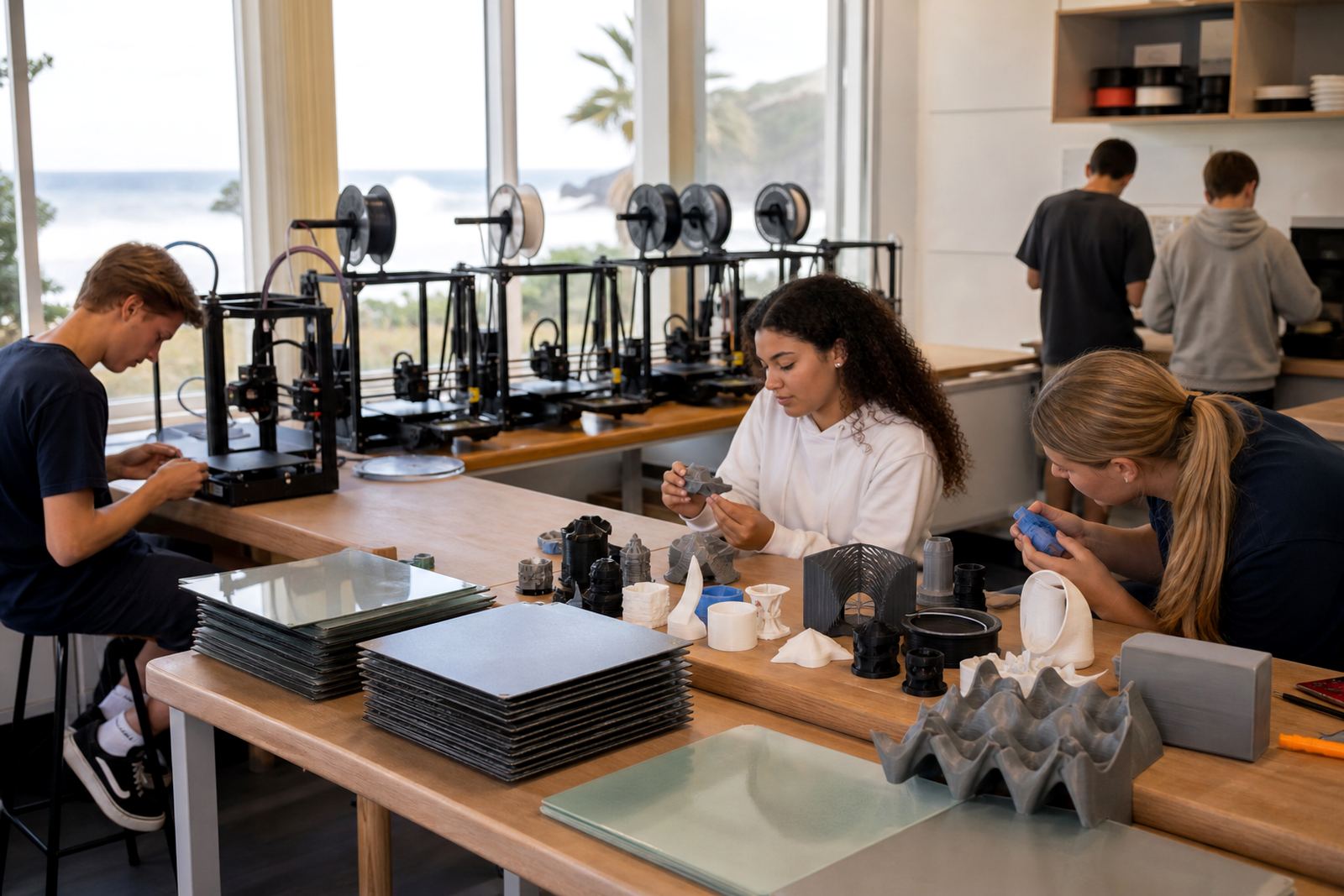
The print farm was running a steady mix of production jobs for local customers, with machines working long hours and operators changing plates often. The problem was not one single failure point. It was the small losses that add up in a busy room: worn surfaces, uneven adhesion, delayed changeovers, and operators spending too much time rescuing prints instead of starting the next job.
The brief was simple in principle but detailed in practice. Reduce downtime, keep adhesion more consistent across different bed sizes, and put a maintenance routine in place that could be followed on shift. The site also needed support that made sense for a South African workshop, where power interruptions, dust, temperature swings and a full calendar of jobs can all affect print quality.
- Client type: growing print farm
- Town: Pietermaritzburg, KwaZulu-Natal
- Goal: less machine downtime and more repeatable first layers
- Focus: plate rotation, maintenance checks, and adhesion control
Site constraints we had to work around
The farm had a mixed setup, which meant different plate sizes and a few different surface types in use at once. Some machines were used for quick turnaround parts, while others were reserved for longer runs. That meant the team needed a plan that was practical across the whole fleet, not a one-size-fits-all approach.
There were also physical limits to work with. The room had limited spare storage, so removed plates had to be labelled and handled in a way that prevented mix-ups. The team wanted to avoid unnecessary rework, and they needed a routine that stayed manageable during busy periods when operators are under pressure and the phone keeps ringing. In Pietermaritzburg, humidity can also shift through the day so we kept the cleaning and surface care steps very clear, especially for PEI sheets and magnetic bases.
- Mixed printer fleet with more than one bed size
- Limited storage for spare plates and rotated parts
- Need for clear labelling and quick changeover handling
- Adhesion consistency needed in changing humidity and room conditions
What we supplied and fitted
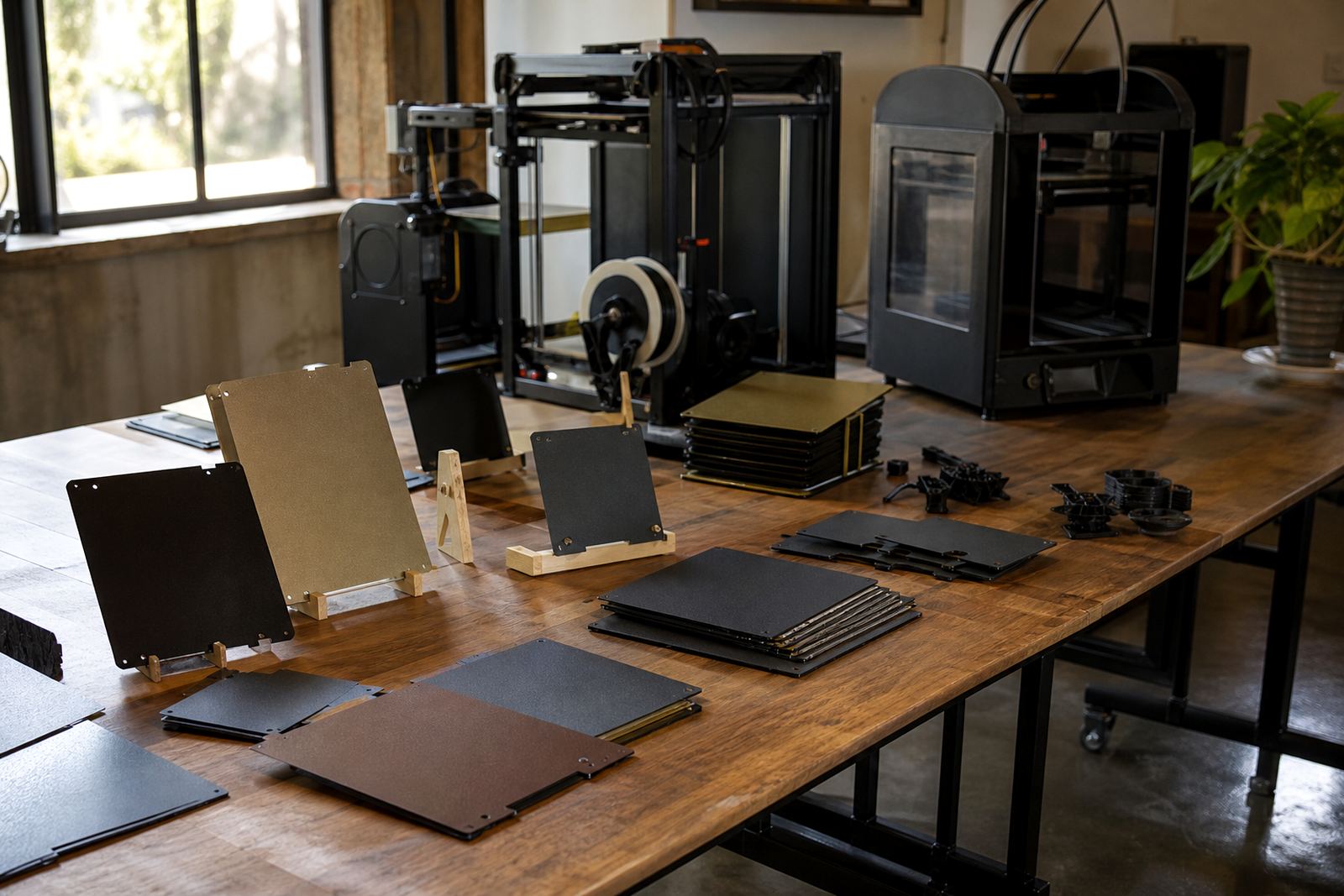
We supplied build plates, PEI sheets and matching bed adhesion consumables sized for the machines on site. Where needed, we completed PEI sheet fitting and magnetic base fitting so the plate swaps became faster and more reliable. We also checked the flatness of the beds before final fitting, because a good surface still struggles if the underlying bed is out by a small amount.
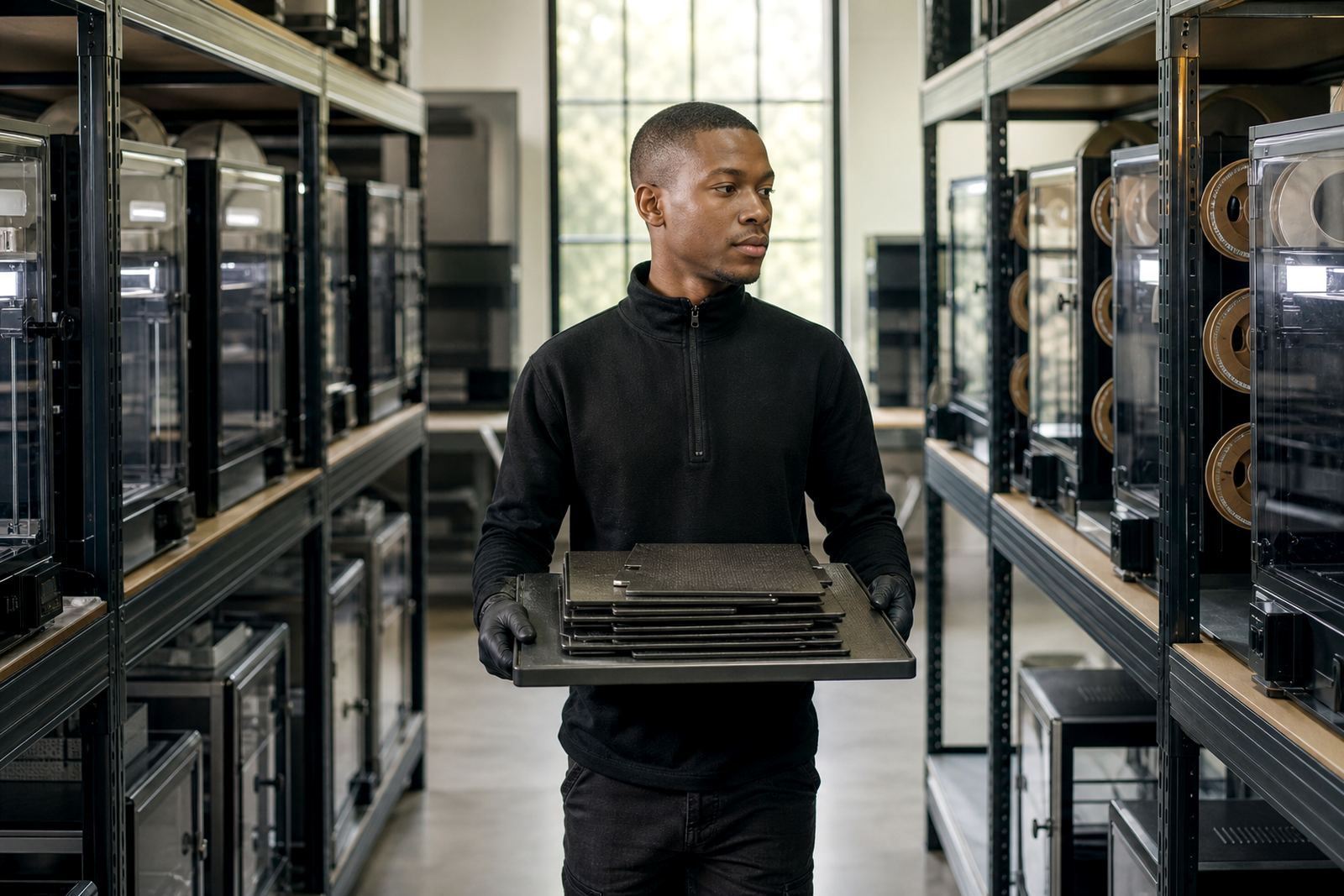
Our team set up a rotation plan so plates could be removed, cleaned, inspected and returned to service without confusion. We also marked replacement thresholds for the most used surfaces, so the farm would know when a plate could still serve on lighter jobs and when it should be pulled from production. That saved time and cut the guesswork that tends to creep in on a busy line.
- Custom size cutting for the plate dimensions in use
- PEI sheet fitting and magnetic base fitting
- Bed flatness check before installation
- Surface refresh and replacement planning for high-use plates
- Consumables supply for cleaning and adhesion care
Timeline and rollout over three weeks
The project ran over three weeks from first review to final handover. In week one, we assessed the current plate condition, checked the bed surfaces and identified which machines needed immediate attention. In week two, we completed the fitting work and introduced the rotation system. In week three, we trained the team on cleaning, handling and storage so the new process would stick after the job was done.
The schedule was kept tight because the farm could not afford long interruptions. We planned the work around the least busy periods of the day and kept each machine off line only for the time needed to complete its checks. That approach mattered because once a farm starts losing half a day here and there the backlog builds fast.
- Week 1: assessment, plate condition review and flatness checks
- Week 2: fitting, cutting and rotation setup
- Week 3: training, handover and follow-up checks
Results after the changes were in place
Once the rotation system was running, the farm saw fewer failed first layers and less time lost to plate cleaning between jobs. Operators had a clearer routine, which reduced handling mistakes and helped keep the fleet moving. The team also reported that it was easier to plan around maintenance because the wear on each plate was now tracked instead of being noticed only when a print failed.
The practical gain was not just in the prints themselves. It was in how the room worked. Jobs moved through the queue more predictably, and the maintenance load became part of the workflow instead of an extra task pushed to the end of the day. For a print farm, that sort of improvement can be the difference between staying current on orders and chasing them the next morning.
- Reduced machine downtime from avoidable adhesion failures
- More consistent first-layer performance across active machines
- Clearer maintenance planning for operators and supervisors
- Less wasted time on emergency cleaning and mid-job resets
What we would repeat on the next farm job
If we were starting the same type of job again, we would begin with the same three steps: measure the beds properly, set the plate rotation early, and train the team before the new routine goes live. Those steps are simple, but they prevent a lot of small issues from becoming repeat failures. We would also keep replacement planning visible from day one, because print farms work better when everyone knows which plate is in good shape and which one is living on borrowed time.
For farms in places like Pietermaritzburg, Durban or Pretoria where temperature, humidity and load shedding can all affect output, the best fix is usually a practical one. Good surfaces, clear handling rules and regular checks give the operators something they can rely on. That was the point of this project and it is the same approach we would use again for schools, makerspaces or a larger production floor.
- Start with measurements, not assumptions
- Plan plate rotation before the backlog grows
- Train the operators while the process is fresh
- Keep spare consumables on hand so maintenance does not stall
Key facts
| Project type | Print farm maintenance and adhesion support |
|---|---|
| Location | Pietermaritzburg, KwaZulu-Natal |
| Timeline | 3 weeks |
| Core work | Plate rotation, PEI sheet fitting, magnetic base fitting |
| Machine focus | Mixed fleet with multiple bed sizes |
| Main outcome | Less downtime and more consistent first layers |