
A Pretoria workshop with too many restarts
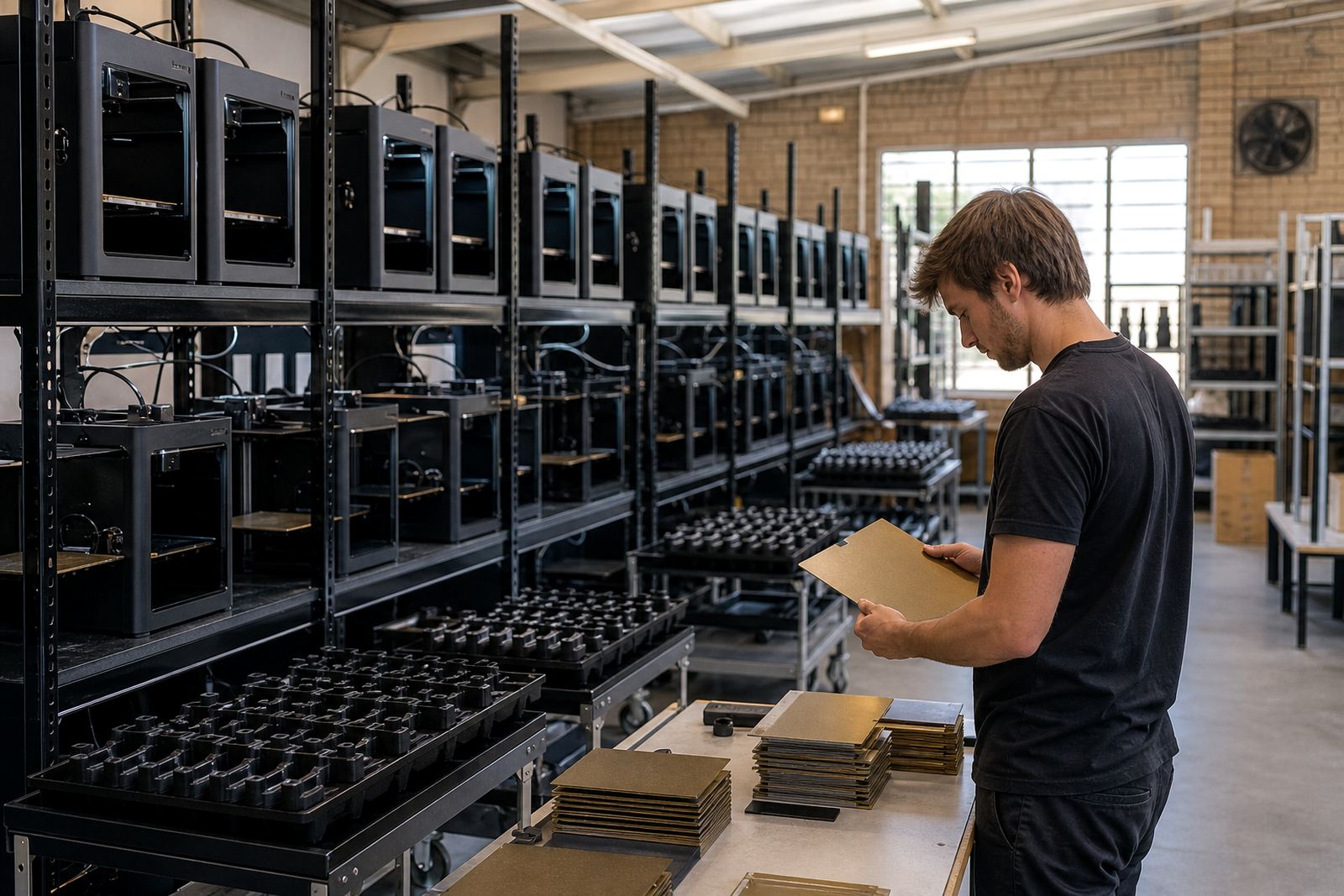
The client was a small prototype shop in Pretoria East, working mainly with engineering samples, jigs, brackets and fit-check parts for local product teams and schools. They were printing on several machines at once, with different operators starting jobs across the day. The problem was not the printers alone. The real time loss came from bed prep, stuck parts, damaged surfaces and the need to stop a machine just to get a part off the plate.
They asked for a setup that could handle frequent changeovers, keep first layers consistent and make the process easier for new staff. The workshop also needed something that would suit Pretoria's dry inland climate, where dust builds up quickly and bed surfaces can get knocked around during busy weeks. In practice, that meant less scraping, fewer resets and a repeatable routine that did not depend on one experienced person being on shift.
The brief, constraints and what had to stay practical
The brief was clear: reduce restart time, improve adhesion on everyday materials and make the bed care process simple enough for a mixed team. The workshop did not want a complicated system that needed special parts or long training. They also could not afford to take all machines offline at once, so the plan had to be done in stages.
- Supported bed sizes from 220 x 220 mm to 300 x 300 mm.
- Worked around machine frames that were already levelled and in use daily.
- Kept the magnetic base and removable plate profile slim enough for existing Z heights.
- Used parts that were easy to replace locally if a surface wore down.
- Allowed the team to continue printing during load shedding windows and catch-up shifts.
We also had to account for mixed output, because one machine might print short test parts while another ran longer prototype batches. That meant adhesion had to be dependable across repeated heating cycles, not just on the first job of the morning. The surfaces also needed to cope with a fair amount of operator handling, because in a workshop like this the plates get swapped, moved and cleaned more often than in a home setup.
What we supplied and fitted on site
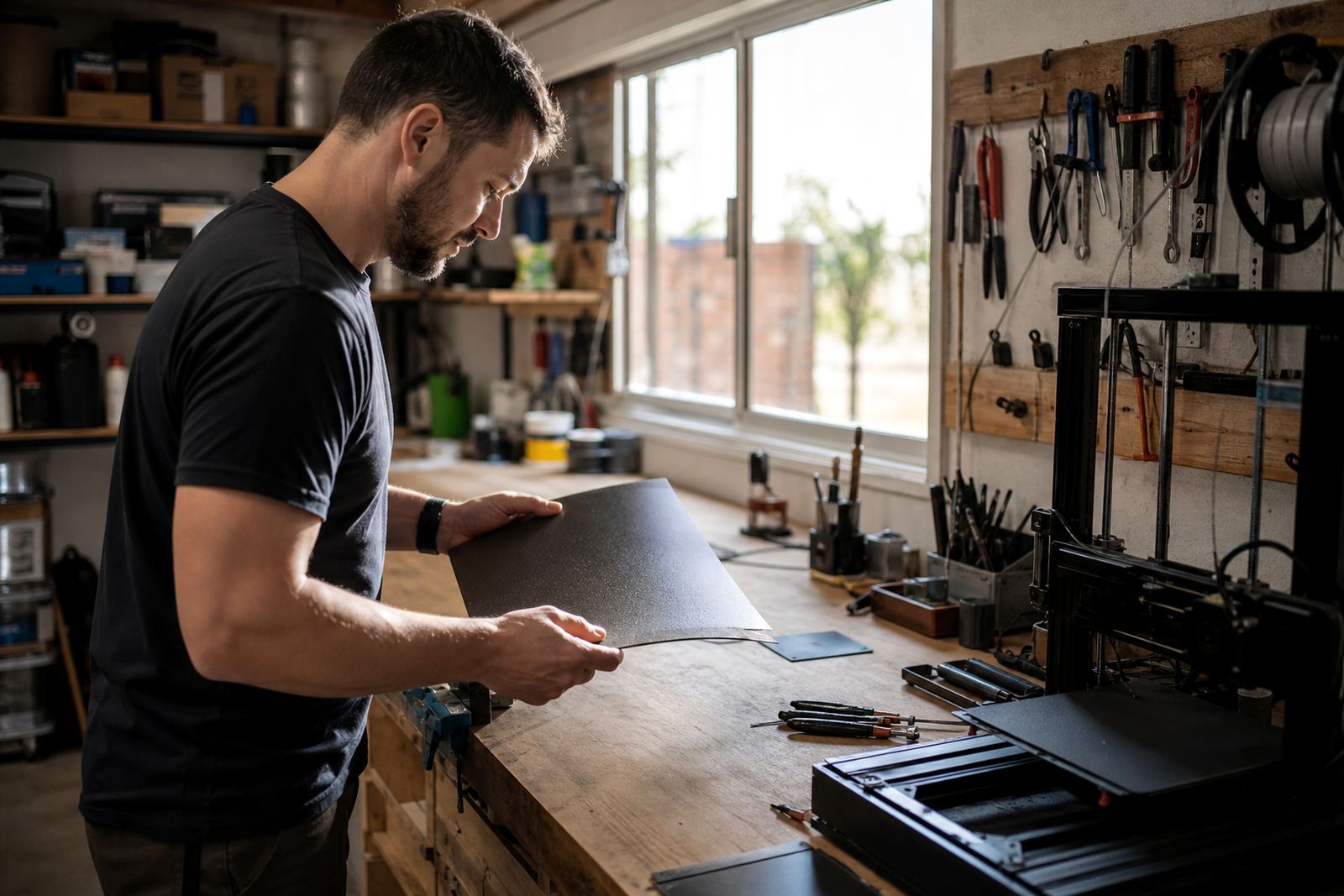
We supplied removable build plates with PEI sheet surfaces sized to match each machine in the workshop, together with magnetic bases for quick swap handling. The main aim was to create a repeatable surface that gave strong grip when hot and released parts cleanly once cooled. For the rougher print days, we added a small stock of spare surface material so the team could keep going without waiting for a full replacement.
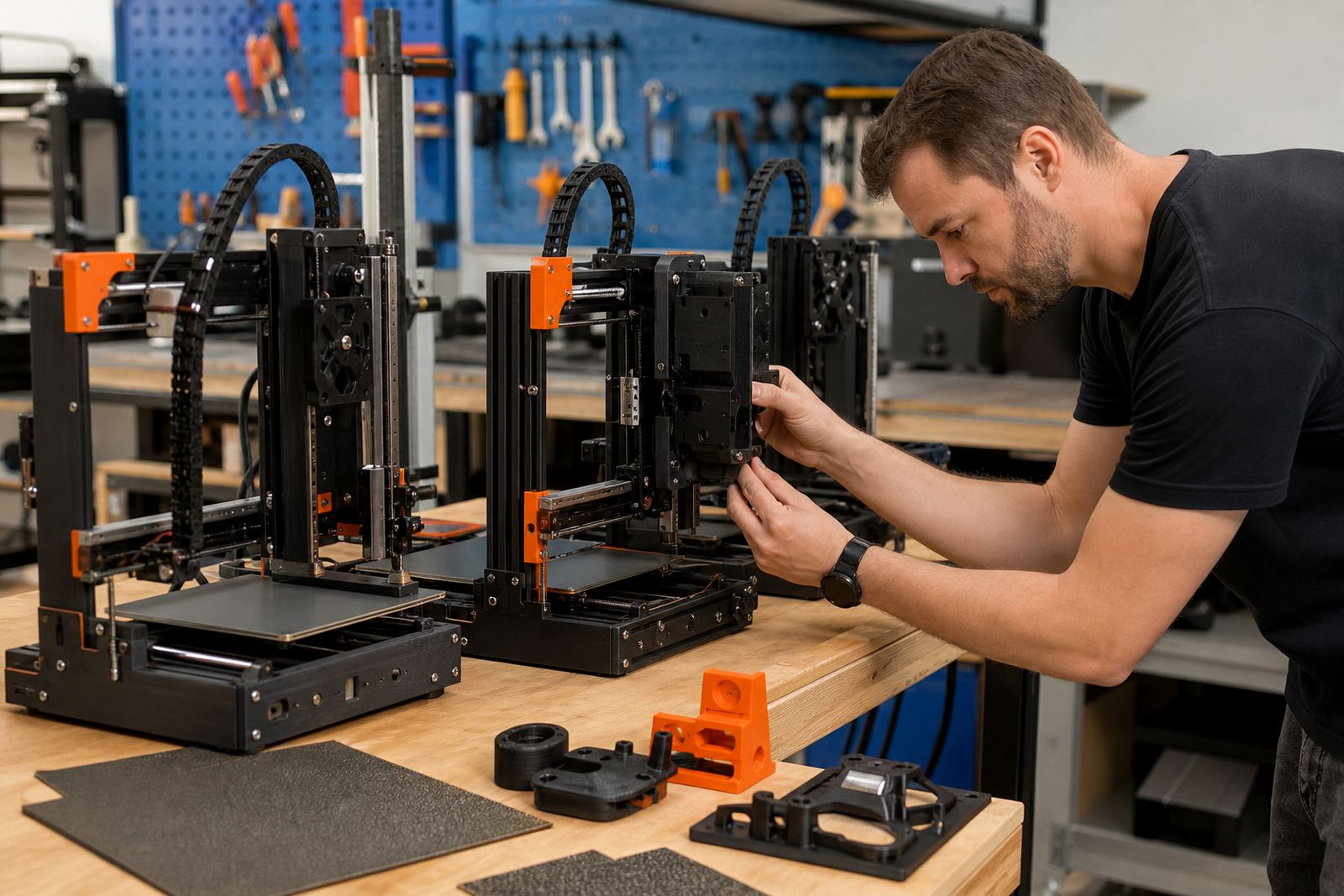
The installation work was done in stages over three weeks. First we checked bed flatness and machine profiles, then fitted the magnetic bases on the machines that needed them most. After that we cut and fitted the PEI sheets, checked edge alignment and tested adhesion with standard workshop materials. We also completed a surface refresh on two beds that had visible wear from previous scraping.
- Plate installation on the busiest machines first.
- PEI sheet fitting with clean edge finish and corner alignment.
- Magnetic base fitting for faster part removal and plate rotation.
- Bed flatness check before final surface bonding.
- Custom size cutting where the existing plate dimensions varied by machine.
Bed care routine the team could actually keep
Once the hardware was in place, we set up a simple bed care routine that the operators could follow without slowing the line. That routine covered cleaning between jobs, when to leave the bed alone, when to refresh the surface and how to spot early signs of wear. The aim was not to overtrain the team, only to give them a clear method that avoided guesswork.
We ran bed care training with the supervisors and the newer operators, then left behind a short checklist for daily use. It covered wiping down the plate before each run, checking for fingerprints and dust, letting the build surface cool before removal, and rotating plates on heavier print days. The team also asked us to show them how to tell the difference between poor adhesion and a bed that was simply out of flat, which turned out to be useful within the first week.
There was a practical side to this too. In a busy workshop, people will use what is close at hand and easy to remember. So the routine had to be plain, not fancy. We kept the steps short and made sure the labels and handling notes matched the way the operators already spoke about the machines. That helped with handover between day shift and late shift, and reduced the chance of small mistakes after a restart.
Results after the first few weeks
By the end of week three, the workshop was seeing quicker turnaround between jobs and fewer parts needing a second attempt. The biggest gain was in restart time. Instead of waiting for a stubborn print to be pried off or for a bed to be cleaned from scratch, operators could remove the plate, flex the part off or swap to a fresh surface and carry on.
They also reported more stable first layers on repeat prints, especially on shorter prototype runs where bed prep matters more than total print time. Parts were coming off cleaner after cooling, and the workshop stopped wasting so much time on surface rescue. In simple terms, the machines were spending more time printing and less time being reset. That mattered during busy periods when several jobs had to move through the same day.
- Restart time dropped because plates could be swapped instead of scraped.
- First-layer consistency improved across repeated daily runs.
- Surface wear became easier to track, so replacements were planned instead of rushed.
- Operators had a single care routine, which cut confusion between shifts.
There was also a morale gain. When people can see a part lift cleanly the first time, they tend to trust the process more. That is not a small thing in a workshop with pressure on deadlines. It means fewer interruptions, fewer arguments about settings and less time wasted chasing the same fault over and over.
What we would repeat for another Pretoria print team
If we were setting up the same kind of workshop again, we would follow the same order. Start with bed flatness, then match the plate size to the machine, then set the cleaning and handling routine before the team gets into a rush. That sequence saves time because you are fixing the root cause first, not just improving the surface on top.
For Pretoria and the wider Gauteng area, we would also keep spare surfaces in the plan from day one. Dust, busy shifts and repeated heating cycles all shorten the service life of a bed surface if it is used hard. A small replacement stock is cheaper than losing half a day to a failed print or a badly marked plate. We would also keep the training short, practical and tied to the exact machines on site, because that is what people remember when the work gets busy. The fix does not need to be complicated, just consistent.
This project showed that a prototyping shop does not need a major rebuild to improve output. With the right plates, the right fit and a routine the whole team can follow, the workshop can stay moving even when orders stack up and the schedule gets tight.
Key facts
| Location | Pretoria East, Gauteng |
|---|---|
| Project duration | 3 weeks |
| Machine range | 220 x 220 mm to 300 x 300 mm build areas |
| Supplied | Removable build plates, PEI sheets and magnetic bases |
| Services used | Plate Installation, Bed Flatness Check, Custom Size Cutting, Surface Refresh, Bed Care Training |
| Outcome | Faster restart time and more reliable first layers across daily prototype runs |