
What Bed Care Training Covers
Our bed care training is practical, hands-on guidance for anyone working with 3D-printer build plates, PEI sheets and magnetic bases. We cover the day to day habits that protect the surface, reduce failed starts and help you avoid the cost of replacing plates too early.
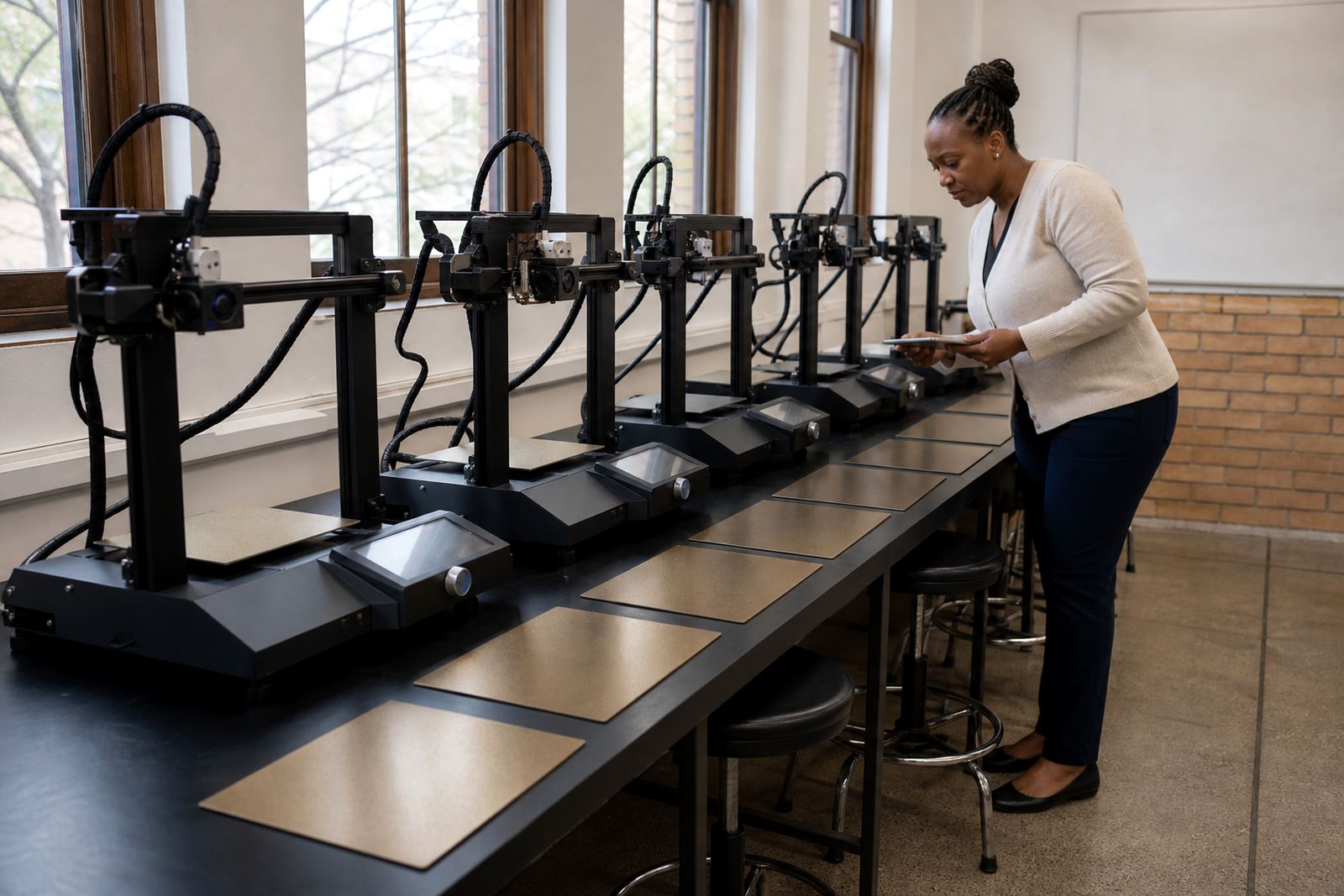
The session is suitable for schools, makerspaces, engineering teams and print farms that want consistent results across multiple machines. We work through cleaning methods, handling rules, storage, flatness checks and simple troubleshooting for poor adhesion. You will also learn how South African conditions like dust, heat, coastal humidity and load-shedding can affect the bed surface if it is not cared for properly.
Cleaning Methods That Protect the Surface
We show which cleaners are safe for common build surfaces and how often to use them. In most cases, a light wipe before each print and a deeper clean at set intervals is enough, but the exact approach depends on whether the bed is smooth, textured or coated. Over-cleaning can be just as damaging as poor cleaning, especially if the wrong cloth or chemical is used.
- Removal of oils from fingers, dust and filament residue
- Safe wiping technique using lint-free cloths or paper designed for workshop use
- When to use warm water, isopropyl alcohol or mild detergent
- What to avoid on PEI, magnetic sheets and coated surfaces
We also explain how to inspect for scratches, worn areas and residue build-up. Small marks can change adhesion patterns and lead to one corner lifting while the rest of the print looks fine.
Handling, Storage and Surface Protection
Many bed issues start before the first print, when the plate is picked up, stacked or left on a machine for too long. Our training teaches correct handling so the surface stays flat and clean, with less chance of fingerprints, bending or contamination. This matters even more in workshops where several people use the same printer.
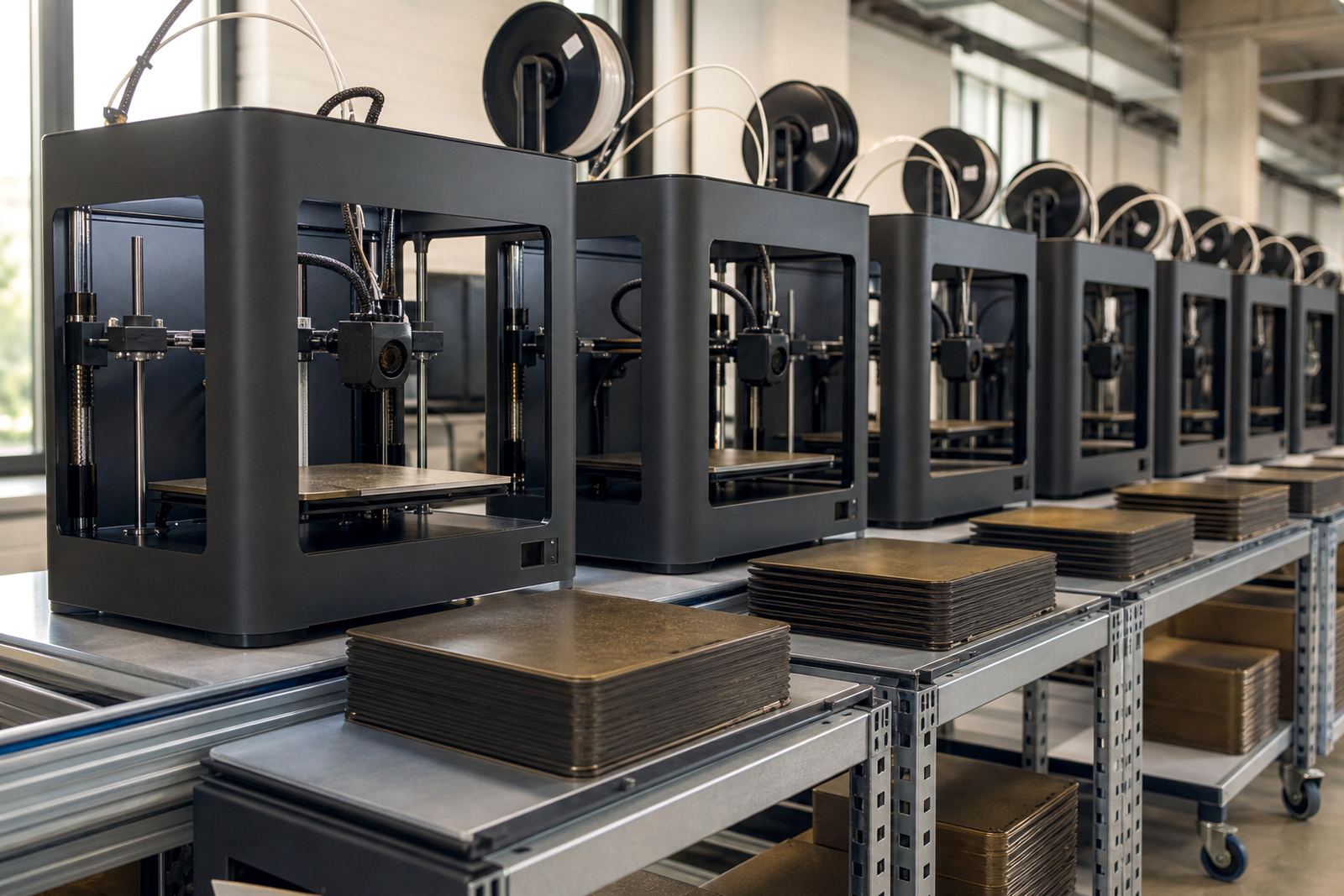
We cover storage methods for spare plates, including upright stacking, dust protection and simple labelling so the right surface goes onto the right machine. For schools and shared work areas, we also explain how to assign responsibility for plate care, which helps avoid confusion and rough handling. Good storage is not complicated, but it does need a routine.
- Safe lifting points for flexible and rigid plates
- How to store plates away from heat, direct sun and workshop dust
- Labelling by printer model, size and surface type
- Basic sign-off system for classrooms or shift-based production
Bed Flatness Checks and Maintenance Intervals
Adhesion problems are not always caused by the surface itself. Sometimes the bed is out of level, the magnetic base is uneven, or the printer has moved after transport. We include a simple flatness and consistency check so your team can identify whether the issue is cleaning, setup or hardware related.
Typical maintenance intervals depend on print volume. A school lab may only need weekly checks, while a print farm running daily jobs should inspect beds more often and log wear on each machine. We help you set a practical schedule for your site, not a generic rule that looks good on paper but is ignored after a week.
| Low use | Light clean before use, full inspection every 2 to 4 weeks |
| Medium use | Daily wipe, full inspection weekly, replace worn consumables as needed |
| High use | Every shift checks, scheduled refreshes, surface review after heavy jobs |
How the Training Session Runs
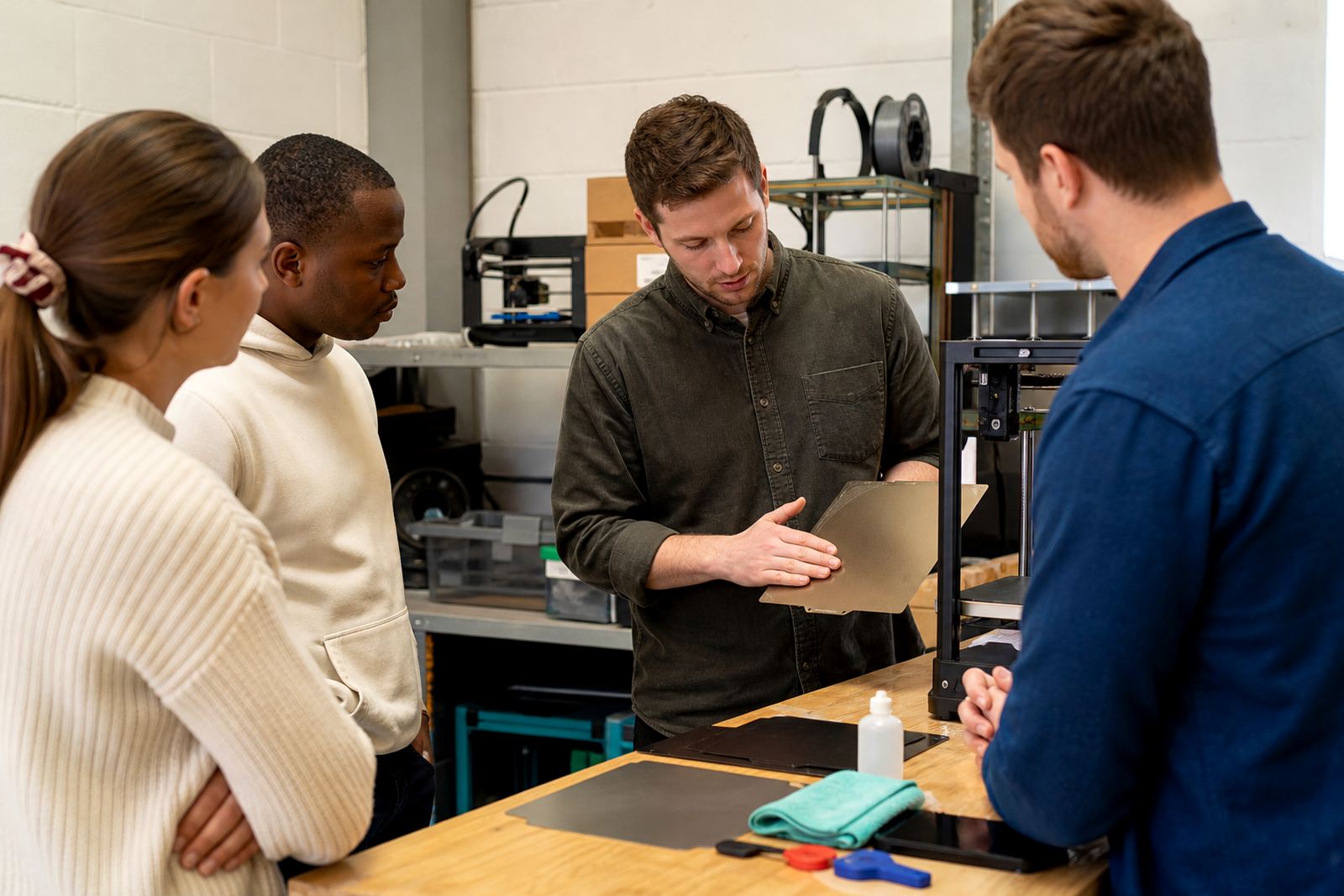
We keep the process straightforward. First, we look at the printers and surfaces already in use. Then we identify the problems you are seeing, such as poor first layer stick, corner lift, residue transfer or damaged coating. After that, we run through the correct care steps and show your team how to repeat them without guesswork.
If needed, we can also include a short site review of your current plates and adhesion products. This helps us tailor the session to the exact equipment in your Centurion office, Pretoria classroom or Johannesburg production room. The aim is to leave your team with a clear routine they can follow the same day.
- Initial discussion of printer models, surface types and print issues
- On-site demonstration of cleaning and handling methods
- Practical checklist for daily and weekly bed care
- Questions and follow-up notes for your team leader or lab manager
Pricing Approach and Turnaround
Pricing depends on the size of the team, number of printers and whether the session is on-site or organised for a mixed group. We quote according to the time required and the level of support needed, rather than forcing every customer into the same package. That way a small maker group does not pay for a large-farm programme they do not need.
For turnaround, we can usually schedule bed care training within a practical lead time, subject to site access and the areas we cover. Centurion collection and Pretoria East support are often the quickest to arrange, while other areas such as Cape Town, Durban, Bloemfontein and Gqeberha are planned around route and stock movement. If you need training before a new term, a large production run or a printer rollout, it is best to book early.
We also help with maintenance planning after the session, including when to refresh surfaces, when to replace a plate and when to order spare consumables before stock runs low.
Who Benefits Most From Bed Care Training
This service is useful wherever print reliability matters. Makers learn how to avoid wasted filament and damaged prints. Schools get a safer, more organised routine for shared equipment. Print farms gain better consistency across multiple beds, which saves time when machines are running through long jobs and the team cannot afford repeated restarts.
It is also useful for coastal users where humidity can affect storage and surface performance, and for busy inland sites where dust builds up quickly. A few minutes of proper care can extend the life of a plate and make first layers far more predictable.
When your team knows exactly how to clean, handle and store the bed, the printer behaves more consistently and the whole workflow becomes easier to manage.
Key facts
| Service type | Bed care training for 3D-printer build surfaces |
|---|---|
| Training focus | Cleaning, handling, storage, flatness checks and adhesion routines |
| Suitable for | Makers, schools, labs, print farms and technical teams |
| Surface types | Smooth PEI, textured PEI, magnetic bases and removable build plates |
| Typical session length | About 1 to 3 hours depending on team size and site needs |
| Coverage area | Centurion, Pretoria, Johannesburg, Cape Town, Durban, Bloemfontein and Gqeberha |