

What Replacement Planning Covers
Replacement planning is a practical check on the condition of your build plates, PEI sheets and magnetic bases, with a clear plan for when each item should be swapped out. It suits print farms in Johannesburg, school labs in Pretoria, maker spaces in Cape Town and production teams running long hours in Durban where humidity, handling and repeated heat cycles all affect surface life.
We look at the age of each plate, print count, surface marks, warping, lifting edges and any drop in first-layer grip. Where needed we also review whether the current plate spec still matches the materials you print most often, because a surface that worked well for PLA may be the wrong choice once you move into PETG, ABS or higher-temp jobs.
- Build plate condition review
- PEI sheet wear assessment
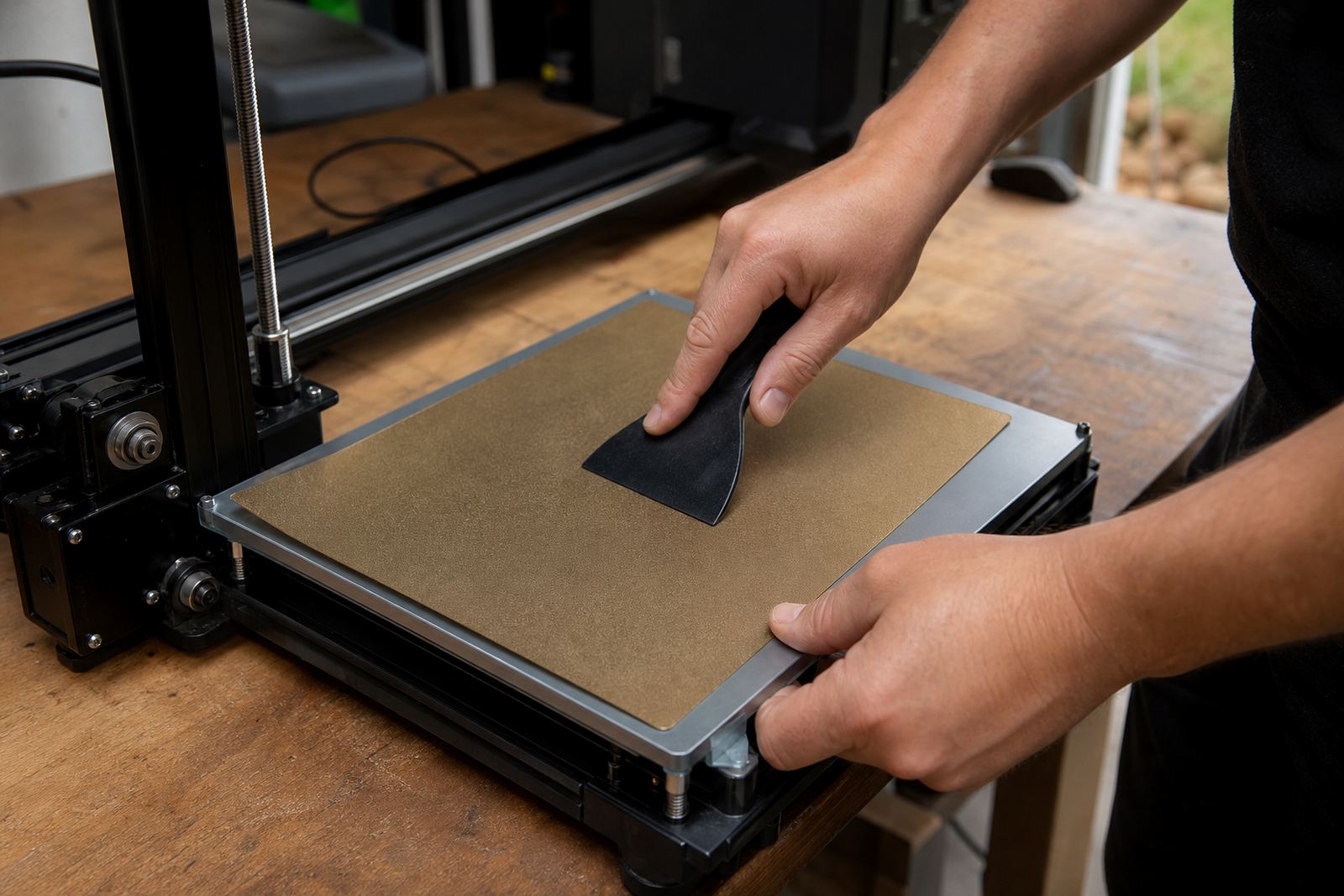
- Magnetic base and adhesive check
- Replacement timing plan by machine or cell
- Material specific surface recommendations
How We Assess Wear On Site or From Your Print Records
We can assess plates during a collection visit in Centurion, a dispatch run to Midrand, or as part of a wider farm standardising exercise. For larger teams, we also work from your print logs, failure notes and replacement history to spot patterns. If one machine is eating through plates faster than the others, there is usually a reason and it is worth finding before you buy more spares.
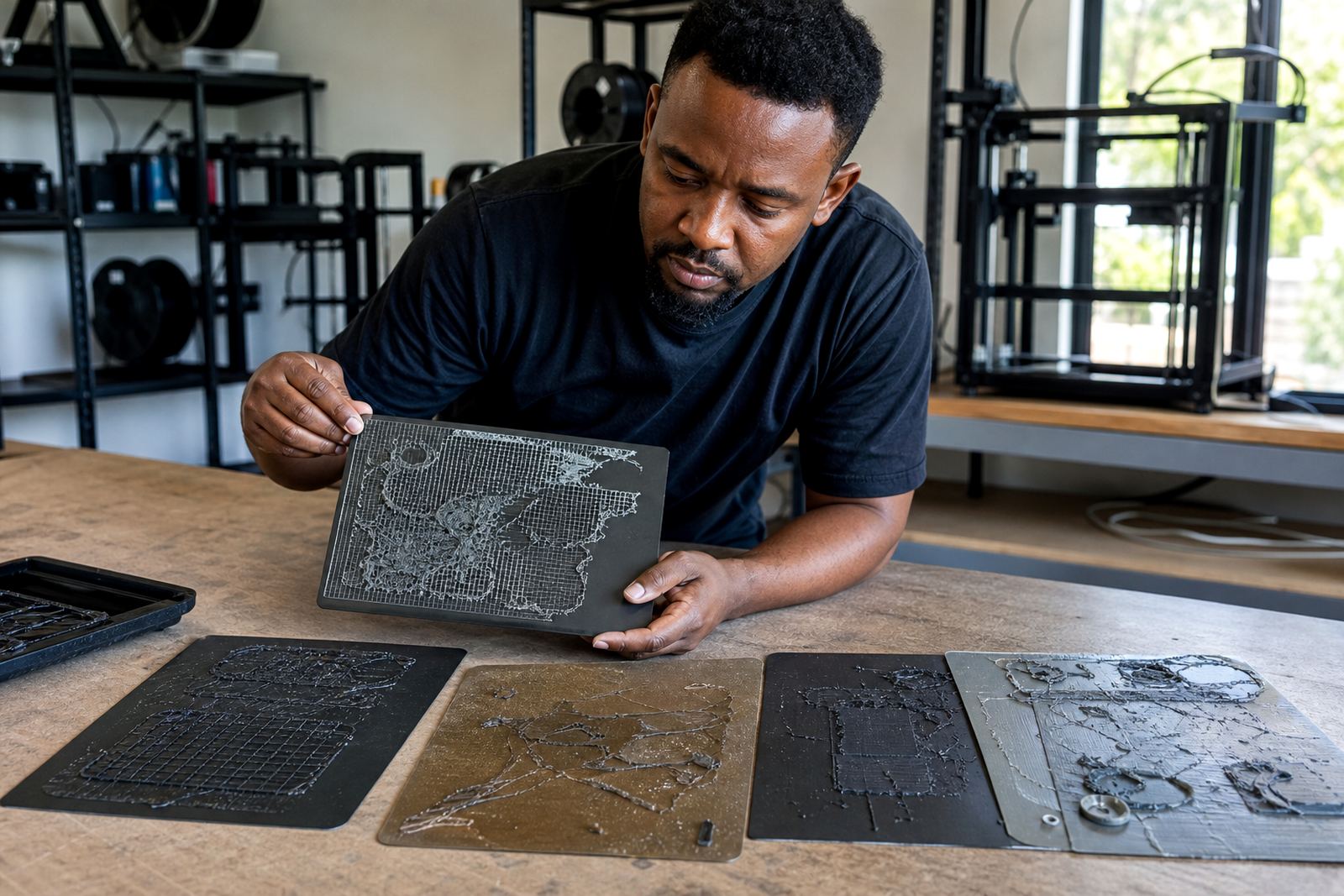
Our checks are straightforward and based on the signs that matter in day to day use: gloss loss on textured PEI, smooth PEI spots that no longer grip, dents from nozzle strikes, edge lift, contamination from oils or cleaning residue, and magnet fatigue under repeated heating. We also check whether bed flatness is contributing to uneven wear. That kind of issue can make a plate look faulty when the real problem is under it.
- Visual wear inspection
- First-layer performance review
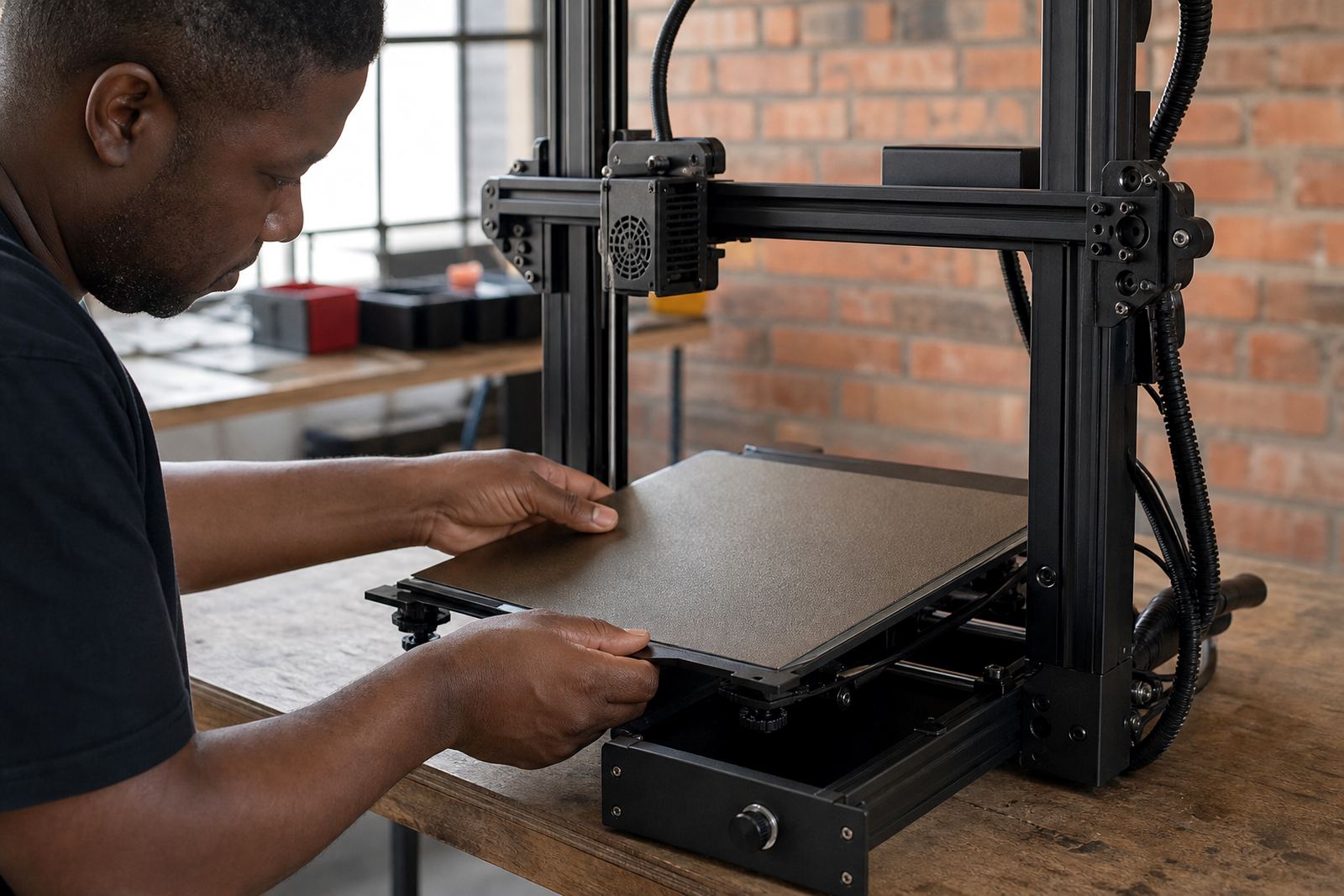
- Plate flatness and fit check
- Surface contamination check
- Usage pattern review for high-volume farms
Replacement Schedule Built Around Your Duty Cycle
There is no single replacement interval that suits every site. A school lab printing a few hours a week may get several months from a plate, while a farm running almost continuously will need a tighter schedule. We build the plan around your actual duty cycle, the materials in use, the temperature range and the cleaning routine. That keeps costs in line and reduces those random failed prints that mess up a full batch.
As a guide, we often separate plates into service bands so your team knows what to monitor closely and what should already be on order. If a plate is nearing the end of its useful life, we flag it before it starts causing rejected jobs. For busy teams this is often the cheapest form of insurance, especially when print time is more valuable than the plate itself.
- Low use sites: inspect every 4 to 8 weeks
- Moderate use sites: inspect monthly
- High volume farms: inspect weekly and replace on a planned cycle
- After nozzle strikes or major adhesion changes, inspect immediately
What Is Included In The Planning Service
The service includes a practical recommendation list for each machine or plate size, plus a replacement order plan that suits your budget and turnaround needs. Where useful, we can group machines by standard size so your team keeps fewer spares on hand and avoids confusion between similar looking plates. That is especially helpful in mixed fleets where the same printer model may be running different build surface setups.
We also advise on what to keep as backup, what to phase out and what should be replaced together for consistency. In some cases it is smarter to change the plate, magnetic base and fitting consumables at the same time than to chase one problem part at a time. It saves labour and keeps the surface stack predictable.
- Plate and sheet replacement list
- Priority ranking for urgent swaps
- Stock holding guidance
- Compatibility checks for your machine range
- Advice on cleaning and care between replacements
Turnaround, Supply and Pricing Approach
For most replacement planning jobs, we can complete the assessment and issue a recommendation quickly, especially if the team sends machine counts and print use details in advance. If the request is tied to a collection run or school setup, we can bundle the planning with other work so there is less downtime. Where urgent failures are already happening, we prioritise the most affected machines first.
Pricing is based on the number of machines or plates to be reviewed, the level of detail required and whether the work is on site or done as part of a broader support visit. We do not charge for unnecessary extras. If you only need a replacement schedule, we keep it focused. If you need farm standardising, fitting checks and training as well, we can quote that as one plan so you know exactly where the Rand goes.
- Simple review for small teams
- Scaled pricing for print farms and labs
- Combined quoting available for fitting and training
- Stock planning for replacement batches
Keeping Surfaces In Service For Longer
Good maintenance extends the life of every plate, but it has to be realistic for South African conditions. Dust, handling, cleaning products and high temperatures all matter. In coastal areas around Cape Town and Durban, humidity can change how a surface behaves from one week to the next. In Gauteng, dry conditions and load-shedding related restarts can also change how often teams touch and reheat machines, which affects wear over time.
We help set maintenance intervals that fit the way your team actually works, not some idealised schedule nobody follows. That means deciding when to clean, when to inspect, when to rotate plates and when to stop using a surface that is no longer giving reliable adhesion. A clear maintenance cycle usually costs less than replacing failed parts after a bad run.
- Daily wipe-down guidance
- Weekly condition check for active farms
- Monthly review for labs and schools
- Replacement trigger points for worn plates
Key facts
| Service area | Centurion, Pretoria, Johannesburg, Cape Town, Durban, Bloemfontein and Gqeberha |
|---|---|
| Typical materials reviewed | PEI sheets, glass plates, spring steel plates, magnetic bases and adhesive layers |
| Recommended check intervals | Weekly to monthly depending on print volume and surface type |
| Common plate sizes | 220 x 220 mm, 235 x 235 mm, 300 x 300 mm and custom cut sizes |
| Useful indicators | Reduced grip, edge lift, nozzle scars, warping, contamination and uneven wear |
| Best for | Print farms, school labs, maker spaces, print service shops and production teams |