
What Magnetic Base Fitting Includes
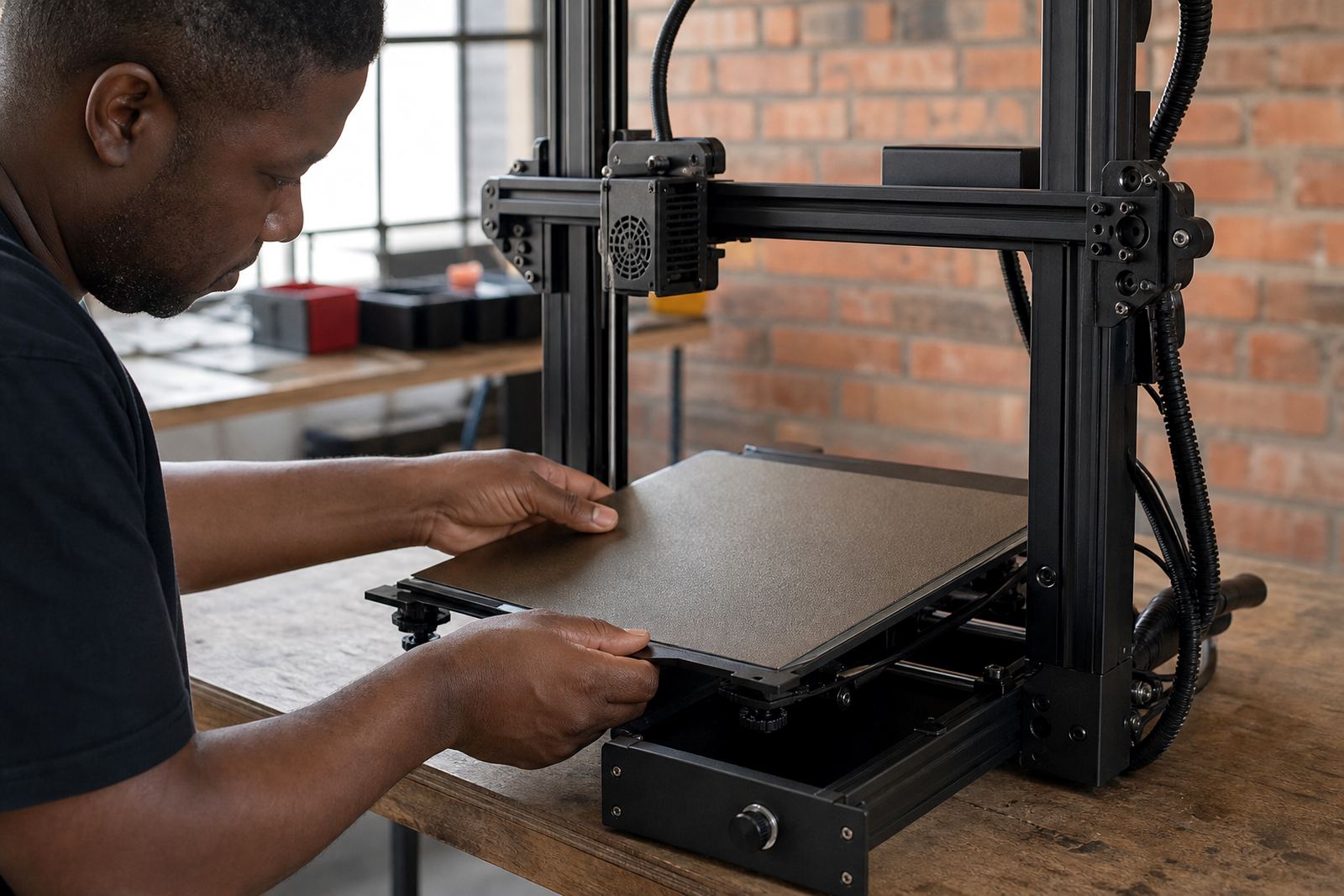
Magnetic base fitting is the process of bonding a magnetic layer to the printer bed so a spring steel or flex plate can be removed after each print. Done properly, it gives you a flatter working surface, quicker part removal, and less scraping on the build plate. It is a practical upgrade for users who print often, change materials, or need faster turnaround between jobs.
Our fitting service is intended for common bed sizes used in South Africa, from smaller hobby machines to larger format printers. We work with smooth and textured PEI systems, where suitable, and we check that the bed can handle the added thickness without reducing usable Z height too much. If your printer relies on a heated bed, we also look at temperature stability and whether the magnet is rated for the heat you normally print at.
- Removal of the existing build surface where needed
- Surface cleaning and bed prep before bonding
- Alignment of the magnetic sheet for full coverage
- Pressure fit and cure guidance where adhesive is used
- Compatibility check for spring steel flex plates
- Basic test to confirm plate seating and release
How We Fit the Magnetic Base
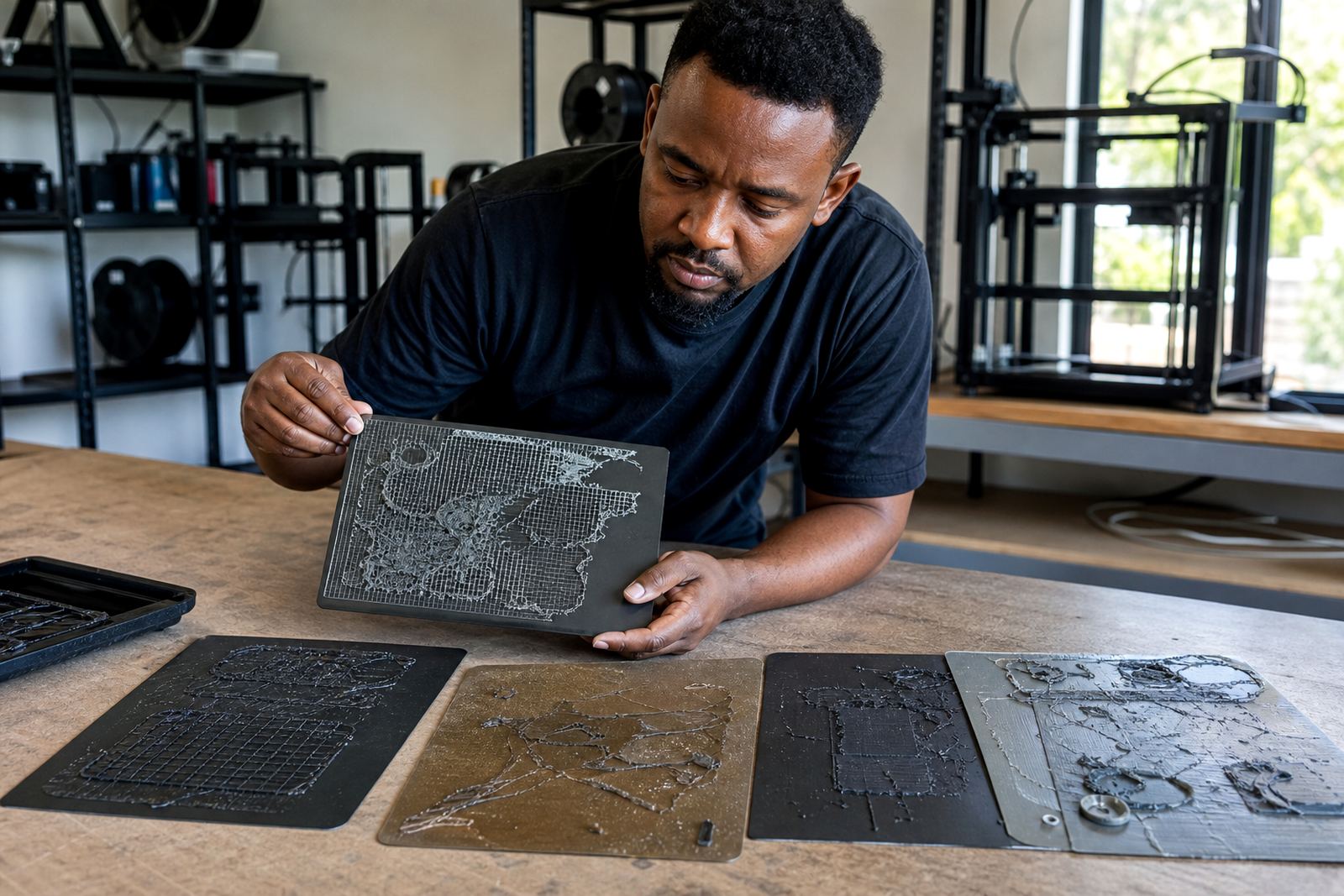
We start with a quick check of the printer model, bed material, and the type of prints you run. A glass bed, aluminium plate, or coated surface all behave differently, so the prep is not the same on each machine. If there are high spots, old adhesive, or damaged corners, we note that before any fitting begins. It saves time later and helps avoid a lifted edge or poor bond.
Next we measure the active bed area and confirm the magnetic sheet size. For custom machines or modified beds, we can cut to fit. In most cases the installation follows a simple sequence: clean, mark, align, bond and press. We leave the system to settle before heat cycling it, because rushing that step can reduce grip over time. After fitting, we check that the flex plate sits flat and that the nozzle clearance is still correct across the bed.
- Inspection of bed condition and dimensions
- Cleaning with suitable adhesive remover and lint-free wipe
- Dry fit and alignment check
- Bonding of magnetic layer to the bed
- Pressure setting across the full surface
- Heat test and plate fit confirmation
Turnaround, Pricing and What Affects the Quote
Turnaround depends on the condition of the printer and whether the bed needs extra prep. A simple installation on a clean, standard-size bed can often be completed quickly, while a machine with residue, warping concerns, or a custom cut may take longer. If the system needs curing time before the first hot run, we will let you know upfront so you can plan around it.
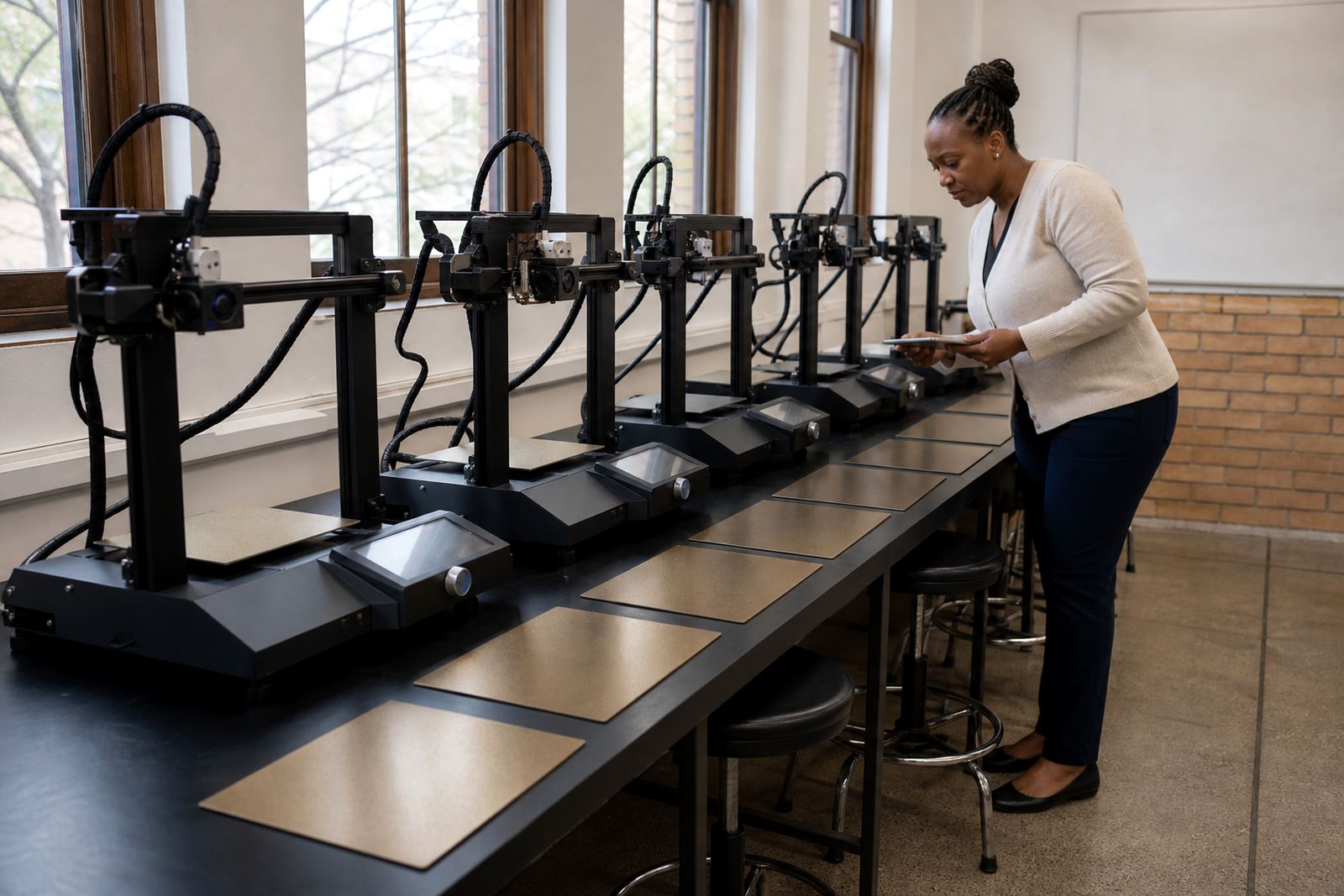
Our pricing is based on the bed size, the amount of prep required, and whether you need a standard fit or a custom cut. Schools and print farms often ask for more than one machine to be standardised, and in those cases we price the job around consistency across the fleet rather than treating each printer as a one-off. That helps when you need spares that match across multiple bays.
- Small beds: generally lower material use and quicker fitting
- Large format beds: more material, more alignment time
- Custom cuts: priced on size and finish requirements
- Fleet work: quoted per unit or as a standardisation batch
- Extra prep: old adhesive, damaged surfaces, or cleaning time may add to cost
When a Magnetic Base Needs Attention
Magnetic bases do not need constant maintenance, but they do need regular checks. In South Africa, dust, heat cycles and coastal humidity can affect adhesive performance over time, especially if the printer sits in a garage, classroom or workshop with changing temperatures. A quick inspection every few months usually catches early signs of lifting before they become a problem.
If you print daily, especially with high bed temperatures, check the corners and centre of the magnetic sheet during routine cleaning. If you notice a soft edge, slight movement, or a change in plate seating, do not ignore it. On farm setups and school labs, we usually recommend a planned inspection interval so the team knows when to look instead of waiting for a failed print.
- Check corners and edges every 8 to 12 weeks
- Inspect more often on high-heat machines
- Keep the bed clean and free of oil or dust
- Replace worn flex plates before they mark the magnet
- Avoid sharp tools that can lift the magnetic layer
Best Results for Home Users, Schools and Print Farms
Magnetic base fitting is useful for anyone who wants quicker part release and less handling of the heated bed. Home users often want cleaner removal of PLA or PETG parts. Schools want fewer damaged beds and easier supervision for learners. Print farms need repeatable setup across several machines, with less downtime between jobs and fewer surface-related failures.
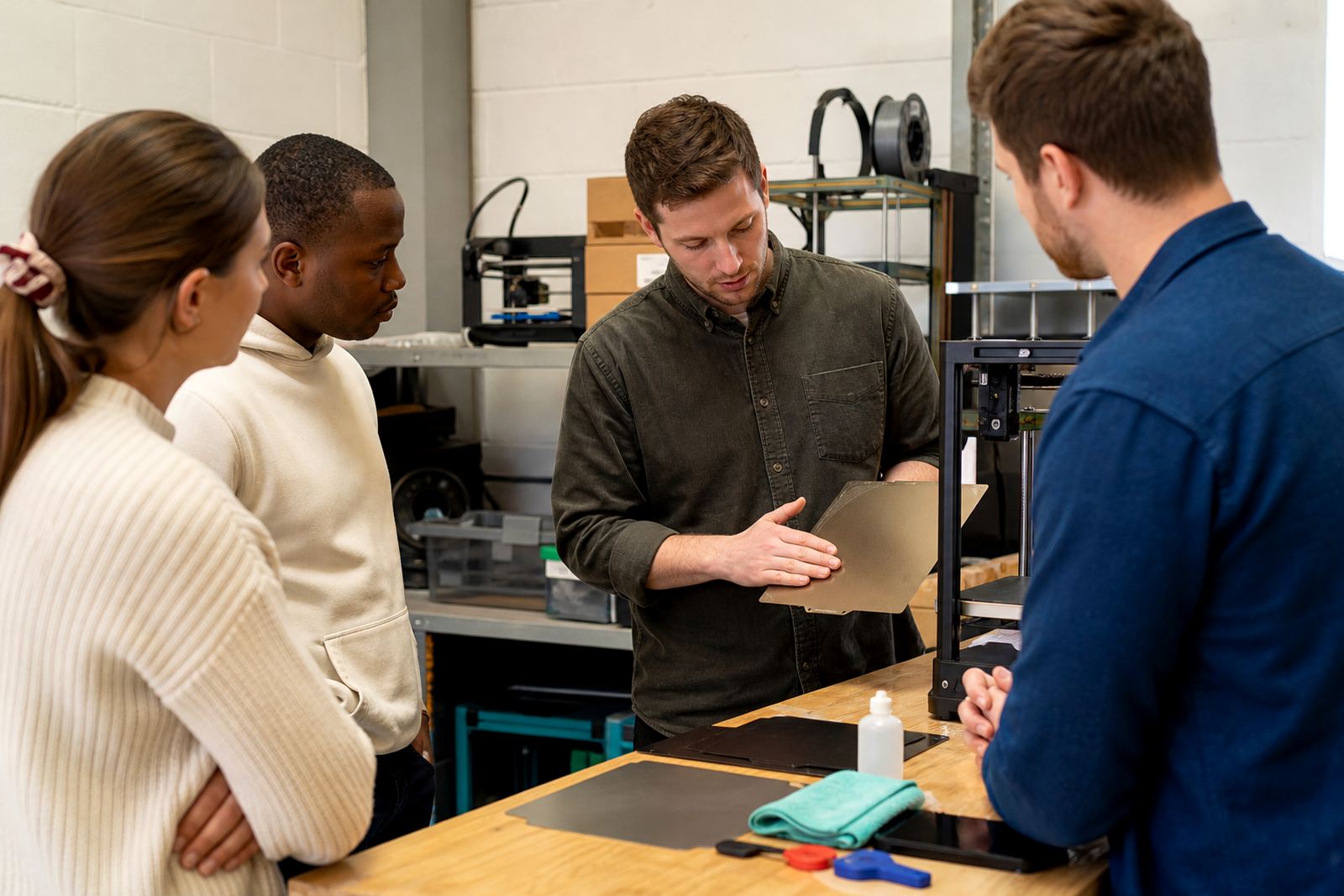
We can also help standardise plate sizes and surface types across a group of printers. That matters when you are running different machines in the same room and want the same spare plates to work across most of them. For training rooms and school labs, we can explain how to remove a flex plate safely, how to avoid bending it, and how to clean the surface without shortening its life.
- Home printers with frequent part changes
- School labs that need safer, simpler handling
- Print farms aiming for consistent bed setup
- Users upgrading from fixed beds to removable systems
- Teams that need one method across several machines
What to Bring or Tell Us Before Booking
To keep the fitting accurate, give us the printer model, bed size, and the highest bed temperature you normally use. If you already have a flex plate, bring it along so we can check fit before bonding the magnet. If you are unsure whether the bed is glass, aluminium, or coated metal, send a clear photo through the enquiry form on our contact page and we will guide you from there.
It also helps to mention whether the printer stays in a warm office, a school store room, or a workshop with dust and humidity. Those details influence the prep and help us recommend the right maintenance interval. We do not overcomplicate the process, but we do make sure the fit is suitable for your daily use rather than a quick one-size job.
- Printer model and bed dimensions
- Current bed surface and any damage
- Target materials and bed temperature range
- Whether you need one printer or a full batch fitted
- Your preferred turnaround window
Key facts
| Supported bed sizes | Common hobby beds through to larger custom formats, with cut-to-fit options available |
|---|---|
| Typical heat range | Suitable for many beds used between 50 degreeC and 110 degreeC, depending on system rating |
| Surface types | Glass, aluminium and coated beds can be assessed for compatibility before fitting |
| Installation method | Clean, align, bond, press and heat test with plate seating check |
| Maintenance interval | Inspect every 8 to 12 weeks, or sooner on high-use and high-heat machines |
| Use case | Home printers, school labs, maker spaces and print farms |