
Why dental model labs need repeatable plate prep
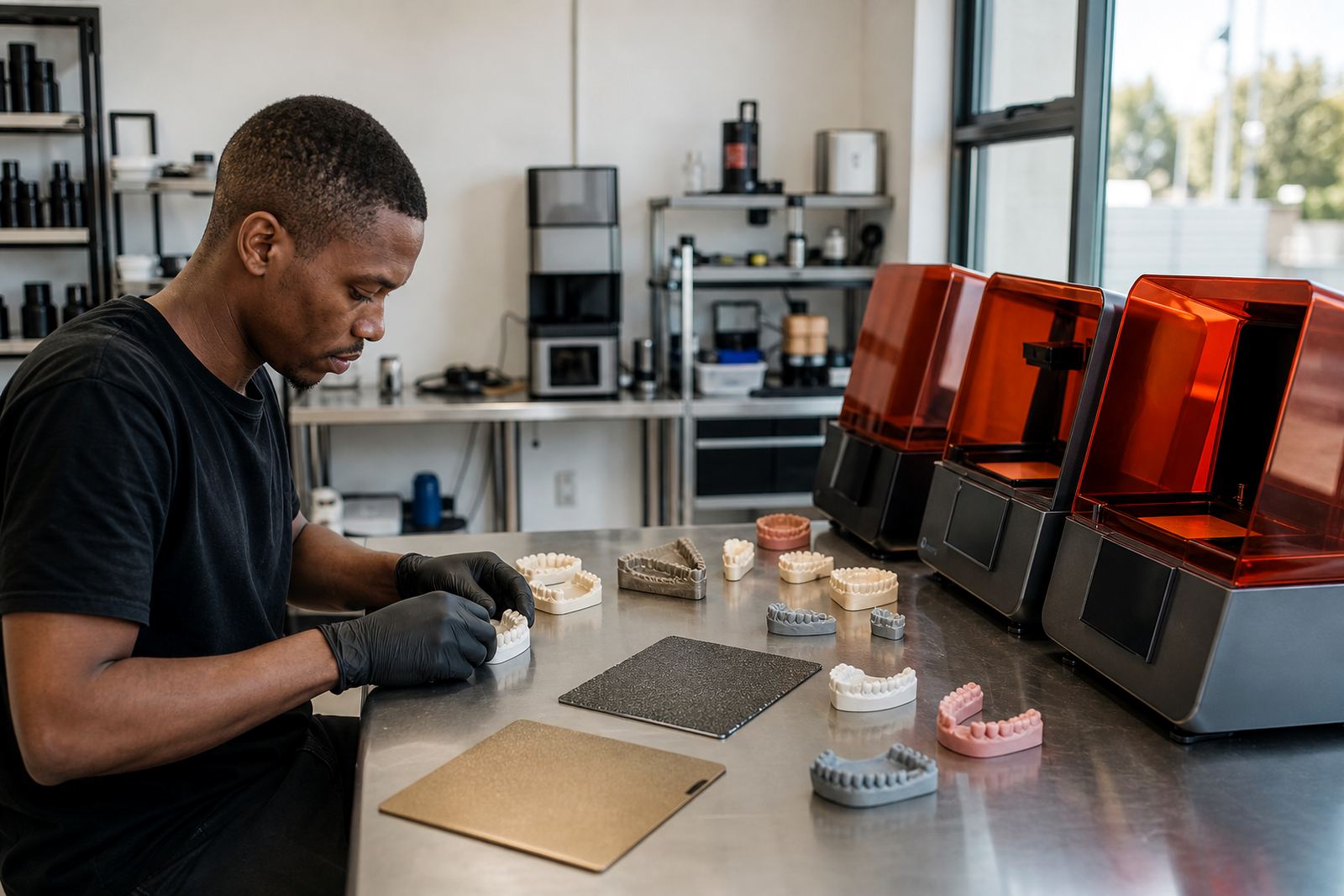
In a dental model lab, small differences in adhesion can affect a full run of models, bases and aligners. When the plate is prepared the same way every time, the first layer lands where it should, parts release more cleanly and staff spend less time scraping, reprinting or checking for warping.
That matters in busy labs serving practices in Pretoria, Johannesburg, Cape Town, Durban and Bloemfontein. You may be running evening batches after load-shedding, or pushing a few printers hard before courier collection. A steady plate routine gives you better control over yield, turnaround and rework.
We also see that dental work tends to use smaller, tighter parts than general maker projects. That means the bed surface has to be consistent right across the usable area, not just in the middle. If one corner releases differently, the whole tray becomes a problem.
Typical equipment in a small to medium model lab
Most dental model labs start with a compact fleet of FDM printers, a few spare build plates and a basic cleaning routine. Some labs use a single printer for urgent cases, while others run several machines in parallel for model sets, study casts and appliance supports. The exact mix changes, but the plate requirements stay similar.
- Spring steel build plates for fast changeover between jobs
- PEI sheets for dependable grip on common model materials
- Magnetic bases where quick removal saves time during shifts
- Isopropyl-safe cleaning cloths and non-abrasive wipes
- Scrapers, nylon tools and a small inspection light
- Spare plates for overnight runs and backup during servicing
For labs in humid coastal areas like Durban and Gqeberha, surface care matters more than many teams expect. Moisture, dust and fingerprints can change adhesion from one run to the next, so a simple cleaning step before each batch pays off.
Layout planning for a cleaner workflow
A good dental model lab layout keeps printing, cooling, cleaning and packing in separate zones. You do not want freshly printed parts stacked next to dust, packaging offcuts or cleaning fluids. Even a small room can work well if the path is simple and the process is fixed.
Place the printers where staff can reach them without crossing the packing area. Keep spare plates near the machines, not across the room, and store replacement sheets flat so they do not pick up bends. If your lab also handles school work or bulk educational models, set aside one shelf for labelled plates by machine number. That avoids mix ups when the day gets busy.
Centurion and Midrand labs often run from office parks with limited storage, so wall racks and narrow shelving help. In older buildings around Pretoria East, check that the table is level and sturdy enough for repeated plate removal. A slight wobble on the base can look minor, but it often shows up later as a poor first layer.
Common plate mistakes we see in dental printing
Most adhesion problems in model labs come from routine errors rather than the printer itself. A plate that looked fine yesterday can fail today if the cleaning step was rushed or the surface was worn. It is worth watching for the small habits that keep causing repeat faults.
- Using a worn sheet too long after the surface has gone patchy
- Skipping levelling checks after moving a printer or fitting a new plate
- Touching the print area with bare hands after cleaning
- Running too much bed adhesion product and causing messy release
- Mixing plate types across printers without a clear label system
- Ignoring tiny edge lifts that later become full part failures
We also see labs trying to save money by reusing damaged plates for critical jobs. That can cost more in wasted resin or filament than the replacement ever would. If the sheet is scratched, warped or no longer gripping evenly, it is time to replace it.
Budget ranges for plates, sheets and fitting work
Lab budgets vary depending on printer count, plate size and how often you change surfaces. A single replacement PEI sheet may fit a modest budget, while a full standardising plan for several printers costs more but can save a lot in failed runs. For dental model work, it helps to budget for both the surface and the fitting labour.
As a working guide, many South African labs plan around R350 to R900 for a basic sheet or plate upgrade on a small machine, R900 to R2,500 for more specialised build plate and magnetic base combinations, and R2,500 to R8,000 plus for multi-printer standardising across a small farm or lab cell. Custom size cutting and bulk replacement planning can move the total up or down depending on how many printers are involved.
If you are comparing costs, remember to include downtime. A cheaper plate that causes one failed batch each week is often more expensive in the long run, especially when staff time and reprints are counted.
Services that help dental labs keep batches moving
LayerPad works with labs that need practical support, not just a box of parts. We help with plate installation, PEI sheet fitting, magnetic base fitting and bed flatness checks. We also provide surface refresh options, custom size cutting and replacement planning for labs that want a more organised consumables schedule.
For new setups, school-linked labs and teams expanding into print farms, farm standardising is useful because it keeps the plate setup consistent across all machines. That makes training easier and reduces operator error. Our maker education lead also supports school lab setups where dental model printing is part of a broader technical programme.
- Adhesion troubleshooting for recurring lift or release issues
- Bed care training for staff who handle daily plate cleaning
- Consumables supply for ongoing plate and sheet replacement
- Collection and coverage support in Centurion, Pretoria, Midrand and Johannesburg
If you need plates delivered or fitted for a lab in Cape Town, Durban or Bloemfontein, we can help plan around your schedule and courier timing. The aim is simple: fewer interruptions, cleaner runs and a plate routine that your team can repeat without guesswork.