
What print farms need from every first layer
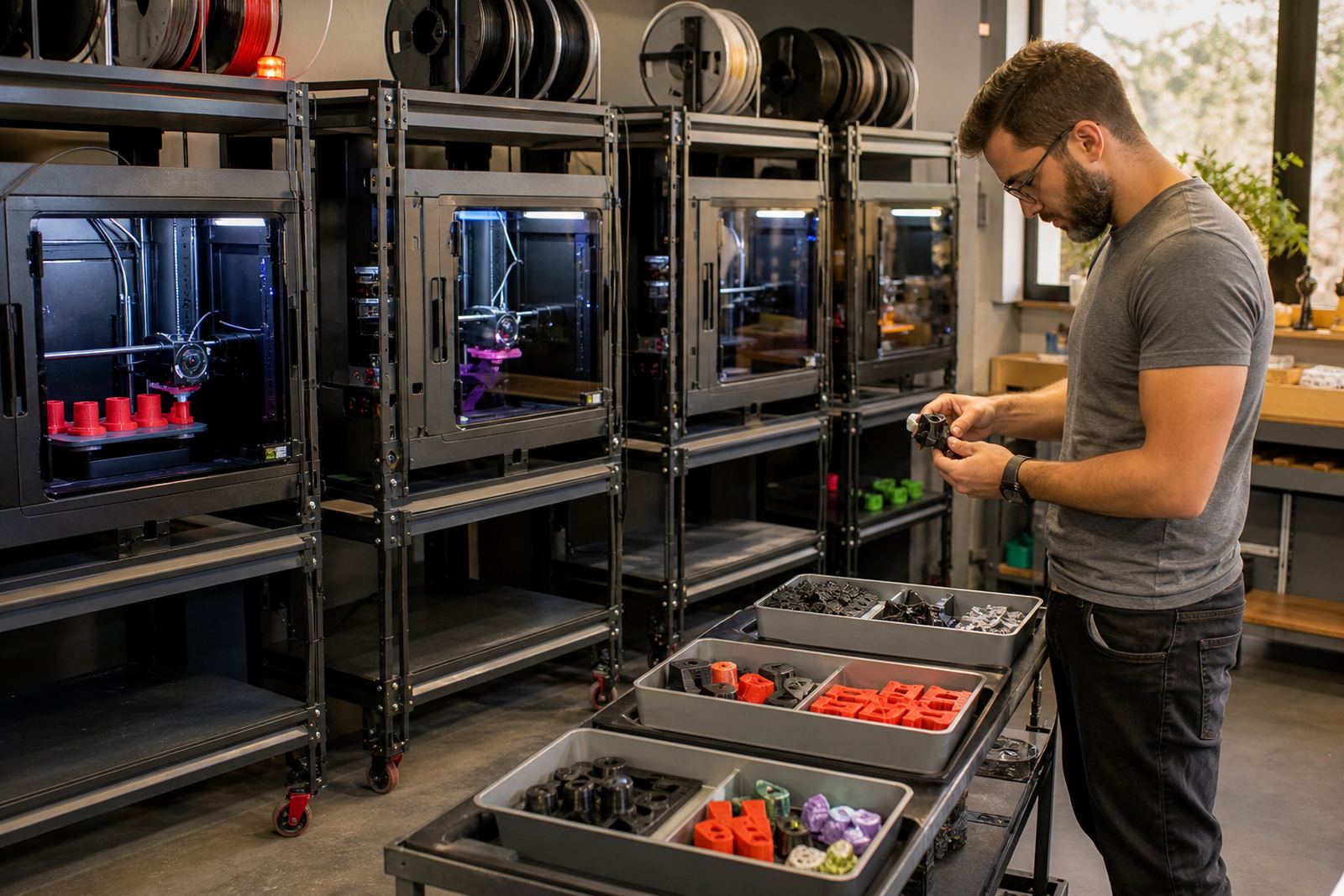
A print farm lives or dies on repeatability. When a job is running across ten, twenty, or more machines, the first layer must grip the same way every time, with the same release feel when the part is done. That is why build plate choice, surface finish and bed condition matter more than many teams expect. A plate that works on one machine but behaves differently on the next quickly turns into scrap, stoppages and rework.
In practice, most South African print farms use a mix of direct drive and Bowden machines, with heated beds, removable plates and a steady supply of PEI surfaces. The goal is not just better adhesion, but less cleaning, fewer failed starts and quicker changeovers between jobs. In Pretoria, Johannesburg, Cape Town, Durban and Bloemfontein, many teams also have to deal with load-shedding, warm rooms, coastal humidity or dusty workshops, all of which can shift how a bed performs from week to week.
For a production environment, consistency is worth more than novelty. If your team can predict release, flatness and heat-up behaviour, you can plan runs with less waste and fewer surprise delays.
Typical equipment on a production floor
Most print farms do not run on a single machine type. A working setup often includes a mix of enclosed and open printers, spare build plates, magnetic bases, bed levelling tools and cleaning materials. Some teams keep one plate set per printer, while others rotate plates through a wash, inspect and return cycle. The right system depends on your job mix, but the principle stays the same: every printer should have a known surface with known behaviour.
- Removable build plates in several sizes for different machines
- PEI sheets for improved first-layer grip and easier release
- Magnetic bases where quicker plate swaps are needed
- Bed flatness check tools for recurring adhesion problems
- Cleaning supplies for dust, oils and release residue
- Spare plates for high-volume or overnight production runs
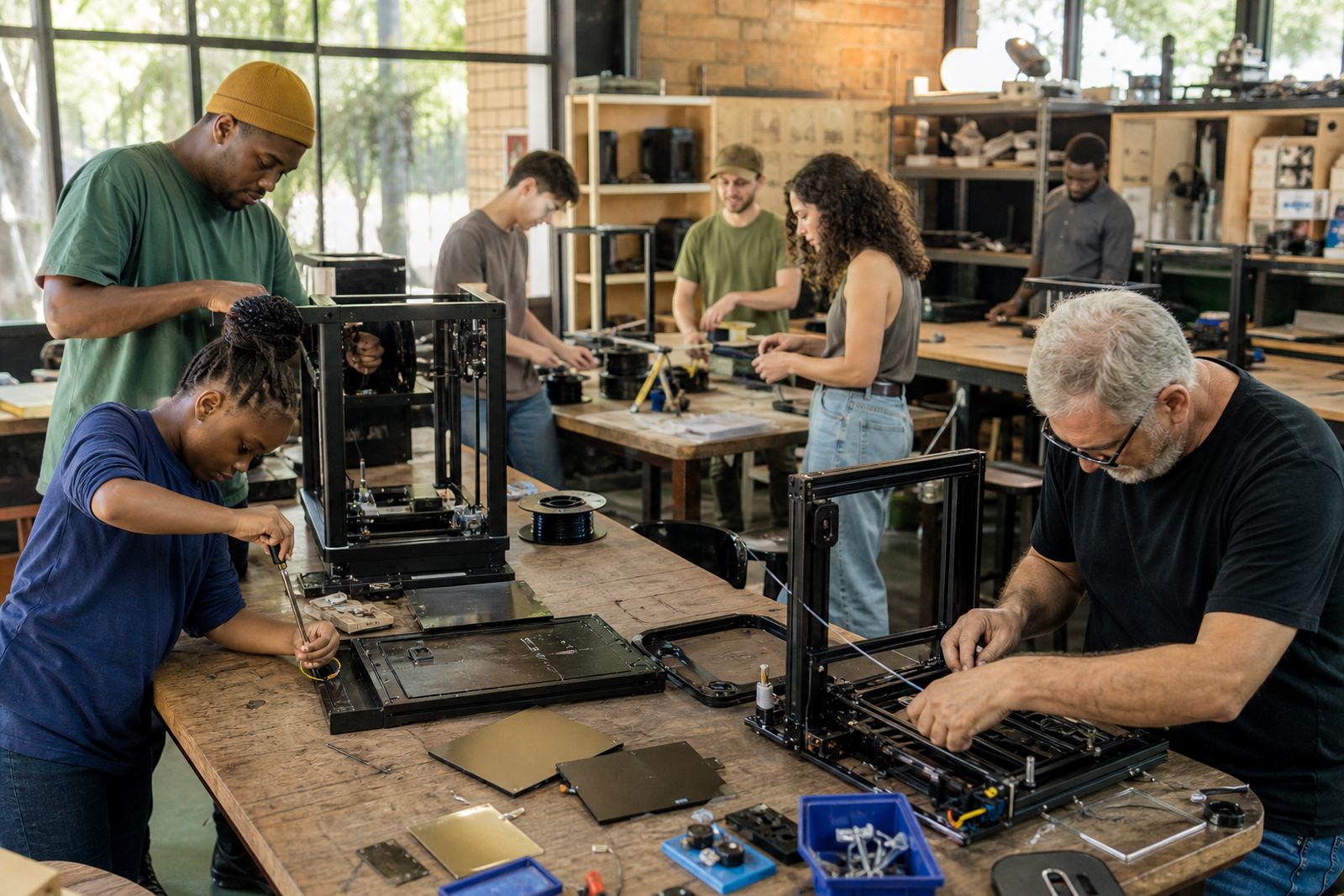
Schools and maker labs that scale up into farm-style production often need the same items, but with a tighter budget and simpler training. A clean, labelled plate system saves time when multiple operators share the same room. It also helps prevent the common mistake of moving a good plate from one printer to another without checking fit, flatness or surface condition first.
Layout planning that saves time and plates
A print farm should be laid out around movement. Operators need space to remove plates, inspect parts, clean surfaces and return them without bumping into other machines. If plates are stacked in the wrong place, or if there is no fixed return point, surfaces get scratched and warped. Even a small workshop in Centurion or Midrand can run well if the workflow is clear.
We usually advise teams to separate the floor into simple zones: print, inspect, clean, store and prep. That reduces handling mistakes and keeps plate condition more predictable. If you are running a farm in a shared municipal space or a school lab, it also makes it easier to manage dust, access and safety. In humid areas near the coast, storage matters even more because moisture and grime can affect surface behaviour faster than expected.
- Keep spare plates flat and off concrete floors
- Label machines by plate size and surface type
- Use one cleaning method across the full farm
- Record which plates are tied to high-wear jobs
- Plan a spare set for load-shedding recovery and overnight runs
Common mistakes that hurt output
One of the biggest mistakes is treating all adhesion problems as a slicer issue. In many cases the issue is the plate, the bed, or the way the surface is being handled between jobs. A second common problem is waiting too long before replacing a worn PEI sheet. Once a surface starts showing uneven grip, shiny wear lines or patchy release, it often costs more in failed prints than the replacement plate would have cost.
Another issue is skipping maintenance planning. A print farm with no schedule for plate cleaning, inspection and replacement will slowly lose output quality. Teams also sometimes overlook temperature matching. A plate that works well for PLA may behave differently with PETG, ABS or other materials, especially if the bed is not stable or the room temperature shifts during the day. The right plan should account for material, job size and the way each machine is used.
We also see farms trying to stretch one surface across too many printers. That may look cheaper at first, but it creates bottlenecks when machines need different sizes or surface finishes. A better approach is to standardise where possible, then keep a small number of specialist plates for difficult jobs.
Budgets for farms, schools and production teams
Budgeting for print farm support in South Africa depends on the number of machines, the plate sizes, and whether you need fitting, cutting or troubleshooting as part of the job. For a small production room, replacement plates and PEI sheets may start from a few hundred Rand per item, while complete sets for multiple printers can move into the low thousands quickly. If you are fitting magnetic bases, reworking beds or standardising a fleet, the total can rise further.
As a rough working guide, many teams should allow for the following:
- Small repair or replacement jobs: from about R350 to R1,200
- Single printer fitting or plate refresh: from about R450 to R1,500
- Multi-machine standardising: from about R2,500 to R8,000
- School lab setup or farm planning support: from about R3,500 upward
The useful question is not only what a plate costs, but what each failed first layer costs in time, filament and operator attention. In a busy farm, one bad run can waste more money than a proper replacement would have. That is why many teams choose a maintenance plan instead of waiting for breakdowns.
How LayerPad supports high-output printing
LayerPad works with print farms that need plates, surface refresh work and sensible replacement planning. That includes plate installation, PEI sheet fitting, magnetic base fitting, bed flatness checks, custom size cutting, adhesion troubleshooting and consumables supply. For teams in Centurion, Pretoria East, Midrand, Johannesburg and the major metro areas, the aim is to keep machines usable and predictable, not just supplied.
We also support farm standardising, which is often where the biggest gains are found. When each printer behaves slightly differently, staff spend too much time adjusting settings and swapping plates. Once the surfaces, sizes and handling rules are standardised, the whole room becomes easier to run. That matters whether you are producing parts for sale, teaching learners, or keeping a large fleet moving through the week.
If your farm is starting to grow, or if your current plates are causing uneven first layers, it is worth tightening the system before output slips further. A good surface plan usually pays for itself in fewer failed starts, less cleaning and better turnaround between jobs.