
Why prototype shops need repeatable first layers
In a prototype shop, every print is usually part of a larger process. A housing needs a quick fit check, a bracket must line up with a jig, or a snap-fit part has to be tested before the next revision. If the first layer lifts or shifts, the whole schedule slips and the printer becomes the bottleneck.
That is why dependable build plates matter as much as the machine itself. A good plate gives you the same release behaviour from one job to the next, so teams can plan around real turnaround times instead of guessing. For shops in Centurion, Pretoria, Johannesburg and Cape Town, that consistency is especially useful when power interruptions or busy print queues make every hour count.
Most prototype teams do not need fancy extras. They need clean adhesion, proper flatness and a surface that suits the materials they run most often. If the shop handles both short test prints and larger overnight parts, it helps to standardise the plate spec across the fleet so operators know what to expect.
Typical equipment in a working prototype bench
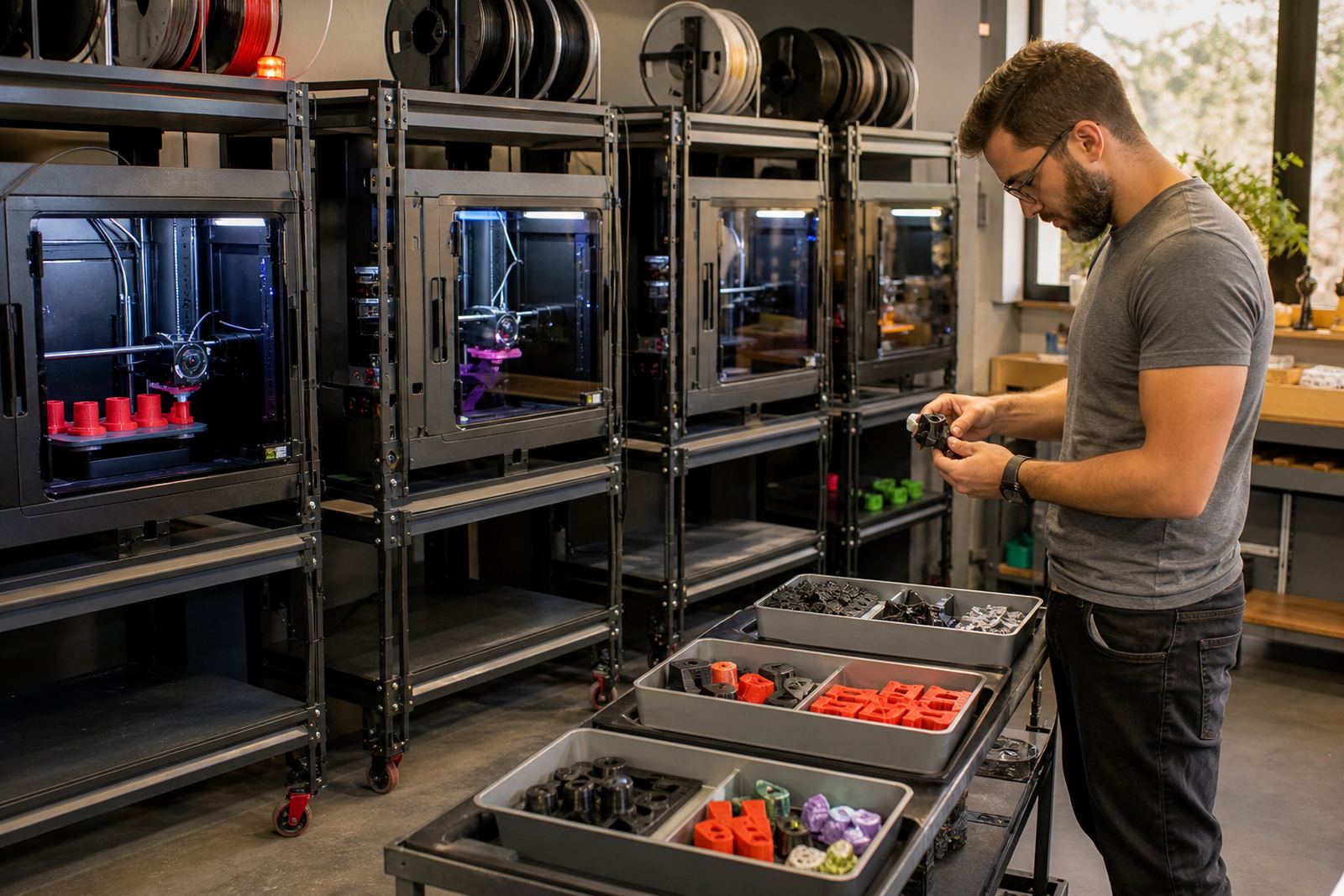
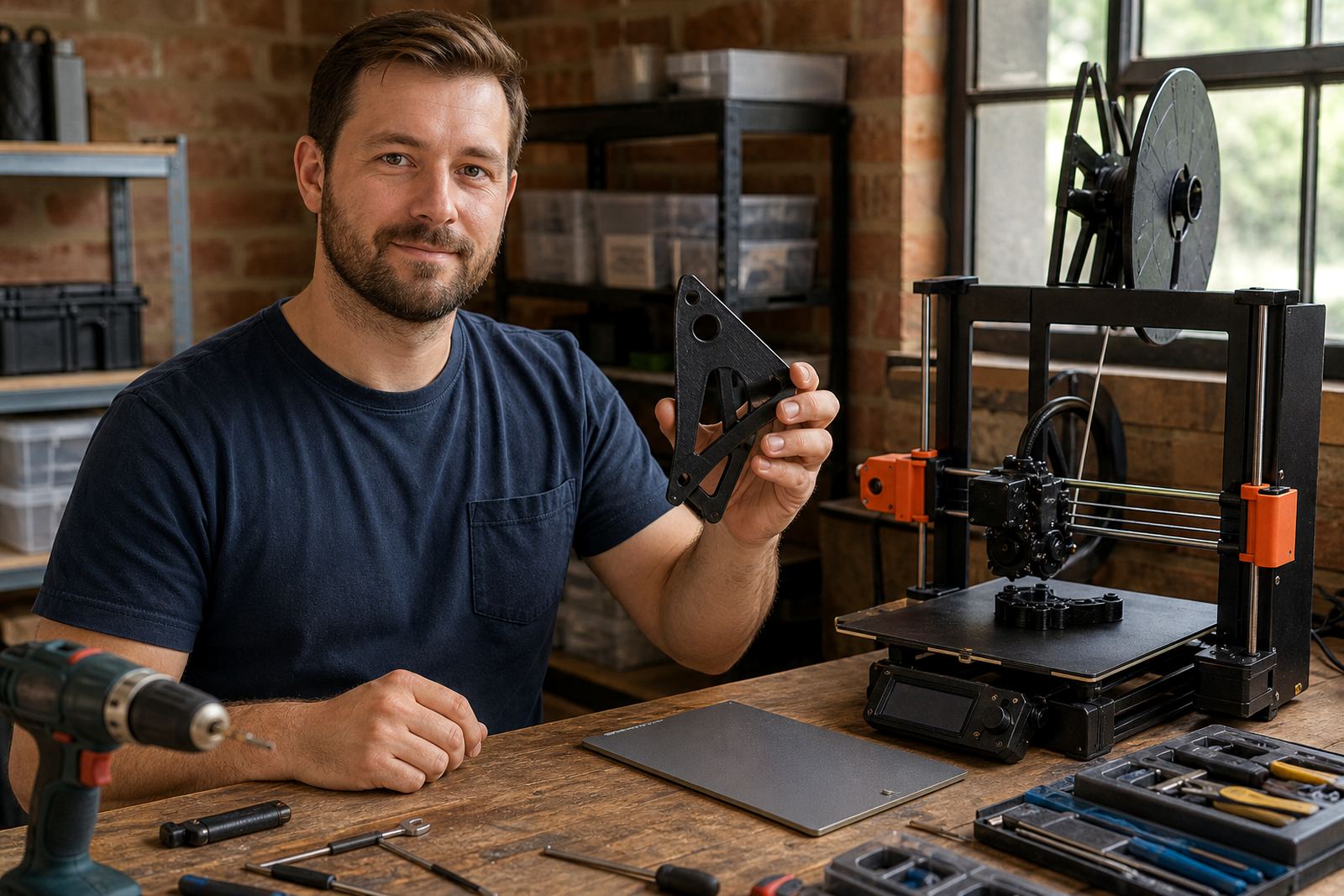
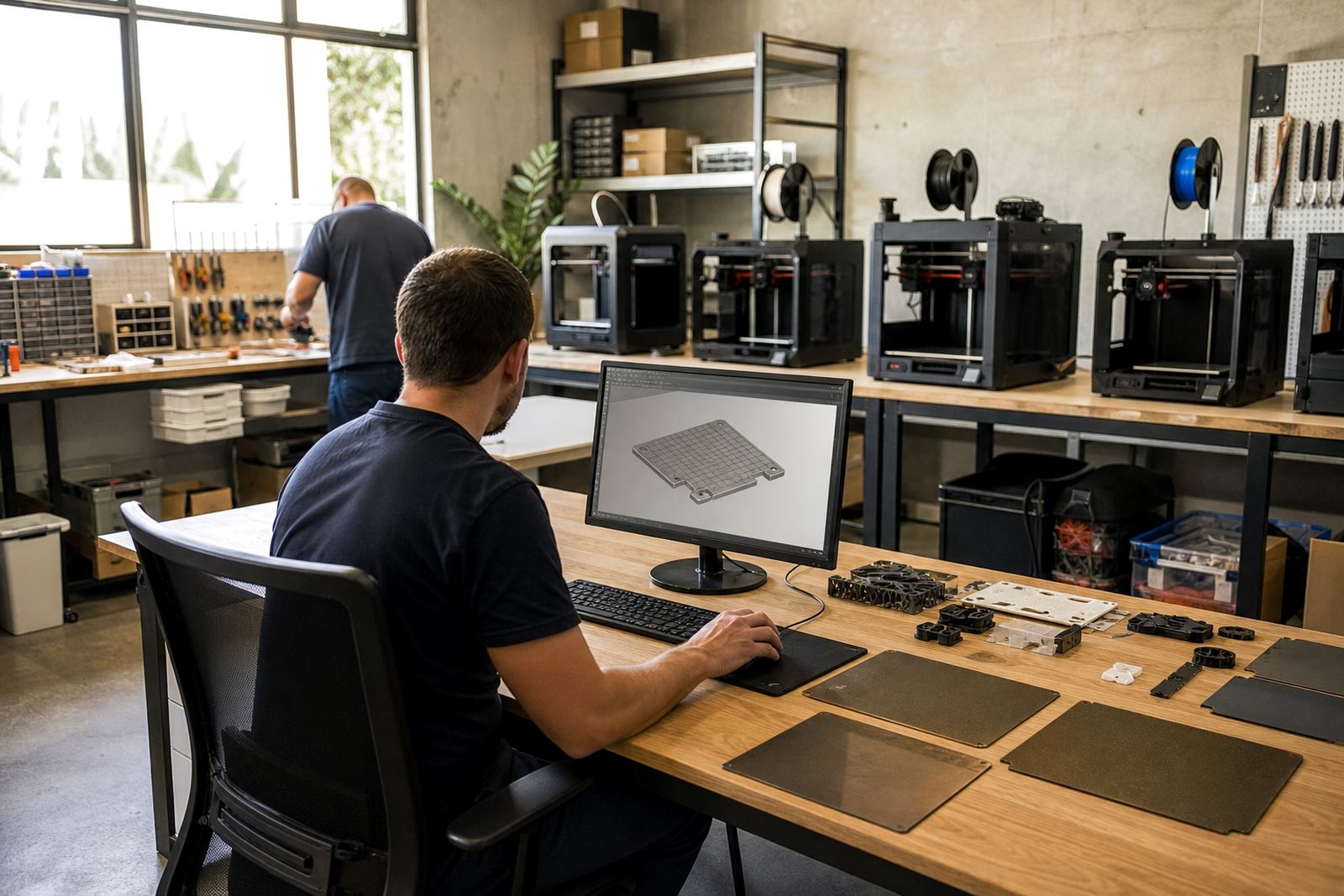
A prototype room usually mixes general purpose printers with a few machines set up for repeat jobs. The exact setup varies, but the most common layout includes printers for small parts, one or two larger build-volume units, spare sheets, scrapers, cleaning materials and a labelled storage area for active plates.
- Spring steel or rigid build plates sized to match the printer bed
- PEI smooth or textured sheets for different release and grip needs
- Magnetic bases for quick swap systems on busy benches
- Bed levelling tools and a flatness check routine
- Isopropyl alcohol, lint-free cloths and bed care supplies
- Spare nozzles, part cooling fans and common fasteners for maintenance
For schools and makerspaces that also prototype, a simpler set-up often works best. One plate type per machine, a labelled storage rack and a clear cleaning routine reduce confusion for learners and part-time users. In a shared lab, that small bit of order saves time and keeps the surfaces in better condition.
Layout advice for a shop that prints all day
Good layout cuts down handling errors. Keep new plates near the printers, not across the room. Put cleaning supplies close to the bench but away from dust and coolant spray, and mark each plate with the machine it belongs to if the shop uses several formats. That reduces mix-ups when a busy shift changes over.
If you run multiple printers in parallel, plan for storage as carefully as you plan for the machines. Plates should stand flat, not lean against a wall where they can warp or pick up grit. In coastal areas like Durban or Gqeberha, humidity can also affect storage conditions, so sealed containers or covered racks are worth having. In Gauteng, dust and dry air can still leave a film on the surface if the area is open to the workshop.
For small prototype teams, a magnetic base fitting can be a practical upgrade if the printers need fast turnarounds. The operator removes the plate, clears the part, wipes it down and gets back to the next job with less delay. When a team is sharing machines, that kind of flow matters more than people expect.
Adhesion choices by material and job type
Different materials need different surface behaviour. Some jobs want strong grip for the first few layers, while others need easier release once the plate cools. A prototype shop should match the surface to the part instead of forcing every print onto the same plate and hoping for the best.
- PLA and similar materials usually suit a clean PEI surface with moderate grip
- PETG often needs careful release planning to avoid surface damage
- ABS and ASA benefit from stable bed temperature and reduced draughts
- Flexible materials need a surface that supports grip but still allows clean removal
- Short test parts may prefer a quick-release setup for fast iteration
Bed flatness also changes the result. Even a small dip in the middle can cause first-layer inconsistency on larger plates. If a shop is printing jigs, housings or panel test pieces, a flatness check should sit in the maintenance routine alongside nozzle cleaning and belt checks. It is one of those tasks people skip until the failure rate climbs.
Common mistakes that slow prototype work
The biggest mistake is treating the build plate as a consumable with no plan. Shops often wait until adhesion fails before replacing a worn surface, then spend hours troubleshooting a problem that was really surface fatigue. Another common issue is cleaning with the wrong product, which leaves residue and makes prints behave differently from one day to the next.
Teams also lose time when they use one plate for everything. A plate that works well for small PLA test pieces may not be the best choice for larger, hotter parts. It is worth setting up a simple replacement and rotation plan so the team knows which plate is due for refresh, which one is in service and which one should be kept for special jobs.
We also see shops underestimating staff training. If one person knows how to fit the magnetic base or adjust the sheet but nobody else does, the system falls apart when that person is away. A short bed care training session and a written routine for surface refresh can prevent a lot of avoidable downtime. It seems small until a Friday afternoon rush hits.
Budget ranges for prototype shops in Rand
Budget depends on the size of the shop, the number of printers and whether you are upgrading one machine or standardising an entire fleet. For a small prototype setup with one to three printers, a practical starting budget for plates, PEI sheets and basic adhesion supplies is often around R1 500 to R4 500.
A growing shop with four to ten printers, plus spare sheets and a few magnetic base fittings, usually plans for R5 000 to R18 000. If the team needs custom size cutting, replacement planning and a farm standardising plan for multiple machines, the spend can move higher depending on volume and plate format.
Schools, print farms and product development teams in Pretoria, Johannesburg and Bloemfontein often spread this spend over several months. That can make more sense than buying everything at once, especially when the team wants to test which surface suits the most common materials first. A sensible plan is to start with the busiest machines, then roll the same setup across the rest of the line.
How LayerPad supports prototype teams across South Africa
LayerPad works with design teams, schools and print farms from Centurion and Pretoria East through to Johannesburg, Cape Town, Durban, Bloemfontein and Gqeberha. The aim is simple: keep your printers ready for the next revision, with the right plate, the right fit and the right surface for the job.
- Plate installation and PEI sheet fitting for common machine sizes
- Magnetic base fitting for faster changeovers
- Custom size cutting for less common beds
- Adhesion troubleshooting for lifting, warping and edge curl
- Consumables supply and replacement planning for busy rooms
For prototype shops, the value is in reducing wasted prints and keeping the cycle moving. If your team is trying to get from concept to fit test before the next meeting, the bed should not be the thing that slows you down.